
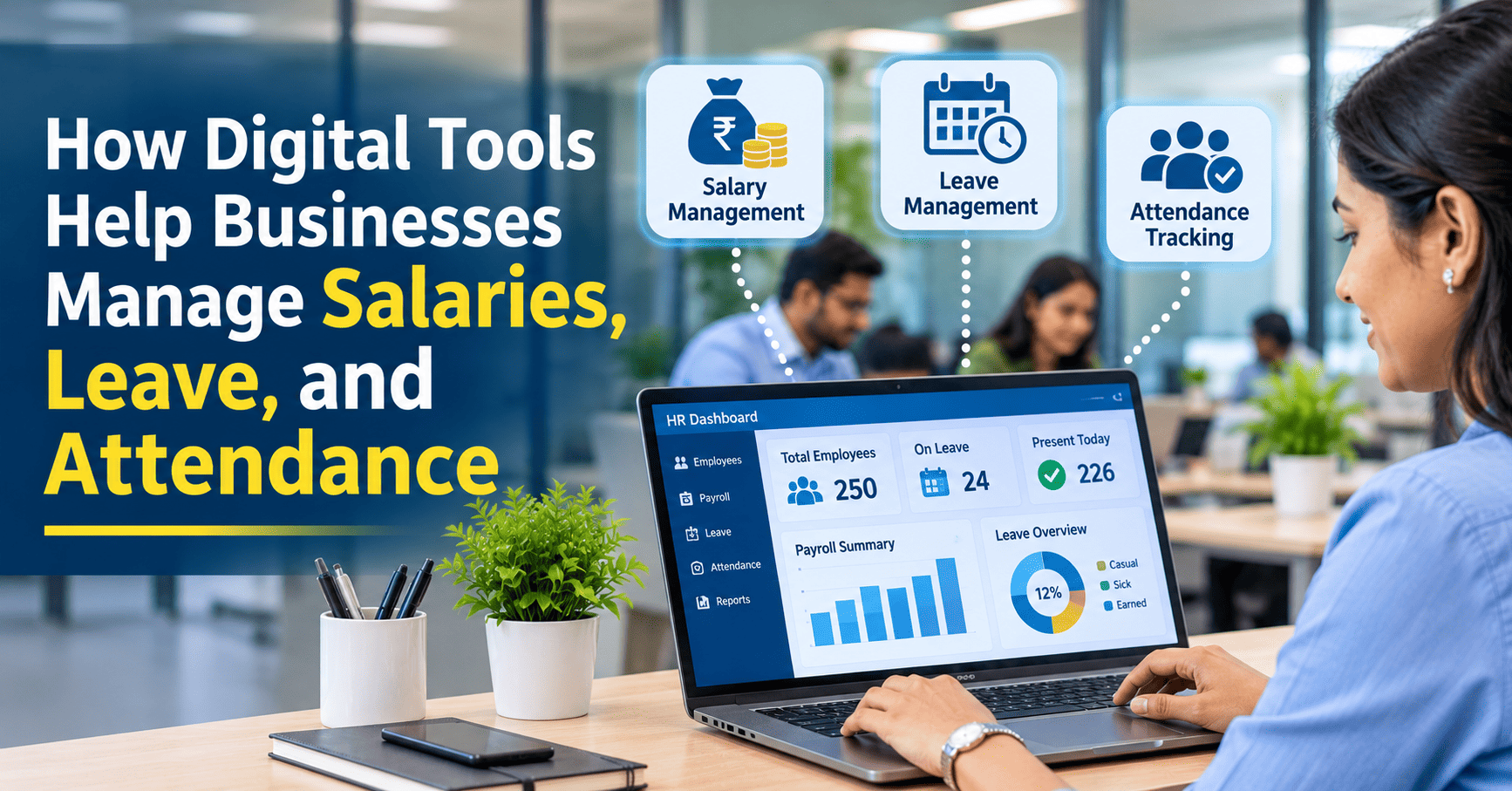
Managing employees involves several responsibilities, including salary processing, attendance tracking, leave administration, and maintaining employee records. Handling these activities manually can increase administrative workload and lead to errors. Businesses adopting Best payroll software india solutions can simplify salary calculations, automate routine tasks, and maintain accurate payroll information. Integrating payroll, attendance, and HR automation also helps organizations improve workforce management and create more efficient workplace processes.
1. Understanding Payroll Automation
Payroll automation simplifies the process of calculating and distributing employee salaries. Instead of preparing salary statements manually, businesses can use digital systems to manage employee compensation and payroll records.Automated payroll solutions can handle basic salary calculations, allowances, overtime, deductions, bonuses, and payslip generation. They can also help maintain information related to statutory requirements such as Provident Fund (PF), Employees’ State Insurance (ESI), and Tax Deducted at Source (TDS), depending on employee eligibility.This reduces repetitive calculations, minimizes manual errors, and helps HR teams complete monthly payroll activities more efficiently.
2. Why Attendance Management Automation Matters
Accurate attendance records are essential for managing employee working hours, calculating overtime, and monitoring workforce availability. Manual attendance registers and spreadsheets can become difficult to maintain as organizations expand.Automated attendance systems simplify this process through biometric devices, mobile applications, and web-based platforms. Employees can record their check-in and check-out times, while managers can monitor attendance information through centralized dashboards.These systems can also help businesses track late arrivals, absenteeism, shift schedules, and working hours. Integrating attendance information with payroll processes makes salary calculations more organized.
3. Simplifying Leave and Employee Management
Leave administration is another important responsibility of HR departments. Managing leave requests through emails, messages, or paper forms can create confusion and delays.Digital HR platforms allow employees to submit leave applications online and enable managers to review and approve requests through automated workflows. Employees can also check their leave balances and application status.
Centralized employee management systems help organizations maintain important information such as contact details, job roles, employment history, attendance records, and leave information. This makes employee data easier to access and update.
4. Benefits of Integrating Payroll and Attendance Systems
Managing payroll and attendance through separate platforms can create duplicate work and inconsistent employee information. Integration connects these functions and allows relevant data to move between systems.
Some important benefits include:
- Improved accuracy: Attendance information can support salary calculations and reduce manual data entry.
- Time savings: HR teams can automate repetitive administrative activities.
- Better transparency: Employees can access relevant attendance and salary information.
- Simplified reporting: Managers can review payroll expenses, working hours, and attendance patterns.
- Organized records: Employee information can be maintained through a centralized platform.
These advantages help businesses establish more consistent workforce management processes.
5. The Role of Automation in HR Administration
HR automation goes beyond payroll and attendance. It can support several activities throughout the employee lifecycle, including recruitment, onboarding, performance management, training, and employee engagement.For example, digital onboarding tools can help HR teams collect employee information and maintain joining documents. Performance management platforms can help managers establish goals, monitor progress, and provide feedback.Employee self-service portals also allow individuals to access payslips, update personal details, submit leave requests, and review attendance records without depending on HR teams for every requirement.
6. Improving Workforce Reporting and Decision-Making
Automated HR platforms provide dashboards and reports that help managers understand workforce activities. Instead of manually collecting information from different departments, businesses can review relevant data through centralized reporting features.Important reports may include employee attendance, absenteeism, overtime, payroll expenses, leave utilization, and workforce distribution.These insights help management identify operational challenges, monitor employee availability, plan staffing requirements, and make informed decisions about workforce costs.
7. Choosing the Right HR Automation Solution
Selecting suitable software requires understanding the organization’s workforce requirements and existing HR processes.Before adopting a platform, businesses should evaluate its payroll capabilities, attendance tracking methods, leave management features, reporting options, mobile accessibility, and integration support.
Data security is equally important because HR systems store sensitive employee and salary information. Organizations should look for appropriate access controls, secure authentication, data protection features, and reliable technical support. Businesses should also consider scalability to ensure that the platform can support future workforce expansion without requiring frequent system changes.
Conclusion
Payroll, attendance, and HR automation help businesses manage everyday employee-related activities with greater accuracy and efficiency. By connecting salary processing, attendance tracking, leave administration, and employee records, organizations can reduce administrative work and improve workforce visibility.
Adopting suitable HR software india solutions allows businesses to centralize essential HR operations, simplify reporting, and improve employee experiences. As organizations grow and workplace requirements evolve, investing in integrated HR automation can support better workforce management and long-term operational efficiency.