

There’s a quiet leak in many transport businesses that rarely makes it into boardroom slides. The slow, cumulative tax imposed by disconnected data and ad hoc processes, also known as digital drag. It isn’t a single catastrophic outage or an obvious outage, but a thousand tiny frictions. For example, a manager reconciling spreadsheets at midnight, or a pricing decision made on gut feeling. Over months and years, those little costs accumulate, eroding margins, tiring staff, and blurring strategic clarity.
Modern Bus Ticketing Systems aim to remove this invisible friction. They wire operations together so energy goes into growth instead of troubleshooting. The solution is Bus Management Software that closes gaps, provides operators with clear revenue signals, and prevents guesswork from becoming the norm.
If you’re curious about where your profit quietly slips away, read on. Looking at the full picture, you may find the problems are familiar, and the fixes are straightforward.
Explore how an Online Bus Booking System can streamline these gaps.
Yield Optimization Techniques for Bus Ticketing Systems

-
The Fixed-Price Trap: Leaving Money on the Table
Many operators price like the old days, seating plans based on routes and a handful of rules. That’s comfortable, predictable, and sadly expensive. When demand peaks or dips, fixed fares ignore nuance. Seats that could command higher fares stay pegged low, while low-demand trips still run full-service pricing that scares away occasional riders. Over time, that mismatch drains revenue potential. You end up with wasted upside on high-demand windows, and lost volume where a modest price nudge would have filled seats. This is less about complex math and more about missed signals.
-
Dynamic Pricing Engine as Revenue Lever
Introduce a dynamic pricing engine, and pricing stops being a calendar task and becomes an active revenue lever. Revenue management systems use fare analytics and demand-based pricing to adjust offers in near real time. They factor in booking velocity, historical demand, seasonality, even local events, and then recommend fares that maximize yield. The system nudges prices where appropriate, runs targeted discounts when fill rates fall, and avoids panic price cuts that destroy long-term fare memory. Importantly, these systems are permissioned. You keep guardrails, override where needed, and watch the optimization learn.
-
From Guesswork to Data-Driven Profitability
The leap isn’t futuristic, but procedural. Replace hunches with fare analytics dashboards, integrate booking data with route-level demand models, and measure incremental revenue per price point. A smart engine gives visibility into elasticity, showing where higher fares stick and where small discounts unlock volume. You begin to see pricing as a continuous process, not an annual chore. That frees commercial teams to test offers, refine segmentation, and run campaigns that increase average ticket value without alienating loyal customers. Naturally, there will be awkward lessons, some failed experiments, and a few course corrections.
Learn more about choosing the right system with How to Choose Bus Booking Software.
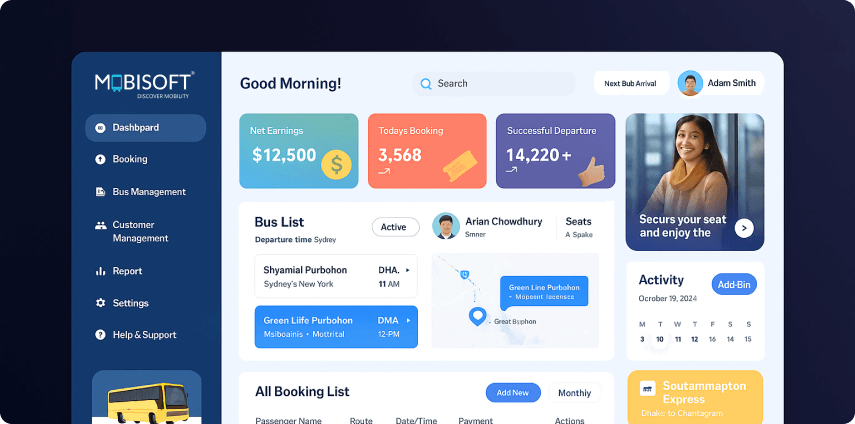
Real-Time Operational Dashboard for Transport Operators
Cost of Operational Data Silos in Transit
It often starts with good intentions. A booking system added here, a fleet tracker there, a customer app built in a rush. Individually, they work, but together they speak different languages. Dispatch can’t see what sales sees, maintenance schedules live in someone’s inbox, and finance receives half-formed data once a week. This isn’t chaos in the cinematic sense, but it quietly burns time and patience. Teams end up solving data puzzles instead of serving passengers. The cost is subtle but relentless: delayed responses, duplication of effort, and avoidable operational errors. Many of these issues stem from the absence of unified systems, such as Bus fleet management software that brings everything under one workflow.
Integrated Fleet Management Platform Benefits
Integrated fleet management platforms and real-time operational dashboards offer a way out. They pull data streams from bookings, GPS, and service logs into one clean interface. The result isn’t more data, but better visibility. Managers can track utilization, monitor on-road performance, and spot service gaps without calling five people. A centralized Bus Ticket Booking System means fewer double entries and fewer human errors that come from juggling tabs. Over time, teams start trusting the data again, which may sound small but changes how decisions get made.