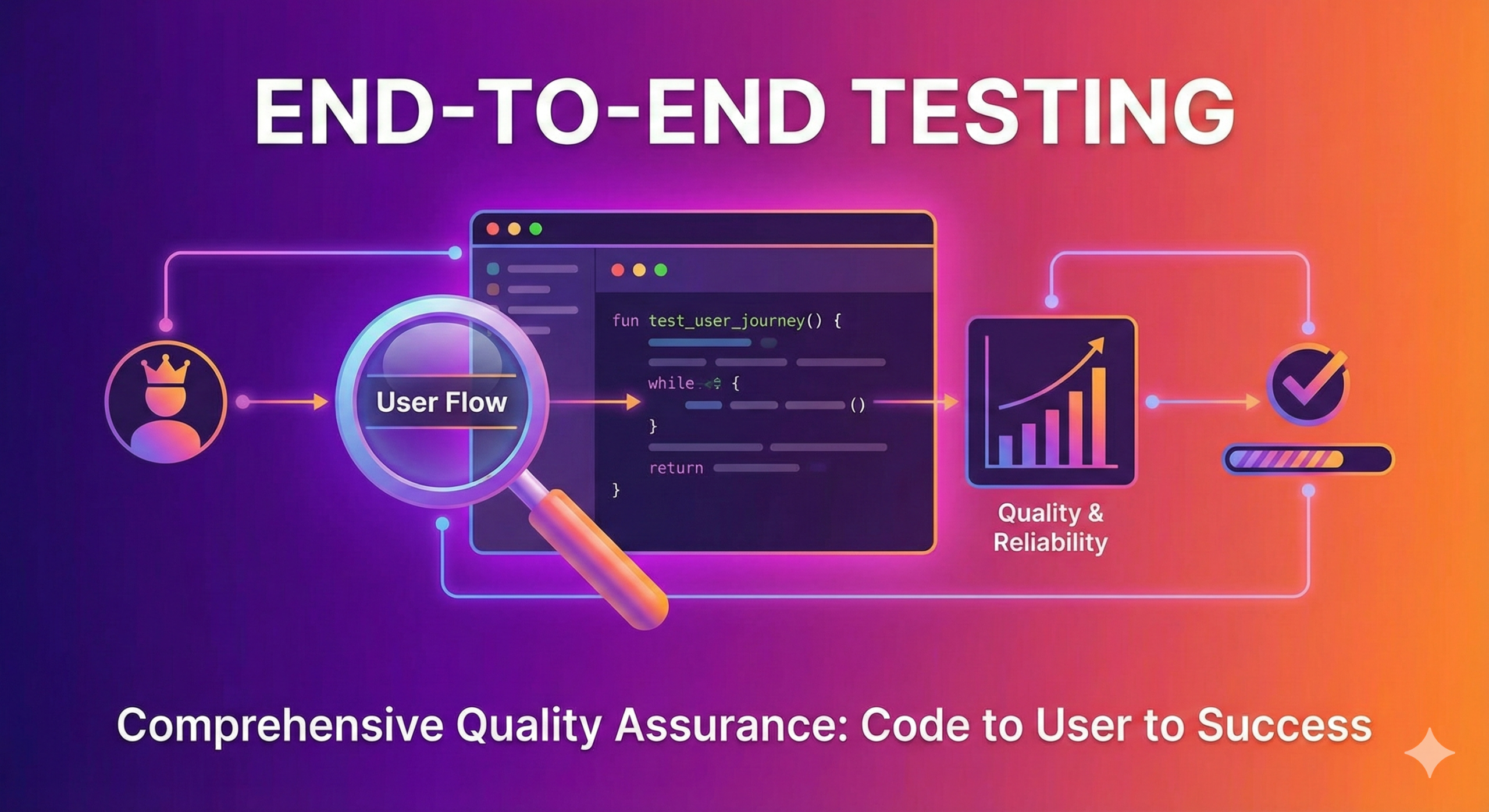
In today’s fast-paced software development world, ensuring that your application functions seamlessly across all layers is more critical than ever. While unit tests and integration tests play crucial roles in validating isolated components and their interactions, End-to-End Testing offers the final layer of validation — ensuring that the entire system, from the user interface to backend services, works as expected.
End-to-end testing mimics real-world scenarios where users interact with your application and ensures that all parts of the system communicate and work together smoothly. Whether it’s submitting a form, completing a transaction, or navigating through multiple pages, E2E tests simulate these user interactions and ensure everything operates correctly in a real environment. Unlike other types of testing, which focus on isolated parts or units, E2E tests give you the confidence that the whole system works as it should, just as your users will experience it.
Key Benefits of End-to-End Testing:
- Complete System Validation:
E2E testing confirms that all parts of the application, from the front-end to the back-end, function together as expected. This comprehensive test ensures that even if one part of the system is working perfectly, it won’t break when interacting with other components. - Improved User Experience:
By testing real-world scenarios, E2E tests catch issues that might only appear during actual use, ensuring that the user journey remains smooth. E2E testing validates that everything, from the look and feel of the UI to how quickly a page loads or a transaction completes, is working as intended. - Early Bug Detection:
E2E tests uncover bugs that might be missed by unit or integration tests, especially those related to the interaction between different components or third-party services. Catching these issues earlier in the development cycle helps reduce the cost of fixing them later. - Better Team Collaboration:
E2E testing encourages better collaboration between front-end, back-end, and QA teams. By testing the complete user flow, teams can align on features and functionality, reducing friction and ensuring that everyone is on the same page.
Best Practices for Successful End-to-End Testing:
- Choose the Right Tools:
When selecting E2E testing tools, it’s important to choose one that integrates well with your existing development and testing frameworks. Tools like Selenium, Cypress, and Playwright are popular choices due to their robust features and community support. These tools allow you to simulate user interactions and test real-world scenarios, making them indispensable in modern software testing. - Prioritize Key User Flows:
Not all scenarios need to be tested in depth. Focus on the most critical user flows, such as logging in, making a purchase, or navigating through essential pages. These are the paths that need to work flawlessly to ensure a seamless user experience. - Keep Tests Maintainable:
E2E tests can grow quickly, so maintaining them becomes crucial. Make sure your tests are modular and easy to update. Use techniques like Page Object Model (POM) to keep your test code organized and reusable. - Run Tests Regularly:
E2E tests should be an integral part of your CI/CD pipeline. Automating these tests and running them with every build ensures that issues are detected early and are not missed in the final stages of development.
Challenges to Overcome:
Despite their many benefits, E2E tests can be challenging to implement and maintain. One common challenge is flakiness — tests that sometimes fail due to external factors like network latency or changes in the application’s state. To reduce flakiness, it’s important to make your tests as stable as possible and avoid relying on timing-based actions.
Another challenge is execution time. Since E2E tests involve simulating real user interactions, they tend to be slower than unit or integration tests. Balancing comprehensive test coverage with execution speed is key. Prioritize tests based on critical user journeys to avoid running unnecessary tests.
Conclusion:
Adopting End-to-End Testing in your software development workflow is crucial for ensuring the overall reliability and user experience of your application. While it requires careful planning, execution, and maintenance, the benefits far outweigh the challenges. By catching issues early, improving collaboration, and ensuring complete system validation, E2E tests help build dependable software that provides seamless experiences for end users.
As the software industry continues to prioritize quality, integrating end-to-end testing into your pipeline will help you deliver reliable, user-friendly applications. Whether you’re building complex web applications, mobile apps, or microservices architectures, E2E testing should be a core part of your development process.