
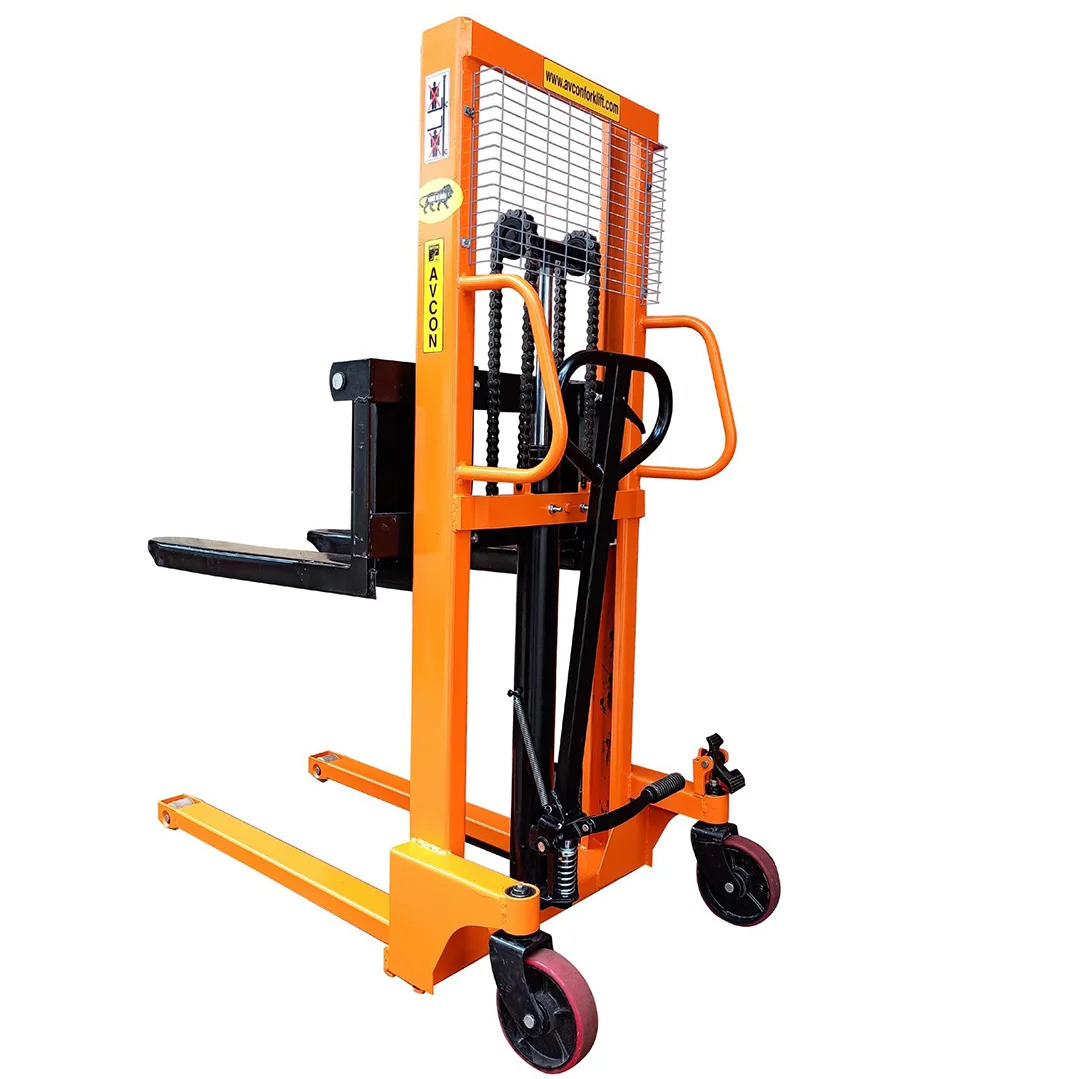
Manual Hand Stacker – A Reliable Solution for Everyday Material Handling
Material handling is a critical function in warehouses, factories, retail stores, and small manufacturing units. While automation is increasing, many industries still rely on simple, cost-effective, and dependable equipment for daily lifting and stacking tasks. One such essential solution is the Manual Hand Stacker.
A Manual Hand Stacker is designed to lift, move, and stack palletized or non-palletized loads using manual hydraulic operation. It is widely preferred by industries that require a safe and economical lifting solution without the need for electricity or batteries. Manufacturers and suppliers across India continue to recommend manual stackers for their durability, ease of use, and low maintenance requirements.
What Is a Manual Hand Stacker?
A Manual Hand Stacker is a manually operated lifting device used to stack, transport, and position loads at various heights. It operates using a hydraulic system that is activated through a hand pump or foot pedal. Unlike electric or semi-electric stackers, manual stackers rely entirely on human effort for lifting and movement.
Despite being manually operated, modern manual hand stackers are engineered with strong steel frames, precision hydraulics, and safety features that allow efficient handling of heavy loads.
Why Industries Choose a Manual Hand Stacker
Many industries continue to use manual stackers due to their practical advantages:
✔ Cost-Effective Solution
Manual stackers are significantly more affordable than electric alternatives, making them ideal for small and medium businesses.
✔ No Power Dependency
Since they do not require batteries or electricity, manual stackers can operate anywhere without charging concerns.
✔ Low Maintenance
Fewer components mean reduced maintenance costs and longer service life.
✔ Easy to Operate
Minimal training is required, making them suitable for facilities with varied workforce skill levels.
✔ Safe for Controlled Environments
Manual operation allows precise control during lifting and lowering.
Key Technical Features of a Manual Hand Stacker
A high-quality Manual Hand Stacker typically includes the following technical features:
1. Heavy-Duty Steel Construction
Manufactured using high-grade steel to ensure structural strength and long-term durability.
2. Hydraulic Lifting System
The hydraulic pump enables smooth lifting with minimal physical effort.
3. Load Capacity
Standard models generally support:
-
Load Capacity: 500 kg to 1500 kg
-
Lifting Height: 1.6 m to 3.0 m (model-specific)
4. Adjustable Fork Width
Allows compatibility with different pallet sizes and load types.
5. Smooth-Rolling Wheels
Equipped with nylon or PU wheels for easy movement and floor protection.
6. Manual Braking System
Ensures stability and safety during loading, unloading, and stacking.
Applications of a Manual Hand Stacker
The Manual Hand Stacker is widely used across multiple industries due to its versatility:
Warehouses & Storage Units
Used for stacking pallets, organizing goods, and optimizing vertical storage.
Manufacturing Plants
Ideal for moving raw materials, components, and finished goods.
Retail Stores & Supermarkets
Helpful in stockrooms for lifting cartons and arranging inventory.
Pharmaceutical & Chemical Units
Suitable for handling drums, containers, and packaged products safely.
Small-Scale Industries
A practical lifting solution where space and budget are limited.
Safety Advantages of Using a Manual Hand Stacker
Safety is a major reason why industries trust manual stackers. Key safety benefits include:
-
Controlled lifting and lowering speed
-
Reduced risk of sudden load drops
-
Strong mast structure for stability
-
Manual control prevents accidental movement
-
Mechanical reliability with minimal failure points
When operated correctly, manual stackers significantly reduce workplace injuries related to manual lifting.
How a Manual Hand Stacker Improves Productivity
Even without automation, a Manual Hand Stacker contributes to operational efficiency:
✔ Faster Material Movement
Reduces time spent on manual lifting and carrying.
✔ Improved Load Handling Accuracy
Allows precise placement of goods at required heights.
✔ Reduced Workforce Fatigue
Minimizes physical strain compared to traditional lifting methods.
✔ Better Space Utilization
Enables vertical stacking, freeing up floor space.
✔ Consistent Performance
Works reliably in all conditions without downtime due to power issues.
Manual Hand Stacker vs Electric Stackers
While electric stackers are suitable for high-volume operations, manual stackers remain relevant due to:
| Feature | Manual Hand Stacker | Electric Stacker |
|---|---|---|
| Cost | Low | High |
| Maintenance | Minimal | Moderate |
| Power Requirement | None | Battery/Electric |
| Ideal Use | Light to medium duty | Medium to heavy duty |
| Ease of Repair | Very easy | Technical |
For businesses with moderate lifting requirements, manual stackers provide unmatched value.
Choosing the Right Manual Hand Stacker Manufacturer
When selecting a Manual Hand Stacker, businesses should consider:
-
Load capacity requirements
-
Lifting height needs
-
Build quality and steel thickness
-
Hydraulic system reliability
-
Availability of spare parts
-
After-sales support
Established manufacturers and suppliers in India focus on delivering robust, user-friendly manual stackers that meet industrial safety standards. Companies like Avcon Systems are known for offering dependable material handling equipment designed for long-term performance across diverse industries.
Conclusion
The Manual Hand Stacker remains an essential piece of material handling equipment for industries seeking a reliable, economical, and safe lifting solution. With its strong construction, simple hydraulic operation, and minimal maintenance needs, it continues to serve warehouses, factories, retail stores, and small manufacturing units efficiently.
For businesses aiming to improve productivity without investing in complex machinery, a manual hand stacker is a practical and proven choice. Its versatility and durability ensure consistent performance, making it a valuable asset in everyday material handling operations.