
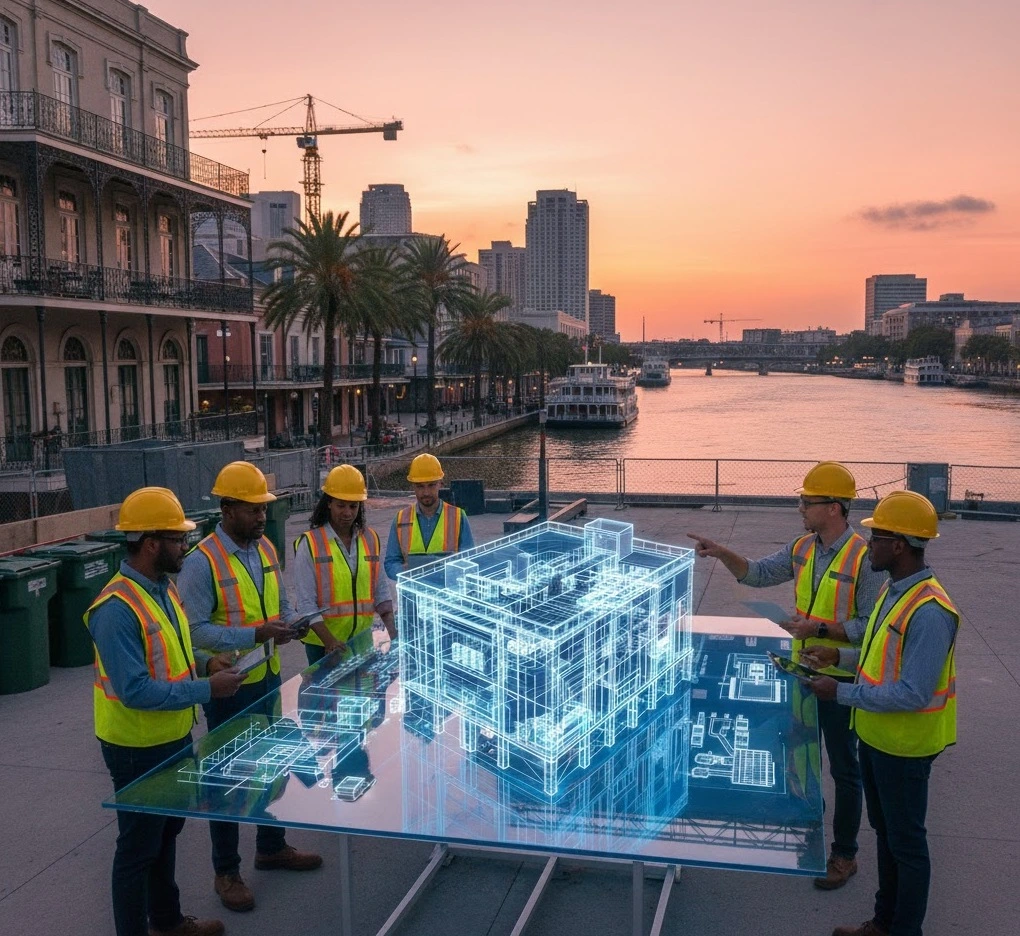
Complex projects don’t usually fail because of ambition. They fail because information slips through the cracks. One team works from an outdated drawing. Another interprets a detail differently. Somewhere between intent and execution, coordination fractures—and the project pays the price.
BIM modeling exists precisely to close those gaps. Not by adding more data, but by organizing it, aligning it, and making it visible to everyone who needs it, exactly when they need it.
Why Digital Coordination Breaks Down in Complex Builds
Large-scale projects behave differently from smaller ones. More stakeholders. More disciplines. More decisions are stacked on top of one another.
In traditional workflows, coordination relies heavily on meetings, markups, and assumptions. That system works—until it doesn’t. And when it breaks, it breaks loudly.
This is where BIM Modeling Services start to show their real value. They replace fragmented communication with a shared digital environment, where design, structure, and systems coexist instead of competing.
BIM as a Single Source of Truth
At the heart of effective coordination is trust. Teams need to trust that the information they’re using is current, accurate, and complete.
A well-developed BIM model becomes that anchor.
Instead of juggling multiple drawings and revisions, teams coordinate around a federated model that reflects the latest decisions. Changes ripple through the system visibly, reducing the risk of silent conflicts.
What Changes When Everyone Works from One Model?
- Design updates are instantly contextualized across disciplines
- Conflicts are detected visually, not discovered during installation
- Decision-making becomes faster because impacts are immediately clear
These benefits don’t come from software alone. They come from how BIM is structured, governed, and maintained throughout the project lifecycle.
Strengthening Collaboration Across Disciplines
Digital coordination isn’t just about avoiding clashes. It’s about enabling conversations that wouldn’t happen otherwise.
When architects, engineers, and contractors view the same model, discussions shift. Instead of debating abstract notes, teams point to real geometry. Real space. Real constraints.
This is especially critical on complex projects—hospitals, data centers, infrastructure—where systems overlap densely, and tolerances are tight.
Many BIM specialists specialize in orchestrating this collaboration, ensuring that models aren’t developed in isolation but as part of a coordinated ecosystem.
Reducing Errors Before They Become Expensive
Most construction errors aren’t dramatic. They’re subtle. A sleeve placed inches off. A clearance was overlooked. A sequence misunderstood.
Individually, these issues seem minor. Collectively, they derail schedules.
BIM modeling exposes these risks early. Not as redlines, but as visible conflicts inside a coordinated model. That shift—from reactive correction to proactive resolution—is one of the most underestimated advantages of BIM Modeling Company.
Real-World Scenario: Coordination Under Pressure
On a high-rise mixed-use project, structural revisions arrived late due to zoning changes. Traditionally, this would have triggered weeks of redraws and coordination meetings.
Instead, the BIM team integrated the updates directly into the federated model. MEP systems were adjusted digitally, conflicts flagged, and solutions tested within days.
The contractor later noted that without that level of digital coordination, the project would have lost an entire month. That’s not efficiency—it’s resilience.
The Role of Process, Not Just Technology
It’s tempting to think BIM coordination is automatic. Upload models. Run clash detection. Done.
Reality is messier.
Strong coordination depends on standards, naming conventions, model ownership, and clear responsibility. This is where experienced BIM Modeling differentiates itself—not by flashy visuals, but by disciplined workflows that keep complexity under control.
They understand that a model is only as reliable as the process behind it.
How BIM Improves Efficiency Without Rushing Decisions
Speed is often framed as the enemy of quality. BIM challenges that assumption.
By making information accessible and interconnected, BIM allows teams to move faster because decisions are better informed, not because corners are cut.
Design options can be tested digitally. Sequencing can be visualized. Risks can be evaluated before they become commitments.
This quiet efficiency is one reason BIM has become integral to large-scale project delivery, especially where coordination complexity is unavoidable.
Long-Term Coordination Beyond Construction
Digital coordination doesn’t end at handover.
Well-coordinated BIM models often transition into operational tools, supporting facility management, renovations, and future expansions. Because systems were coordinated digitally from the start, downstream users inherit clarity instead of confusion.
This long-term value is increasingly recognized by owners who partner with BIM that think beyond construction milestones and focus on lifecycle performance.
Why Coordination Is the Real Measure of BIM Success
A model can be detailed and still fail. A project can be advanced and still chaotic.
The true measure of BIM’s success isn’t how impressive the model looks—it’s how well teams coordinate around it when pressure mounts.
In complex projects, that coordination isn’t optional. It’s the difference between controlled complexity and controlled chaos.
Frequently Asked Questions
How does BIM improve coordination on complex projects?
By providing a shared, up-to-date model that all disciplines reference, we can reduce miscommunication and conflicting information.
Is BIM coordination only useful for large projects?
While most impactful on complex builds, BIM coordination benefits projects of all sizes by reducing errors and improving clarity.
Does BIM eliminate coordination meetings?
No—but it makes them more productive by grounding discussions in shared, visual information.
Who manages coordination within a BIM environment?
Typically, a BIM team or coordinator ensures models align, standards are followed, and conflicts are resolved efficiently.