Introduction: The Story of a Procurement Challenge
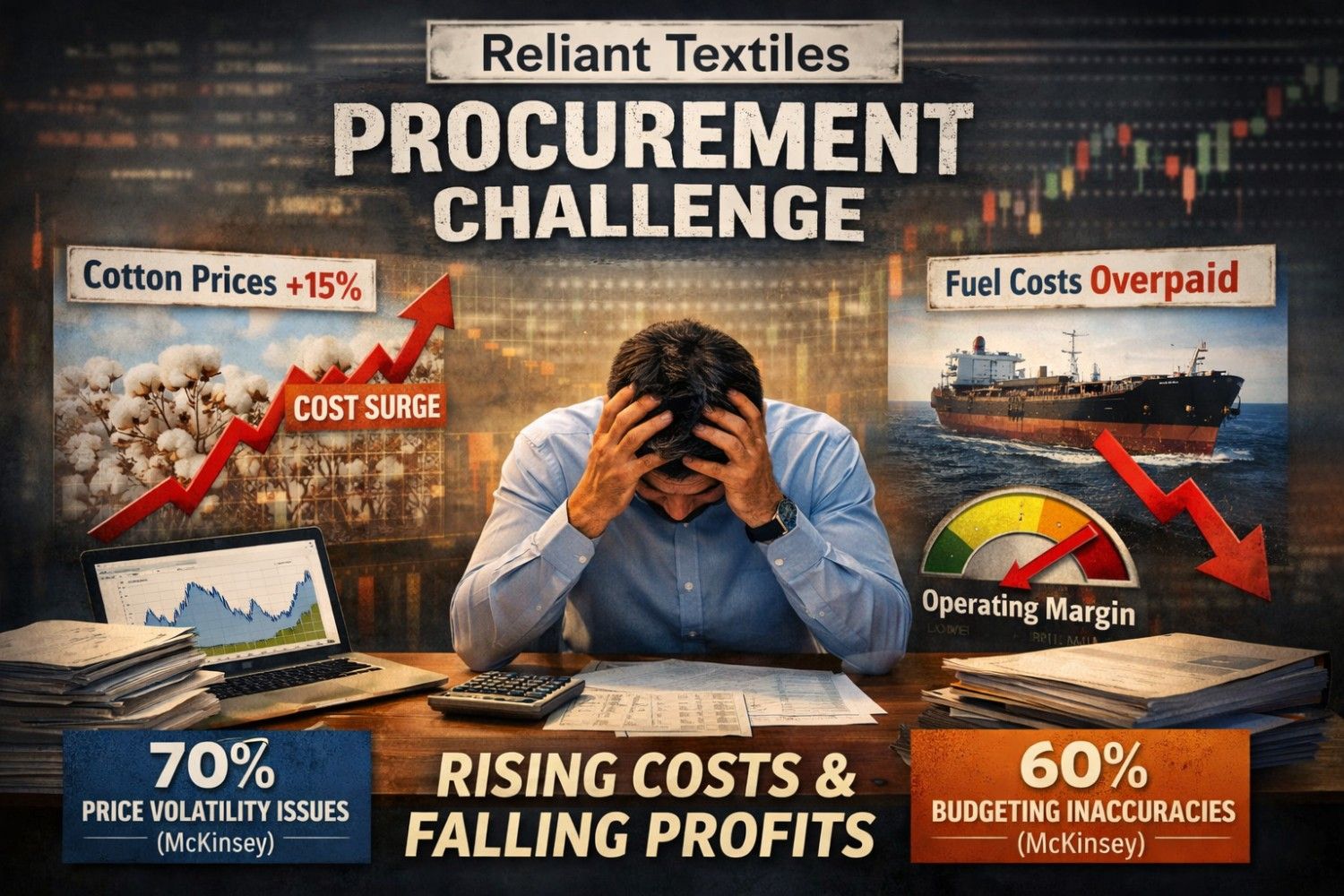
Imagine a mid-sized manufacturing company, Reliant Textiles, navigating the volatile world of raw material procurement. Six months ago, cotton prices surged unexpectedly, increasing production costs by 15% and forcing management to revise budgets mid-cycle. At the same time, delayed insights into global energy prices meant the company overpaid for fuel and shipping, impacting margins.
This story is all too familiar. According to McKinsey & Company, nearly 70% of procurement teams report challenges in anticipating commodity price volatility, while 60% cite budgeting inaccuracies as a primary risk to profitability (McKinsey, 2022). Businesses that fail to forecast effectively expose themselves to cost overruns, supply chain disruptions, and missed opportunities. Conversely, companies that integrate forecasting into their procurement and budgeting processes gain a competitive edge by predicting price trends, negotiating better contracts, and planning capital allocation more efficiently.
A key enabler for this transformation is modern Commodity forecasting software, which combines historical commodity data, real-time feeds, and predictive analytics to deliver actionable insights across the procurement lifecycle.
1. Understanding the Link Between Forecasting and Budgeting
Forecasting provides procurement teams with actionable intelligence that informs both budgeting and purchasing decisions. For example, by analyzing historical trends, seasonal fluctuations, and macroeconomic indicators, organizations can predict raw material price movements months in advance. According to Deloitte, companies that leverage advanced forecasting reduce budget deviations by up to 20% compared to those relying solely on historical averages (Deloitte, 2021).
When forecasts are integrated into budgeting workflows, procurement teams can allocate resources more efficiently. This minimizes the risk of overcommitting funds during periods of price spikes and ensures financial plans reflect real market conditions. Real-time data integration, coupled with predictive analytics, transforms budgeting from a reactive exercise into a proactive strategic function.
2. Short-Term vs Long-Term Forecasts in Procurement
Short-term forecasts, spanning days to months, help companies respond to immediate market fluctuations. For instance, tracking daily oil or copper prices allows energy-intensive manufacturers to optimize fuel purchases or hedge risks efficiently. Meanwhile, long-term forecasts, covering years, support capital expenditure planning and multi-year procurement contracts.
According to the World Bank Commodity Markets Outlook (2023), global commodity volatility has increased by nearly 12% year-over-year, emphasizing the need for both short-term and long-term foresight. A sophisticated Commodity forecasting software enables businesses to access these dual perspectives in a single platform, improving both tactical decisions and strategic planning.
3. Real-Time Data: The Foundation of Smarter Procurement
In today’s globalized markets, real-time insights are essential. A delay of even a few hours can mean paying more for the same commodity or missing an arbitrage opportunity. For example, in metals trading, a 1% price movement can equate to millions in savings or losses for large-scale procurement.
Tresmark’s commodity intelligence platform aggregates spot prices, futures, and spreads across 30+ years of market history into a single dashboard. This allows procurement teams to benchmark current prices, compare trends, and make evidence-based decisions quickly. By using a real-time feed, companies can negotiate contracts proactively, rather than reactively responding to market shifts.
4. Risk Management Through Forecasting
Forecasting isn’t just about budgeting—it’s a critical risk management tool. Predictive insights help organizations anticipate cost spikes, supply shortages, or currency fluctuations. For example, the USD/PKR exchange rate directly affects import costs for Pakistani corporates. According to the State Bank of Pakistan, the currency fluctuated by over 7% in 2023, impacting importers significantly (SBP, 2023).
By integrating real-time FX data with commodity price forecasts, organizations can hedge exposures effectively. Platforms like Tresmark provide automated alerts, dashboards, and predictive analytics to ensure procurement teams mitigate risk before it materializes, enhancing both operational stability and financial predictability.
5. Boosting Efficiency and Collaboration Across Teams
Effective forecasting enhances collaboration between procurement, finance, and treasury teams. With centralized dashboards, teams can align budgets with procurement schedules, track commodity usage, and adjust strategies in real time. A survey by Gartner revealed that 42% of organizations with integrated forecasting platforms report faster decision-making and fewer budget overruns (Gartner, 2022).
Tresmark’s Commodity forecasting software offers ERP integration, data feed APIs, and live Excel connectivity. This allows procurement teams to push real-time data into internal systems, automate reporting, and maintain a single source of truth across departments. Consequently, companies reduce manual errors, improve transparency, and accelerate strategic execution.
6. Conclusion
In conclusion, improving budgeting and procurement through forecasting is no longer optional—it is essential for competitiveness and profitability. By leveraging predictive analytics, historical commodity data, and real-time market intelligence, organizations can anticipate price fluctuations, control costs, and manage risks more effectively.
Platforms like Tresmark offer a Commodity forecasting software solution that empowers procurement teams, treasury departments, and investors alike. With real-time commodities data, integrated dashboards, and automated reporting, businesses can turn forecasting into a strategic advantage. As Reliant Textiles’ story illustrates, the right platform transforms reactive procurement into proactive planning, ensuring organizations remain ahead in volatile commodity markets.
For professionals and enthusiasts, exploring AI, business, and technology topics online can provide additional strategies to optimize procurement, budgeting, and risk management processes.