
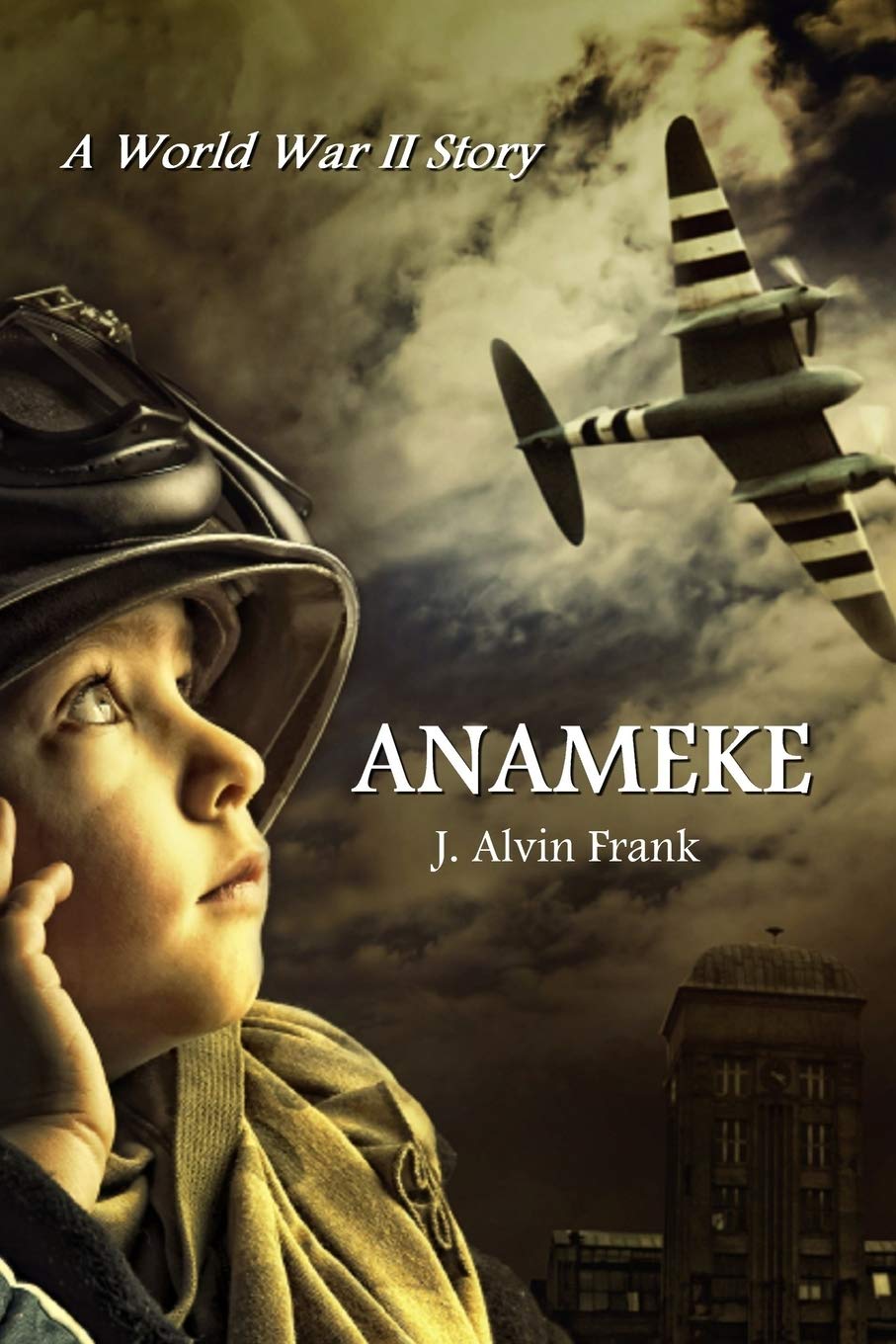
What happens when a soldier trained for war chooses humanity instead?
In many World War II novels, courage is measured by body counts, medals, and battlefield success. Anameke by J. Alvin Frank deliberately moves away from that idea. Instead, it tells a story about moral courage, the kind that shows up quietly, often alone, and sometimes at great personal cost.
The story follows Francis “Allie” von Becker, a German Luftwaffe officer whose story forces readers to confront an uncomfortable truth: even inside a destructive system, individual choices still matter.
Francis von Becker: A Soldier with a Conscience
Francis von Becker is not portrayed as reckless or rebellious. He is disciplined, intelligent, and respected within the military structure he serves. He believes in duty, order, and responsibility. Yet from the beginning, the novel makes it clear that obedience is not the same as moral certainty.
Allie is shaped by his upbringing, his faith, and a strong internal sense of honor. These influences create friction with the world around him. As the war intensifies and expectations harden, he is repeatedly faced with moments where following the rules would be easier than questioning them.
What defines him is not defiance, but reflection. He thinks. He hesitates. He notices the human cost that others learn to ignore.
When War Reduces Lives to Numbers
One of the central tensions in Anameke is how war trains people to stop seeing individuals. Civilians become collateral. Prisoners become logistics. Children become invisible.
The novel resists this reduction at every turn. Through Francis von Becker’s perspective, the reader is constantly pulled back to the reality that war does not erase innocence. It only threatens it.
The idea that saving a single child matters is not treat as sentimental or symbolic. It is treat as disruptive. Protecting one vulnerable life interrupts the machinery of dehumanization. It forces a soldier to remember that moral responsibility does not disappear simply because orders exist.
Courage as Restraint, Not Violence
In Anameke, courage is define by restraint.
Francis von Becker is traine to act decisively, yet the novel’s most powerful moments come when he chooses not to act in the expected way. He recognizes situations where violence would be accepte, excused, or even praised. Instead of defaulting to that path, he weighs the human cost.
This form of courage is risky. It offers no recognition. It can isolate him from peers and place him at odds with the system he serves. But it preserves something essential—his ability to see others as human.
The book makes a clear statement: destroying lives may be efficient, but protecting one life requires strength.
The Meaning of Saving One Child
The phrase “saving a single child” represents more than one moment. It represents a line that Francis refuses to cross.
The novel suggests that war does not begin by demanding atrocities. It begins by asking people to look away. One overlooked act leads to another. One silence becomes a habit. Anameke argues that stopping that progression matters, even once.
By choosing to protect innocence when it would be easier not to, Francis von Becker reclaims agency. He proves that moral choice does not vanish in extreme circumstances. It becomes more important.
Why This Story Matters in Today’s World
Although set during World War II, Anameke speaks directly to modern readers. It asks questions that extend far beyond history.
What do you do when the system you are part of rewards harm? Where does personal responsibility begin and end? How much does one decision matter?
Through Francis von Becker’s journey, the novel offers a grounded answer. You may not change the world. You may not stop the larger forces at work. But you can decide who you are within them.
Saving one child does not end a war. But it does something just as important. It prevents the complete loss of humanity. And sometimes, that is the change that truly matters.
Read Francis von Becker’s story here.