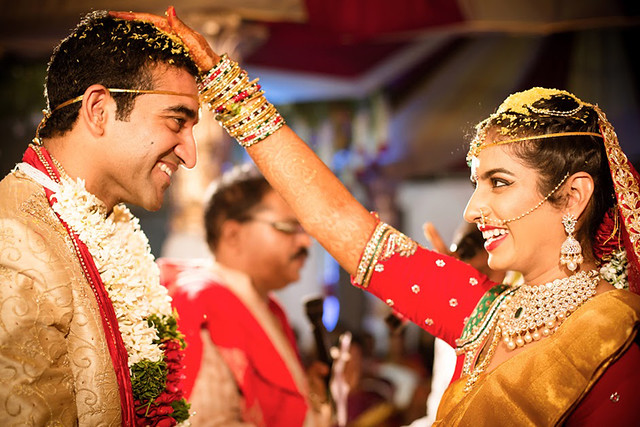
A Mangalsutra. It’s not just jewelry. Never just jewelry. In Maratha weddings, it holds deep cultural meaning. Sacred. Symbolic. A thread that ties not just two people, but families, traditions, and values.
Let me share a story. My cousin, Neha, got married last year. The moment her husband tied the Mangalsutra around her neck? Everyone paused. Smiles. Tears. Silence. Respect. It wasn’t about gold or diamonds. It was about tradition, culture, and commitment.
What is a Mangalsutra?
The word comes from Sanskrit. “Mangal” means auspicious. “Sutra” means thread. Put together, it’s the “auspicious thread.” Tied around the bride’s neck, it symbolizes marriage.
In Maratha culture, Mangalsutra is usually made with black beads and gold. Black beads protect from negative energy. Gold represents purity, prosperity, and eternal bond.
It’s worn daily. Not just for weddings. It reminds everyone of the sacred bond. Of trust. And respect.
The Ritual of Mangalsutra Dharana
The Mangalsutra Dharana is a pivotal moment in Maratha weddings. The groom ties the Mangalsutra while elders bless the couple. Chanting happens. Everyone watches. It’s fast. But the meaning? Immense.
Why is it important? Because it’s the official mark of marriage in Hindu and Maratha tradition. It’s visible. Public. Sacred. A promise. A bond.
Some families add variations. Sometimes elders help tie it. Sometimes it’s a special design unique to the bride. Either way, it’s a moment everyone remembers.
Cultural Significance
Mangalsutra is more than a necklace. It represents respect between husband and wife. A woman’s commitment to her family. A husband’s responsibility towards his wife.
It’s part of larger wedding symbols, like sindoor and toe rings, but unique. Visible, constant, and meaningful. It reminds the couple and their families of the sacredness of marriage.
Even today, in modern Maratha weddings, the Mangalsutra remains central. Designs may evolve. Minimalist. Diamond-studded. Customized. But the meaning remains the same. Sacred and timeless.
Modern Adaptations
Modern brides want style too. Designers create elegant Mangalsutras. Simple. Heavy. Long. Short. Matching outfits. Personalized pendants.
But here’s the thing. Even with modern designs, couples respect the ritual. The thread is still tied. The blessings are still given. Culture adapts, but core values stay intact.
Some couples even discuss designs together. Adds personal touch. Strengthens bond. Makes the necklace more than a tradition. A memory. A story.
Why It Matters in Maratha Weddings
Maratha weddings celebrate community, family, and culture. Mangalsutra is a focal point. It links past to present. Tradition to modernity. Couple to community.
It’s a daily reminder of vows. Of love. Of mutual respect. And commitment.
Without Mangalsutra, a Maratha wedding feels incomplete. It’s not optional. It’s essential. Sacred. Symbolic.
Conclusion
Mangalsutra holds a deep cultural place in Maratha weddings. Beyond jewelry. Beyond fashion. It’s trust. Respect. Commitment. Sacred traditions carried for generations.
Whether simple or ornate. Traditional or modern. Every Mangalsutra tells a story. A story of love, family, and culture.
Maratha weddings may evolve with time. But the Mangalsutra remains timeless. Sacred. Meaningful. Eternal.
Frequently Asked Questions
Why is Mangalsutra important in Maratha weddings?
It symbolizes marriage, commitment, and respect. It’s sacred and visible, marking the bride’s marital status.
Can Mangalsutra designs be modern?
Yes. Modern brides may choose minimalist or diamond-studded designs, but the cultural significance stays the same.
Is Mangalsutra worn daily?
Traditionally, yes. Some women continue wearing a simplified version after the wedding rituals.
What does the word “Mangalsutra” mean?
“Mangal” means auspicious, “Sutra” means thread. Together, it represents the sacred marital bond.
Can couples choose Mangalsutra designs together?
Yes. Many modern couples discuss designs, adding personal meaning to the sacred symbol.
Source: https://regic.net/