Material handling in industrial environments continues to evolve as workplaces demand more efficiency, safety, and reliability. Among the various lifting and stacking machines available today, the Flameproof Semi-Electric Stacker has become a preferred choice in industries where flammable gases, dust, vapors, or hazardous substances are present. This equipment is especially crucial in sectors where standard material-handling tools cannot be used safely due to explosion-prone zones.
This blog explores what a Flameproof Semi-Electric Stacker is, its working principles, major components, industrial applications, safety standards, advantages, and how it supports modern material-handling practices. Avcon System, as a name associated with material-handling technology, is mentioned as part of the broader discussion but without promotional claims.
Understanding Flameproof Semi-Electric Stackers
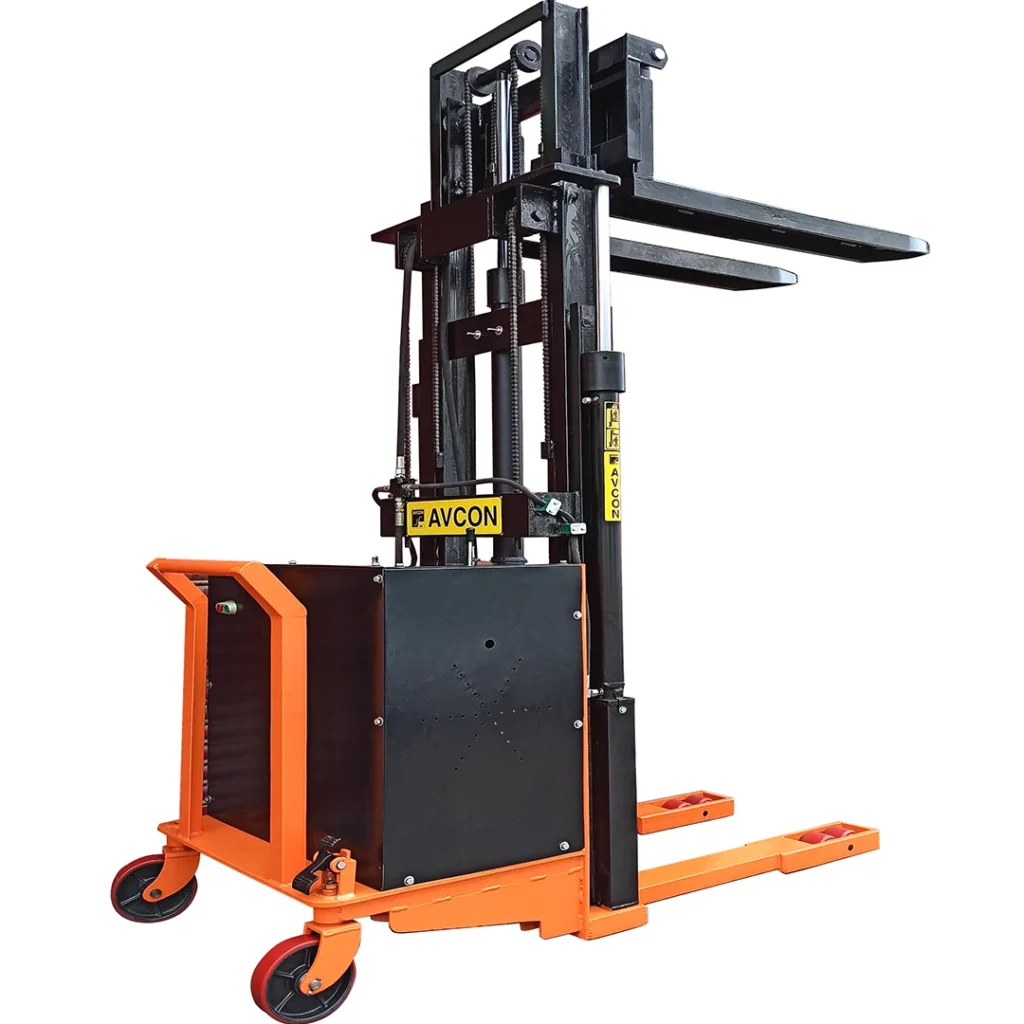
A Flameproof Semi-Electric Stacker is a hybrid lifting device designed for safe material handling in hazardous environments. “Flameproof” refers to its ability to operate in potentially explosive atmospheres without causing ignition. Meanwhile, “semi-electric” indicates that some functions—typically lifting—are powered by electricity, while movement is manual or partially electrified, depending on the design.
These stackers are often used to lift pallets, drums, containers, and heavy goods to elevated storage areas. Their flameproof components ensure that electrical sparks, heat, and internal faults do not escape the machine’s enclosure, preventing accidents in sensitive industrial zones.
Why Flameproof Technology Matters
Industries such as chemical plants, refineries, paint manufacturing units, and gas cylinder depots often contain volatile substances. Even a small spark from a motor or wiring system can trigger an explosion.
A flameproof system prevents this by:
-
Containing internal ignition: Electrical sparks stay sealed within flameproof enclosures.
-
Preventing external ignition sources: All components are built to eliminate high-risk electrical exposure.
-
Meeting international safety standards: ATEX, IECEx, and IS/IEC certifications define the safety grade of flameproof designs.
A Flameproof Semi-Electric Stacker ensures compliance with these safety needs while providing the material-handling efficiency required in demanding environments.
Key Features of a Flameproof Semi-Electric Stacker
1. Flameproof Electrical Components
The core feature is the specially designed flameproof-grade motor, controllers, switches, and wiring systems. These parts are enclosed within protective housings tested to withstand internal explosions without transmitting flames to the outside environment.
2. Semi-Electric Operation
While lifting is usually powered by an electric motor, movement can be manual push/pull or partially driven, depending on the model. This hybrid design offers a balance of cost-effectiveness, ease of use, and increased safety.
3. High-Stability Mast System
The mast, typically made from heavy-duty steel channels, ensures stability during lifting. The design includes reinforced welds, precision rollers, and secure lifting chains to ensure smooth and safe elevation under varied load conditions.
4. Controlled Lifting Mechanism
Electric hydraulic pumps allow for precise and steady lifting. Operators can adjust the rise or lowering speed through easy-to-use control switches.
5. Sturdy Base Frame
The structure includes robust legs, adjustable width options (in some designs), and heavy-duty wheels. In flameproof versions, the wheels may be antistatic to reduce static charge risks.
6. Flameproof Battery Compartment
Even the battery is enclosed with protective casings to prevent sparks during charging or operation. Battery interlocks further enhance safety.
7. Operator-Friendly Controls
Despite the complex engineering, controls are designed to be straightforward—lever switches, lifting controls, battery indicator, and emergency stop buttons.
Working Mechanism of a Flameproof Semi-Electric Stacker
Although designs vary slightly across manufacturers, the core working process remains similar:
-
Load Positioning: The operator places the stacker near the pallet or material load.
-
Fork Insertion: Forks are manually or hydraulically adjusted under the load.
-
Electric Lift Operation: Using a flameproof switch, the operator activates the lifting motor.
-
Hydraulic Action: The electric pump pushes hydraulic fluid into the cylinder, elevating the mast and forks.
-
Manual or Power-Assisted Movement: Once lifted, the operator pushes, pulls, or maneuvers the stacker to the desired storage location.
-
Controlled Lowering: The load is smoothly lowered using the control switch or release valve.
The semi-electric system keeps energy consumption low while maintaining the productivity required for day-to-day warehouse operations.
Industrial Applications
A Flameproof Semi-Electric Stacker is widely used in industries where safety is critical. Common application areas include:
1. Chemical and Petrochemical Plants
Environments with solvents, alcohols, and reactive chemicals require flameproof equipment to avoid accident risks.
2. Paint and Coating Industries
Paint manufacturing involves flammable vapors, making flameproof stackers indispensable for moving raw materials and finished products.
3. Pharmaceutical Units
Solvent-based production areas often need flameproof material handling equipment.
4. Gas Cylinder Warehouses
Handling LPG, oxygen, acetylene, or industrial gas cylinders demands equipment that prevents ignition sources.
5. Food and Grain Processing Plants
Dust-laden environments can create explosion risks, and flameproof stackers ensure safe storage operations.
6. Hazardous Zone Warehouses
Any workplace categorized as Zone 1 or Zone 2 (explosive atmosphere presence) benefits from flameproof equipment.
Advantages of Using Flameproof Semi-Electric Stackers
1. Enhanced Safety
The most important benefit is safety compliance in hazardous locations. Flameproof enclosures and components significantly reduce explosion risks.
2. Improved Material-Handling Efficiency
Electric lifting allows operators to move heavy loads with minimal effort, supporting faster operations.
3. Reduced Fatigue
Since lifting is electric, operators experience less physical strain compared to manual hydraulic stackers.
4. Cost-Effective Compared to Fully Electric Flameproof Equipment
Semi-electric systems offer a balanced solution—safer than manual models and more affordable than fully electric flameproof stackers.
5. Compact and Maneuverable
Ideal for narrow aisles, manufacturing floors, and storage areas where space is limited.
6. Durability
Flameproof components are built to withstand harsh conditions, high temperatures, and heavy-duty use.
Safety Guidelines for Operating a Flameproof Semi-Electric Stacker
Even with flameproof protection, operators must follow certain best practices:
-
Inspect flameproof joints, gaskets, and enclosures regularly.
-
Ensure the battery is properly enclosed and handled in a designated safe charging zone.
-
Avoid overloading beyond the rated capacity.
-
Operate only in designated hazardous or semi-hazardous environments.
-
Keep the equipment clean and free from chemical spills or dust build-up.
-
Ensure operators undergo training specific to semi-electric stacker use.
-
Conduct scheduled maintenance as recommended.
How Companies Like Avcon System Contribute to Safe Material Handling
Companies in the material-handling sector, such as Avcon System, contribute significantly by offering engineered solutions for industries where safety and efficiency must coexist. By incorporating flameproof designs, durable construction, and user-centric engineering, such companies support safer workplace practices across hazardous industries.
This blog focuses on general insights, and the mention of Avcon System is for contextual reference only, without promotional intent.
Conclusion
The Flameproof Semi-Electric Stacker is an essential tool for industries where fire and explosion risks are a concern. Its combination of flameproof engineering, electric lifting capability, and semi-electric mobility makes it a practical and reliable solution for handling materials safely in hazardous zones. Whether in chemical plants, pharmaceutical units, or gas cylinder depots, these stackers play a critical role in ensuring operational safety while maintaining workflow efficiency.
As workplaces continue to prioritize worker safety and regulatory compliance, the role of flameproof equipment like semi-electric stackers will only grow more significant. Their engineering not only addresses safety standards but also supports long-term productivity in industries that demand the highest level of operational control.