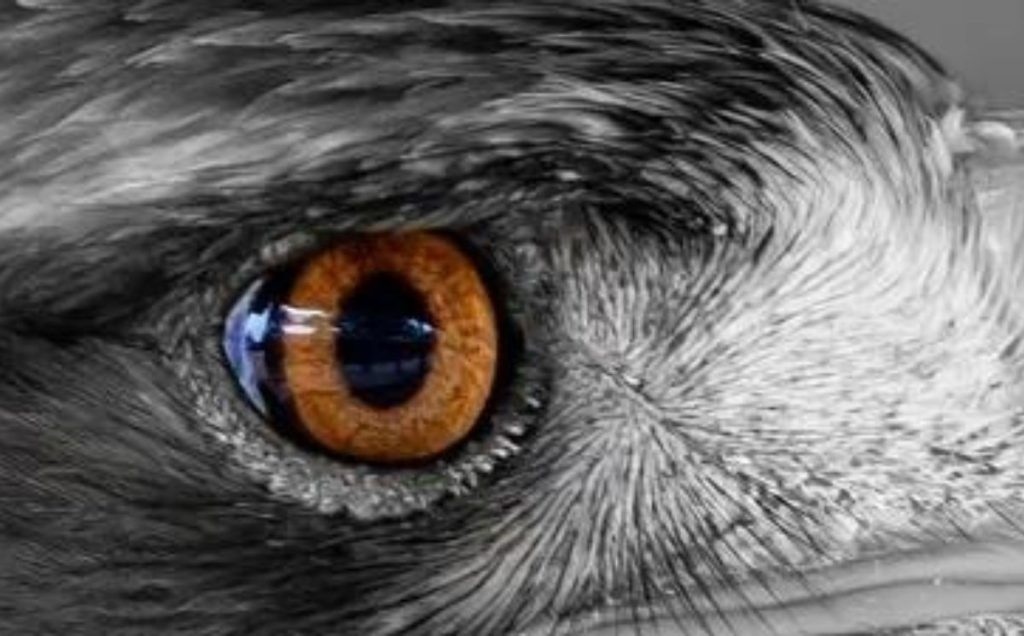
Introduction: The Inspiration Hidden in the Sky
Have you ever seen a hawk gliding hundreds of feet above the ground then suddenly dive with pinpoint accuracy to catch its prey? That breathtaking moment isn’t just nature’s drama; it’s precision engineering in motion. Hawks birds, along with other birds of prey like eagles and falcons, possess one of the most extraordinary visual systems in the animal kingdom.
What’s fascinating is that technology from drones to high-end cameras is now trying to do what hawks do effortlessly: see with incredible detail, speed, and depth. As an IT enthusiast who loves exploring how nature inspires innovation, I find the connection between hawk vision and modern optics nothing short of extraordinary.
Let’s explore how engineers and scientists are studying the structure of the eyes of hawks to design systems that mimic their visual acuity, binocular vision, and color sight giving us machines that can quite literally see the world like a hawk.
The Genius of Hawks Vision: Nature’s Optical Blueprint
Before diving into technology, it’s worth understanding what makes hawk vision so powerful in the first place.
Hawks belong to the order Accipitriformes, a group of birds of prey known for their razor-sharp eyesight. On average, a hawk can see about eight times more clearly than a human. That means if you can spot a mouse from 20 feet away, a hawk could see it from 160 feet while soaring in the sky.
Here’s what gives hawks that edge:
- Exceptional visual acuity: Their retinas are densely packed with photoreceptor cells, giving them unmatched clarity.
- Superior binocular vision: Hawks have both eyes positioned toward the front of their heads, allowing for precise depth perception essential for hunting.
- Advanced color sight: They can perceive a wider spectrum of colors, including ultraviolet light, which helps them track prey through subtle visual cues invisible to us.
In short, hawks have evolved the ultimate visual toolkit. And that’s exactly what tech innovators are trying to replicate.
Mimicking Nature: How Drones Are Learning to See Like Hawks
In the world of robotics and imaging, biomimicry designing technology inspired by nature is a growing trend. When it comes to drones, researchers are closely studying hawks to improve how unmanned aerial vehicles (UAVs) navigate and capture visual data.
1. Precision Vision Systems
Just as hawks use their binocular vision to focus on distant targets while in motion, drones now use multi-lens cameras and AI-powered tracking systems to achieve similar accuracy. For example, some high-end drones can lock onto moving objects (like cars or people) with hawk-like precision, adjusting focus and exposure dynamically.
2. Adaptive Depth and Focus
The way a hawk adjusts its gaze mid-flight inspired adaptive lens systems in drones. By mimicking the structure of the eyes especially how hawks focus between near and far objects rapidly engineers developed autofocus systems that respond to environmental changes in milliseconds.
3. Predictive Tracking AI
When a hawk hunts, it doesn’t just react it predicts. Using visual cues, it calculates the trajectory of its prey. Similarly, drones equipped with AI-based predictive tracking can anticipate movement patterns, allowing smoother and more accurate footage even in unpredictable conditions.
In essence, drones are becoming digital birds of prey not in the literal sense, but in the way they “see” and respond to the world.
Cameras with the Eyes of a Hawk
If you’ve ever wondered why some modern cameras capture detail so sharp it feels unreal you can thank hawks (indirectly).
1. Ultra-High Visual Acuity in Imaging Sensors
Just like hawks have dense retinal receptors, camera manufacturers are developing ultra-dense image sensors that mimic this biological design. These sensors capture fine details with incredible accuracy, giving photographers the ability to zoom in without losing clarity almost like a hawk spotting a rabbit from hundreds of feet up.
2. Dual-Lens and Binocular Systems
Professional-grade cameras and even smartphones now feature dual-lens systems that emulate the binocular vision of hawks and other birds of prey. This dual perspective helps the device understand depth, resulting in lifelike 3D imaging and advanced autofocus.
3. Enhanced Color and UV Detection
While human eyes can’t see ultraviolet light, hawks and now, some specialized cameras can. This feature has been integrated into scientific and security imaging technologies to detect UV patterns, reveal hidden details, or enhance environmental monitoring.
In other words, we’re not just copying hawks we’re learning from them to see beyond human limitations.
The Bigger Picture: Why Hawk Vision Inspires Innovation
It’s amazing how bird vision something evolved purely for survival now drives innovation across multiple industries. From aerial surveillance to filmmaking and even environmental research, the eagle eyesight and hawk vision models have paved the way for smarter, sharper, and more adaptive technology.
And it’s not just about machines seeing better it’s about efficiency, safety, and creativity. Drones with hawk-inspired optics can monitor forest fires with accuracy. Cameras modeled after the Sparrowhawk’s focus mechanism can capture wildlife in motion without blur.
Nature has already done the hard work evolution. Technology is just catching up.
Conclusion: Seeing the Future, the Hawk’s Way
Next time you watch a hawk soaring high above, remember you’re looking at one of the greatest designs nature ever produced. The fusion of hawk vision and human innovation is reshaping how we explore, capture, and understand the world.
As technology continues to advance, one thing is clear: we’re learning that the best ideas often come from the sky.
So, whether you’re an IT enthusiast, a photographer, or just someone fascinated by the natural world keep your eyes open. The next big breakthrough might just be flying above you.