Are you evaluating how fast production can begin after purchasing a pre-installed industrial butter processing system and wondering what commissioning timelines look like? For large-scale dairy production, speed to operation is often just as important as equipment quality.
This blog dives into installation readiness, testing, production validation, utility alignment, automation setup, and realistic commissioning timeframes when deploying an APV HCT3.5 Continuous butter processing line.
Before investing, understanding the complete commissioning journey can help buyers plan resources, align logistics, and minimize downtime while ensuring system performance meets production targets.
Understanding the System Scope Before Commissioning
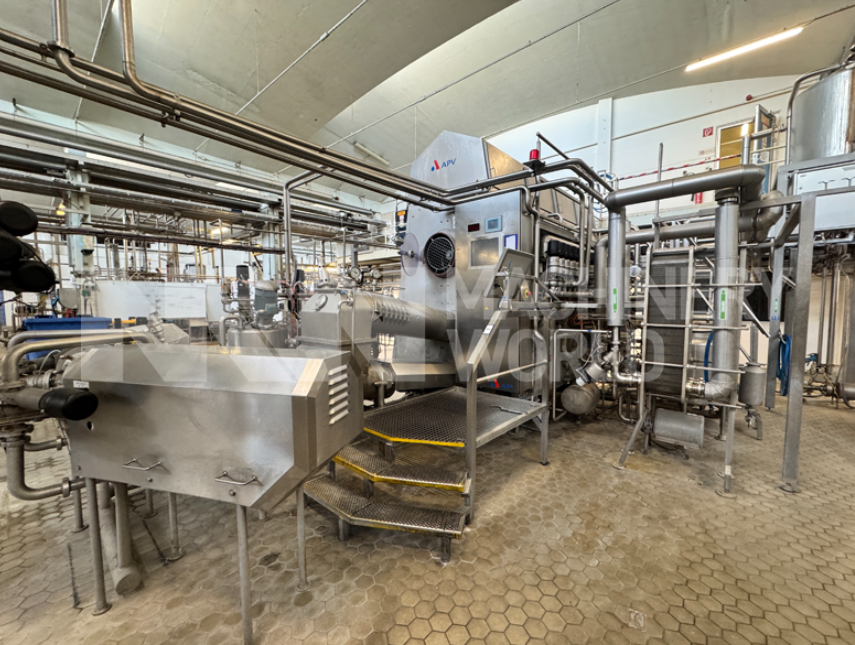
A realistic commissioning timeline begins with understanding system scale. The APV HCT3.5 Continuous line is not a single unit but a complete integrated production solution. It includes an APV continuous churn with an approximate butter output capability of 11,000 kilograms per hour based on a cream feed rate of about 25,000 liters per hour. This means the system handles everything from cream pre-processing through bulk butter packing.
This line also includes a cream buffer tank, an integrated vacuum pump, a lobe pump, a cream pre-heater, a buttermilk cooler, salt-brine dosing, moisture-control technology, a butter silo, and a twin-head bulk packer. Together, this makes the system ready for continuous industrial-scale production, which in turn influences installation scheduling and commissioning speed.
Mechanical Installation and Site Preparation
For a pre-installed unit, the mechanical setup is often faster. However, configuring utilities such as power, compressed air, water, cleaning systems, product feed lines, and hygienic drainage must be aligned with the layout. Facilities that have previously processed dairy or butter products are typically able to integrate the APV HCT3.5 Continuous line more quickly because their existing infrastructure aligns with the requirements.
Mechanical installation may take anywhere from a few days to several weeks, depending on the readiness, facility size, and integration needs.
Utility Testing and Automation Alignment
Once installed, commissioning proceeds to system checks. Utilities must be validated to ensure safety, consistent temperature control, and correct flow rates. The APV HCT3.5 manufacturing machine includes a PLC control panel with touch screen HMI and frequency inverters to manage pumps, dosing, churn speed, and product flow.
Automation calibration ensures consistency in butter quality and moisture levels. This process involves configuring sensors, programming filling weights, and verifying butter packing accuracy. Proper alignment ensures the equipment transitions from installation to semi-automated test runs quickly and reliably.
Dry Runs and Load-Free Testing
Before cream enters the line, test cycles verify that conveyors, pumps, valves, and the moisture control system function correctly. These dry tests provide an operational baseline and ensure the APV HCT3.5 manufacturing machine maintains steady consistency before dairy ingredients are introduced.
Every component, from butter pumps to box closers, must run smoothly before product testing starts.
First Production Trials and Product Calibration
Once dry tests are passed, cream is introduced in controlled quantities. Product trials calibrate moisture content, salt dosing accuracy, butter texture, temperature control, and churn speed. Because the APV HCT3.5 Continuous can deliver high volume extremely quickly, early trial tests are intentionally slow to refine settings and optimize yield.
Commissioning teams typically run several product batches to confirm repeatability and maintain standard butter quality across multiple hours of production.
Bulk Packing Commissioning
After butter consistency meets process requirements, attention shifts to the twin-head bulk packer. This packer is designed to fill 25-kilogram cartons and can achieve a throughput of up to 10,000 kilograms per hour. The APV HCT3.5 Continuous line integrates packing automation with butter production to ensure minimal manual handling.
Commissioning encompasses validation of fill accuracy, integration with box sealers, carton weight checks, and alignment of production rhythm.
Staff Training and Operational Certification
Commissioning is not complete until operators understand the system. The complexity of a processing line like the APV HCT3.5 Continuous requires structured operator training covering safety procedures, cleaning requirements, emergency stops, and operational adjustments. Trained operators ensure the system runs efficiently after the commissioning teams have left.
Documentation, SOP development, and internal certification support sustainable production.
Estimated Commissioning Timeframes
When conditions are optimal, commissioning a pre-installed industrial butter line can range between 2 and 8 weeks, depending on infrastructure, staff training, and production validation. The APV HCT3.5 continuous manufacturing machine was designed for high-volume production, so once operational alignment is complete, scalability is immediate.
Facilities entering large-scale butter production for the first time often allow additional weeks for product development and operator training.
Long-Term Operational Benefits After Commissioning
Once commissioning is complete, the APV HCT3.5 Continuous delivers substantial operational benefits. Continuous processing eliminates downtime between batches, and automated moisture control yields consistent quality. Integrated packing increases throughput efficiency, while centralized automation minimizes operator error.
The system is ideal for producers seeking dependable, industrial-scale butter output.
Cleaning and Hygienic Validation Before Full Production
Before final sign off, hygienic validation is essential, especially for dairy facilities. The APV HCT3.5 Continuous line must undergo CIP testing to ensure all processing pathways, heat exchangers, dosing systems, and butter transfer lines meet sanitation requirements. Cleaning validation encompasses chemical concentration checks, temperature compliance, cycle repeatability, and documentation to ensure compliance with food safety certification guidelines. Proper sanitation validation helps avoid contamination risks and ensures reliable shelf stability once production begins.
Safety and Compliance Sign-Off
During commissioning, safety systems must be verified to ensure compliance with regulatory requirements. The APV HCT3.5 continuous manufacturing machine includes automation controls, guarding, lockout points, and emergency stops. Ensuring the complete line complies with workplace safety regulations and food-grade processing standards is critical. This step may also include quality audits, facility compliance documentation, line labeling, and verification testing to ensure operators and maintenance teams can work safely throughout full-scale production.
Performance Benchmarking and Efficiency Testing
Once stable production is achieved, the next step is performance benchmarking. With an output potential of roughly 11,000 kilograms of butter per hour, it is essential to measure efficiency against operational targets. This phase verifies throughput, moisture stability, salt distribution accuracy, butter texture consistency, packaging speed, and waste output. Evaluating these metrics helps establish performance baselines and identify opportunities for improvement. When the APV HCT3.5 continuous manufacturing machine consistently achieves the expected benchmarks, the line is ready for formal handover.
Conclusion
Commissioning a pre-installed APV HCT3.5 continuous manufacturing machine butter line can be efficient and structured when site readiness, utilities, staff capability, and planning align. While timelines vary depending on facility setup and operational goals, buyers benefit from a predictable commissioning process and a system engineered for rapid transition from delivery to high-volume production. Once operational, the line supports consistent butter quality, strong throughput, and scalable performance, making it a strategic investment for dairy processors seeking high-capacity output with streamlined automation.