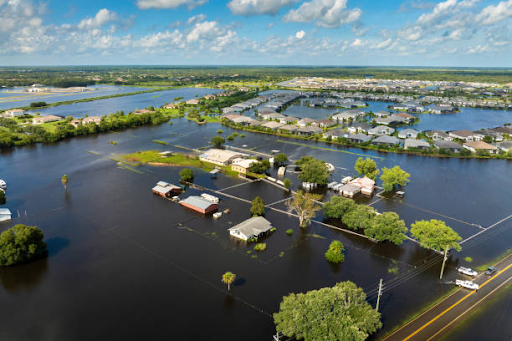
Climate isn’t acting like it used to. Storms are heavier, the water rises faster, and folks who used to shrug at “flood season” now keep one eye on the sky year-round. And because of all this mess, the way florida flood insurance companies operate is changing, fast. Some of it good. Some of it overdue. But all of it necessary.
This isn’t one of those neat, tidy topics with a simple arc. The landscape’s shifting under everyone’s feet — homeowners, insurers, the government — and people are trying to keep up without tripping over the next big storm. So let’s walk through what’s actually happening, in plain English.
Why Climate Risks Are Getting Harder to Predict
For a long time, insurers relied on historical data. “This neighborhood flooded once every 30 years.” “This town sits outside the major flood zone.” That sort of thing. Logical enough back then. But now? History doesn’t mean what it used to.
You can have a “low-risk zone” go underwater twice in five years. You can have homes miles inland take on water from a slow-moving storm that just parks itself overhead. Insurers are realizing the old models don’t cut it. They’re not even close.
So companies are rebuilding their risk maps. Some doing it quietly, some loudly enough that homeowners panic a little. It’s messy work. But you can’t insure the future using yesterday’s weather patterns. Not anymore.
New Tech Is Rewriting the Playbook
Better Tools, Sharper Predictions
Flood insurance companies aren’t just guessing with clipboards anymore. They’re pulling from satellites, real-time rainfall sensors, AI-driven flood simulators… the whole modern toolkit. And while “more tech” isn’t always a magic fix, it does help them spot trouble earlier.
Some companies can now calculate how a specific street drains during heavy rainfall. Not just the city. Not even the neighborhood. The exact street. That’s a big deal for homeowners who kept getting clobbered by blanket pricing before.
More Personalized Risk Profiles
The days of “everyone pays the same” are fading. Insurers are moving toward hyper-specific pricing. Sure, that makes a few people groan, because it can mean higher premiums in risky areas. But it also rewards the folks who invest in elevation, barriers, sump pumps, or other mitigation upgrades.
Basically, the system’s starting to behave less like a blunt tool and more like something with a bit of finesse.
Homeowners Are Asking Better Questions
People aren’t just signing policies blind anymore. They want to know why their premium went up. They want to know what counts as a flood. They want to know if the insurer will actually show up after a storm — or if they’ll start nitpicking every little detail in the claim.
Some of this shift came from reality checks. After the last few nasty seasons, folks saw certain companies struggle during recovery phases. And that shakes trust. So now, transparency’s becoming a selling point. Insurers that explain their models, offer clearer guidance, and provide actual human support (instead of 10-layer phone menus) are winning more customers.
Government Programs Are Pushing Reforms, Too
Flood insurance isn’t just private companies. You’ve also got federal programs, state-level incentives, and disaster funding that interacts with the private sector in weird and sometimes frustrating ways.
But lately, there’s a push — especially in coastal states — to update old rules so they reflect what’s happening today, not what happened in the ’80s. Risk ratings, building codes, claim processes, everything’s being rewritten bit by bit.
It’s slow. Bureaucracy always is. But it’s moving.
The Middle of the Road Problem: Costs Keep Rising
This is the part nobody loves talking about. As climate risks go up, so do premiums. Insurers aren’t charities (even though some pretend), and when flood claims hit record highs year after year, something’s gotta give.
Homeowners call it “price gouging.” Insurers call it “maintaining solvency.” The truth is somewhere in the messy middle. Real risk costs money. And with storms dragging more water inland, flooding in places that didn’t used to flood, the financial math is shifting.
Right in the middle of all that, a lot of folks start shopping around for a flooding insurance quote that won’t blow up their budget. And strangely enough, competition is making some insurers innovate faster. If they can beat a rival with smarter tools or clearer coverage, they will.
Adaptation Isn’t Just for Insurers — It’s for Homeowners Too
Flood insurance companies can do all the modeling and forecasting they want, but at the end of the day, the actual buildings still sit in the path of whatever storm decides to pull through. So there’s a growing push for “resilience upgrades.”
Stuff like:
- Elevating critical utilities
- Installing flood vents
- Reinforcing basement entryways
- Landscaping that helps redirect water, not trap it
These aren’t fancy add-ons. They’re survival tactics. And some insurers now offer lower premiums or incentives if homeowners invest in them. A win-win, when it works.
The Future of Flood Insurance Looks… Different
Here’s the blunt truth. Flood insurance will never go back to the old days. Not in Florida. Not anywhere else. The marketplace is shifting from reactive to proactive — because it has to. Companies that adapt will make it. The ones ignoring the warning signs? They won’t last long. Climate risk is a steamroller. And honestly, most people just want a straight answer: “Will my home be covered when the water comes?” That’s it. That’s the whole point of the industry. The companies that understand that — and build their policies around clarity instead of confusion — will come out ahead, especially when someone is trying to get a flooding insurance quote they can actually rely on.
Conclusion: Changing Risks Demand Smarter (Not Scarier) Insurance
Flood insurance is in a transition period, no question. Weather’s getting meaner, predictions are harder, and the financial impact is heavier. Florida flood insurance companies and insurers nationwide are scrambling to keep pace, using new tech, new models, and sometimes brand-new rules.
But it’s not all doom and gloom. More data means better protection. Better mapping means smarter pricing. And better communication means homeowners aren’t wandering around in the dark.
The world’s shifting. Insurance companies are shifting with it. And if they keep adapting — honestly, openly, and with the same urgency that storms now bring — then homeowners will be better off for it. In the long run, that’s the whole point.