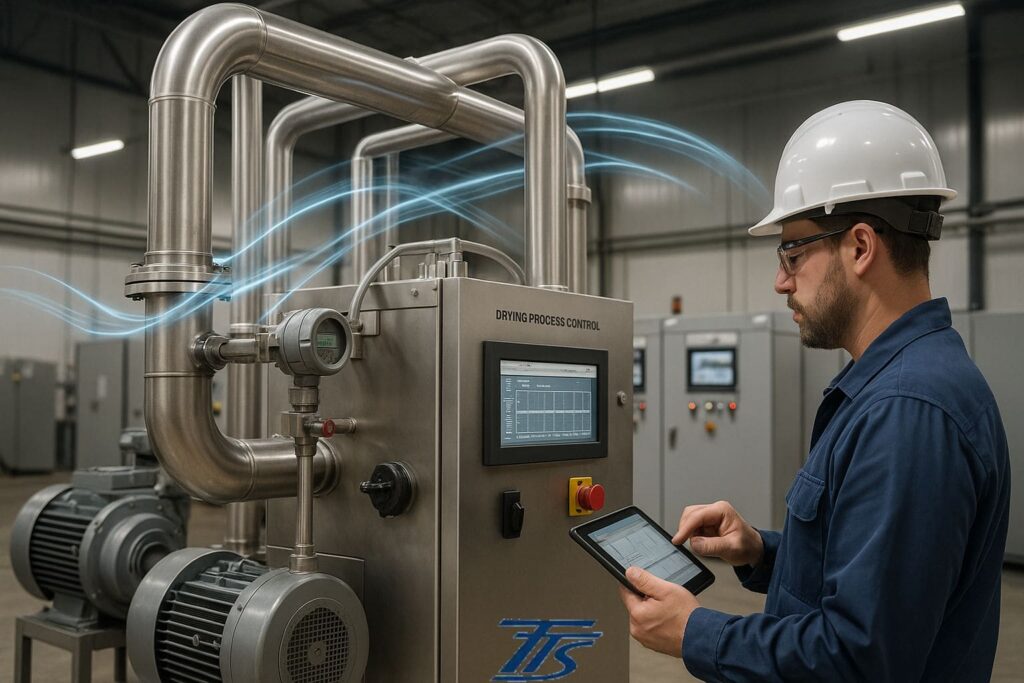
Pressure is one of the most critical parameters monitored in industrial environments. From pipeline operations and chemical production to boiler management and water treatment, pressure changes reveal essential information about system performance, safety, and process stability. A minor fluctuation can signal equipment stress, product variation, or potential failure. For this reason, industries rely on pressure transmitters high-accuracy devices engineered to convert physical pressure into a precise electrical signal for monitoring and automated control.
Pressure transmitters have evolved significantly over the last decade, becoming smarter, more stable, and more adaptable to extreme environments. Today, they form the backbone of industrial automation and are indispensable for reliability, safety, and efficiency across a wide range of applications.
What Is a Pressure Transmitter?
A pressure transmitter is an electronic instrument that measures pressure and outputs a proportional electrical signal—typically 4–20 mA, HART®, Modbus®, Profibus PA, or Fieldbus™. These signals are received by PLCs, DCS systems, or local control panels, enabling operators to observe real-time process conditions and make fast, informed decisions.
Pressure transmitters measure:
-
Gauge Pressure (GP) — pressure relative to atmospheric pressure
-
Absolute Pressure (AP) — pressure relative to a perfect vacuum
-
Differential Pressure (DP) — difference between two pressure points
By using these inputs, transmitters also support:
-
Flow measurement
-
Level measurement
-
Density calculations
-
Filter and heat exchanger monitoring
-
Critical process control loops
This versatility is one of the reasons pressure transmitters are among the most widely used industrial instruments.
How Pressure Transmitters Work
While different manufacturers use unique designs, the working principle is largely the same. Most pressure transmitters rely on a flexible diaphragm connected to a sensing element.
Basic operating sequence:
-
Process pressure is applied to the diaphragm.
-
The diaphragm deflects in response to the applied pressure.
-
A sensing element—piezoresistive, strain gauge, capacitive, or MEMS—converts this mechanical movement into an electrical signal.
-
Internal electronics amplify, linearize, and compensate the signal to ensure accuracy despite temperature and environmental changes.
-
The transmitter sends a clean, accurate output to the plant’s control system.
Advanced pressure transmitters add layers of intelligence through self-diagnostics, drift correction, impulse line monitoring, and process noise analysis.
Types of Pressure Transmitters and Their Uses
1. Gauge Pressure Transmitters
Measure pressure relative to atmospheric pressure.
Used in pumps, compressors, cooling lines, filtration systems, and hydraulic equipment.
2. Absolute Pressure Transmitters
Measure pressure relative to a vacuum.
Critical for vacuum systems, distillation units, chemical reactors, and altitude-independent processes.
3. Differential Pressure (DP) Transmitters
Measure the difference between two pressure points.
Widely used for:
-
Flow measurement (with orifice plates, venturi tubes, wedges, pitot tubes)
-
Level measurement in closed tanks
-
Filter monitoring
-
Boiler drum level
-
Heat exchanger performance
4. Remote Seal Pressure Transmitters
Use diaphragm seals to isolate the transmitter from extreme media, high temperatures, or sanitary environments.
Ideal for corrosive chemicals, viscous fluids, slurries, and hygienic applications.
5. Multivariable Transmitters
Combine DP, static pressure, and temperature measurement to calculate mass flow with high accuracy—especially useful for gas and steam.
Why Industries Rely on Pressure Transmitters
✔ Process Safety
Pressure is a primary indicator of system health. Transmitters help prevent:
-
Overpressure conditions
-
Pipeline ruptures
-
Boiler accidents
-
Reactor instability
-
Pump cavitation
Real-time pressure feedback supports shutdown systems, alarms, and protective controls.
✔ Operational Efficiency
Accurate pressure measurement helps optimize flow rates, pump performance, chemical dosing, and energy consumption.
✔ Product Quality
Stable pressure maintains consistent reaction rates, mixing behavior, and filtration performance, ensuring uniform product output.
✔ Predictive Maintenance
Smart diagnostics detect early signs of problems such as:
-
Impulse line blockage
-
Sensor wear
-
Process noise anomalies
-
Drift or calibration shift
This reduces downtime and maintenance costs.
✔ Integration with Modern Automation
Digital communication protocols allow transmitters to integrate seamlessly with:
-
Smart factories
-
Plant-wide monitoring
-
SCADA visualization
-
Remote operations
Pressure transmitters supply accurate data that drives decision-making across the plant.
Industrial Applications of Pressure Transmitters
Oil & Gas
-
Wellhead monitoring
-
Pipeline pressure control
-
Separator and scrubber systems
-
DP-based flow measurement
-
Gas dehydration and compression
Chemical Processing
-
Reactor pressure stabilization
-
Corrosive chemical handling
-
Distillation column monitoring
-
Steam and heating system control
Power Generation
-
Boiler drum level
-
Steam pressure
-
Feedwater pressure
-
Condenser vacuum measurement
Water & Wastewater
-
Distribution pressure
-
Pump discharge monitoring
-
Filtration and membrane systems
-
Sludge pumping
Food & Beverage
-
Sanitary tank pressure
-
CIP (clean-in-place) system monitoring
-
Beverage filling systems
Pharmaceutical Manufacturing
-
Sterile process pressure
-
Bioreactor and fermenter operations
-
High-purity water system monitoring
General Manufacturing
-
Hydraulic and pneumatic pressure
-
Compressed air systems
-
HVAC systems
-
Industrial machinery monitoring
Advantages of Modern Pressure Transmitters
1. High Accuracy and Stability
Premium transmitters offer accuracy up to ±0.025%, ensuring confidence in critical applications.
2. Rugged Construction
Engineered with materials such as stainless steel, Hastelloy, titanium, and ceramic to handle harsh and corrosive environments.
3. Wide Operating Range
Capable of measuring vacuum pressures to extremely high pressures above 10,000 psi.
4. Intelligent Electronics
Built-in diagnostics enhance system reliability and support predictive maintenance.
5. Versatile Installation Options
Available in manifold mount, direct mount, remote seal, and inline configurations.
6. Long Life and Low Maintenance
Advanced sensor designs minimize drift, reducing calibration frequency.
How to Select the Right Pressure Transmitter
Choosing the correct pressure transmitter involves evaluating:
-
Type of pressure needed (GP/AP/DP)
-
Fluid characteristics (clean, viscous, corrosive)
-
Temperature and pressure limits
-
Accuracy and turndown ratio
-
Communication protocol
-
Material compatibility
-
Installation environment (hazardous area, sanitary zone, outdoor conditions)
-
Need for remote seals or manifolds
Proper selection ensures accuracy, reliability, and long-term performance.
Final Thoughts
Pressure transmitters are essential instruments for maintaining the safety, efficiency, and reliability of industrial processes. With their ability to provide accurate, stable, and real-time data, they empower modern plants to operate intelligently, reduce risk, optimize performance, and maintain consistent product quality.
From monitoring high-pressure pipelines to controlling delicate sanitary processes, pressure transmitters remain the backbone of industrial measurement. As industries advance toward smarter systems and automated operations, their importance continues to grow.