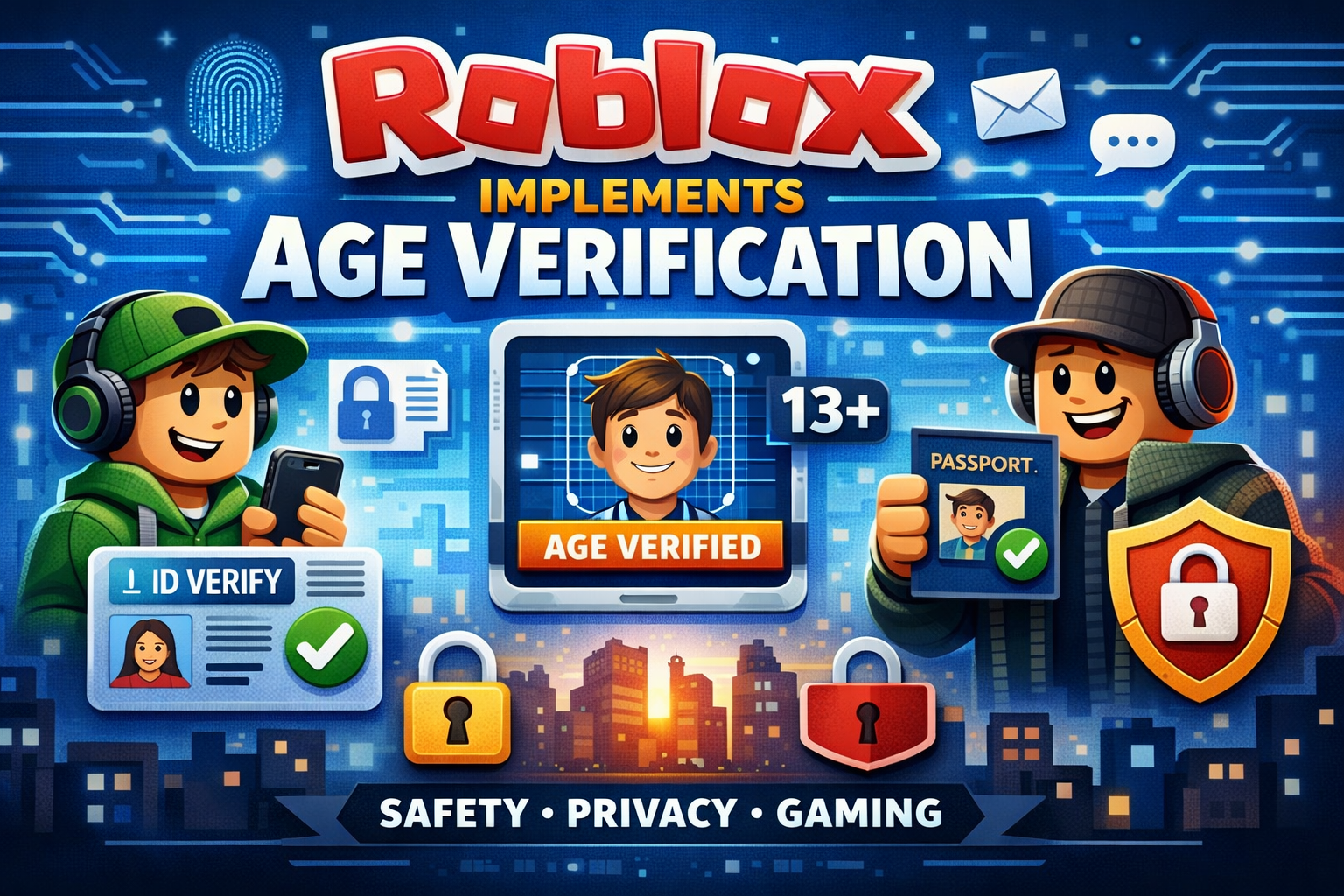
Online gaming platforms are evolving rapidly, not just in terms of graphics and gameplay, but also in how they handle user safety. Roblox, one of the world’s largest multiplayer gaming ecosystems, has taken a major step in this direction by introducing structured age-verification systems for its users. This move reflects a broader shift across the gaming industry—one that prioritizes child safety, responsible interaction, and controlled digital environments.
Rather than relying solely on self-declared ages, Roblox is moving toward more reliable verification methods to ensure that players interact within appropriate age groups. This change could reshape how online gaming communities operate, particularly those with large numbers of young users.
Why Age Verification Is Becoming Necessary in Online Games
Gaming platforms today function as social spaces. Players chat, collaborate, trade, and build virtual friendships. While this enhances engagement, it also increases risks—especially for children.
Self-reported age systems have long been a weak point in online safety. Young users can easily enter incorrect birthdates, granting them access to features intended for older audiences. This creates exposure to inappropriate language, mature content, or unwanted interactions.
By introducing age verification, Roblox aims to reduce these risks and create a more structured social environment where age-appropriate interactions are the default, not the exception.
How Roblox’s Age Verification System Works
Roblox’s age-verification approach focuses on accuracy while offering users multiple options. Instead of enforcing a single method, the platform allows players to verify their age using different techniques, depending on availability and preference.
One method uses AI-powered facial age estimation. Users are asked to take a short video selfie, which is analyzed to estimate their age range. The system does not attempt to identify the individual—it simply assigns the account to an age category.
For older users, document-based verification is also available. This involves submitting a government-issued ID to confirm age eligibility. Once verified, the user is placed into a defined age bracket that determines access to certain social and communication features.
Age Groups and Communication Limits
After verification, users are grouped into age ranges such as children, teens, and adults. These groupings directly affect how players can communicate on the platform.
For example:
-
Younger users may have restricted chat access
-
Teens can communicate mainly with peers in nearby age ranges
-
Adults cannot freely initiate conversations with much younger players
This layered approach reduces the likelihood of inappropriate contact while still allowing meaningful social interaction within safe boundaries.
Impact on Child Safety and Moderation
Age verification is only one part of Roblox’s broader safety ecosystem. The platform combines this system with active moderation, reporting tools, and parental controls.
Unlike encrypted messaging apps, Roblox maintains visibility into in-game chats. This allows automated systems and human moderators to identify harmful behavior, inappropriate language, or suspicious activity in real time.
Parents also benefit from clearer oversight. Verified age categories make it easier to apply parental controls, set communication limits, and understand what features a child can access. This transparency helps families make informed decisions about online play.
Privacy and Tech Considerations
While age-verification systems play a crucial role in protecting younger players from harmful interactions, maintaining user privacy remains equally important. For additional advice on how to keep children safe in virtual environments, explore our detailed guide on Online Gaming Safety for Kids.
Roblox states that facial data used for age estimation is deleted immediately after processing and is not stored long-term. However, the use of biometric technology naturally raises questions about data security, accuracy, and user consent.
AI-based age estimation can occasionally misclassify users, leading to restricted access or incorrect age grouping. This highlights the importance of offering alternative verification methods and transparent appeal processes.
Balancing safety with privacy is a challenge every modern digital platform faces, and Roblox’s approach reflects an ongoing effort rather than a final solution.
Community Response and User Experience
Player reactions to age verification have been mixed. Many parents and safety advocates welcome the change, viewing it as a long-overdue step toward protecting minors online.
Some users, however, express concerns about:
-
Verification errors
-
Reduced communication flexibility
-
Extra steps during account setup
Despite these challenges, most feedback suggests that the system improves overall trust in the platform, especially among families and younger players.
What This Means for the Future of Online Gaming
Roblox’s age-verification rollout signals a broader industry trend. As regulators, parents, and users demand safer digital environments, more gaming platforms may adopt similar systems.
Future developments could include:
-
Smarter AI moderation tools
-
More granular parental control options
-
Industry-wide safety standards for child-focused platforms
Age verification may soon become a standard feature rather than an exception—especially for games that function as social hubs.
Final Thoughts
Roblox’s decision to implement structured age verification reflects the changing responsibilities of online gaming platforms. Games are no longer just entertainment; they are digital communities where safety, privacy, and responsible interaction matter deeply.
While no system is perfect, age verification represents a meaningful step toward creating safer, more age-appropriate online experiences. As technology evolves, platforms that successfully balance security with user trust will define the future of online gaming.
Also Read: Fortnite Weapons Explained – A Simple Guide to All Guns for Beginners