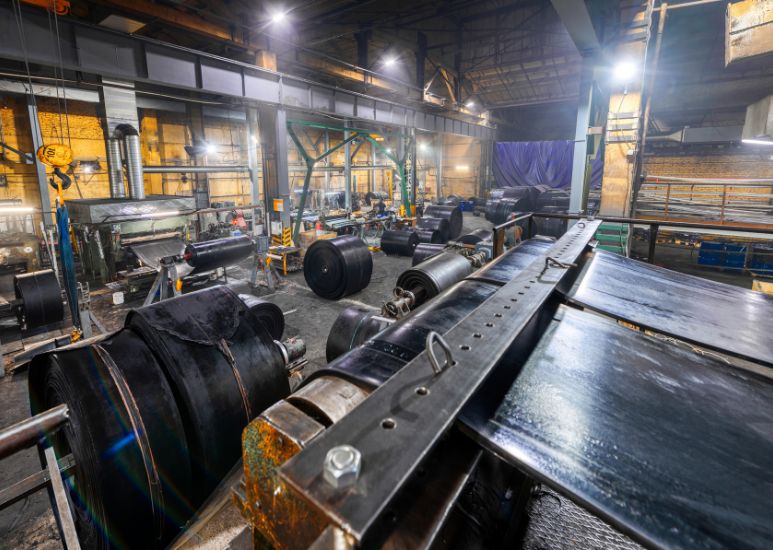
In industrial manufacturing, performance is engineered—not assumed. When it comes to industrial rubber components, achieving consistent quality, durability, and reliability depends on more than just advanced machinery or precise mould design. At the heart of high-performance rubber moulding lies the expertise of skilled rubber compounders.
Rubber compounders play a critical role in transforming raw rubber into application-specific materials that perform under demanding conditions. Their expertise directly influences how rubber behaves during moulding and how it performs throughout its service life.
Understanding the Role of Rubber Compounders
Rubber compounders are specialists responsible for formulating rubber compounds to meet precise performance requirements. They combine base polymers with additives such as fillers, curing agents, accelerators, stabilisers, and plasticisers. Each formulation is carefully balanced to deliver specific properties.
In industrial rubber applications, compounding is never generic. Different industries and operating environments demand different characteristics—flexibility, heat resistance, abrasion resistance, or chemical stability. Rubber compounders use technical knowledge and experience to design formulations that meet these exact needs.
Without expert compounding, even the most advanced rubber moulding processes cannot consistently produce high-quality components.
Custom Compounding for Industrial Rubber Applications
One of the key contributions of rubber compounders is custom formulation. Industrial applications vary widely, and off-the-shelf compounds often fail to deliver optimal performance.
For example:
- Automotive components require resistance to heat, oil, and vibration
- Manufacturing equipment components need abrasion resistance and flexibility
- Infrastructure applications demand long-term durability and weather resistance
Expert rubber compounders analyse operating conditions and tailor formulations accordingly. This ensures that rubber moulding produces components optimised for their specific function rather than relying on compromise solutions.
Custom compounding allows manufacturers to meet performance targets while improving product lifespan and reliability.
How Compounding Affects Rubber Moulding Performance
The behaviour of rubber during moulding is directly influenced by the compound formulation. Flow characteristics, cure rate, and release properties are all controlled at the compounding stage.
Well-designed compounds flow evenly into mould cavities, cure consistently, and release cleanly from moulds. This reduces defects such as voids, surface imperfections, or uneven hardness.
In contrast, poorly compounded rubber can cause moulding issues, increase scrap rates, and slow production. Skilled rubber compounders understand how to balance compound properties to support efficient rubber moulding operations.
For manufacturers of industrial rubber, this efficiency translates into lower production costs and more consistent output.
Material Testing and Quality Control
High-performance industrial rubber requires strict quality control. Rubber compounders play a key role in testing and validation to ensure consistency and performance.
Material testing typically includes:
- Viscosity and flow analysis
- Cure characteristics and scorch safety
- Tensile strength and elongation
- Hardness and compression set
These tests ensure that each batch meets specification before it reaches the moulding stage. For rubber moulding operations, consistent compound quality reduces the need for process adjustments and minimises production variability.
Reliable testing is essential for industrial rubber applications where performance failures can lead to costly downtime or safety risks.
Collaboration Between Compounders and Moulders
High-quality industrial rubber products are rarely the result of isolated processes. Instead, they come from collaboration between rubber compounders and moulders.
Compounders work closely with moulders to align material behaviour with tooling design and processing conditions. Adjustments to compound flow, cure speed, or elasticity may be made to suit specific mould geometries or production methods.
This collaboration allows manufacturers to:
- Improve mould filling and curing efficiency
- Enhance surface finish and dimensional accuracy
- Reduce waste and cycle times
When rubber compounders and moulders work together, the result is a more efficient and predictable rubber moulding process.
Enhancing Performance Characteristics Through Compounding
The performance of industrial rubber components depends on multiple properties, all of which are influenced by compounding.
- Durability: Reinforcing fillers improve wear and tear resistance
- Flexibility: Plasticisers and polymer selection control elasticity
- Heat resistance: Special curing systems and stabilisers protect against thermal degradation
- Chemical resistance: Polymer compatibility ensures resistance to oils, fuels, and solvents
Rubber compounders balance these properties based on application demands. This ensures moulded components perform reliably throughout their service life.
Supporting Innovation in Industrial Rubber Manufacturing
As industries evolve, so do performance expectations. Rubber compounders support innovation by developing new formulations that meet emerging requirements such as higher temperatures, stricter environmental standards, or improved sustainability.
Advanced compounding techniques allow manufacturers to adapt rubber moulding processes for new materials and applications. This flexibility helps companies remain competitive in fast-changing industrial markets.
For manufacturers of industrial rubber, access to skilled rubber compounders is a key driver of innovation and product differentiation.
Consistency and Long-Term Reliability
Consistency is critical in industrial production. Variations in rubber properties can cause unpredictable moulding behaviour and inconsistent end-product performance.
Experienced rubber compounders implement controlled production systems and strict documentation to ensure repeatability. This consistency supports long-term manufacturing stability and builds trust with customers who rely on dependable industrial rubber components.
Reliable compounding reduces risk and supports long-term supply partnerships.
Why Expert Rubber Compounders Matter
In rubber moulding, success is defined by performance, consistency, and efficiency. Rubber compounders influence all three.
By tailoring formulations, conducting rigorous testing, and collaborating closely with moulders, expert compounders ensure industrial rubber products meet exact specifications and perform under demanding conditions.
Manufacturers who prioritise compounding expertise gain a clear advantage in quality, reliability, and operational efficiency.
Conclusion
While rubber moulding shapes the final product, it is the expertise of rubber compounders that defines how industrial rubber components perform. From custom formulations and material testing to close collaboration with moulders, compounders play a central role in delivering high-performance rubber products.
In industrial applications where precision and reliability matter, expert rubber compounders are not just contributors—they are essential partners in manufacturing success.