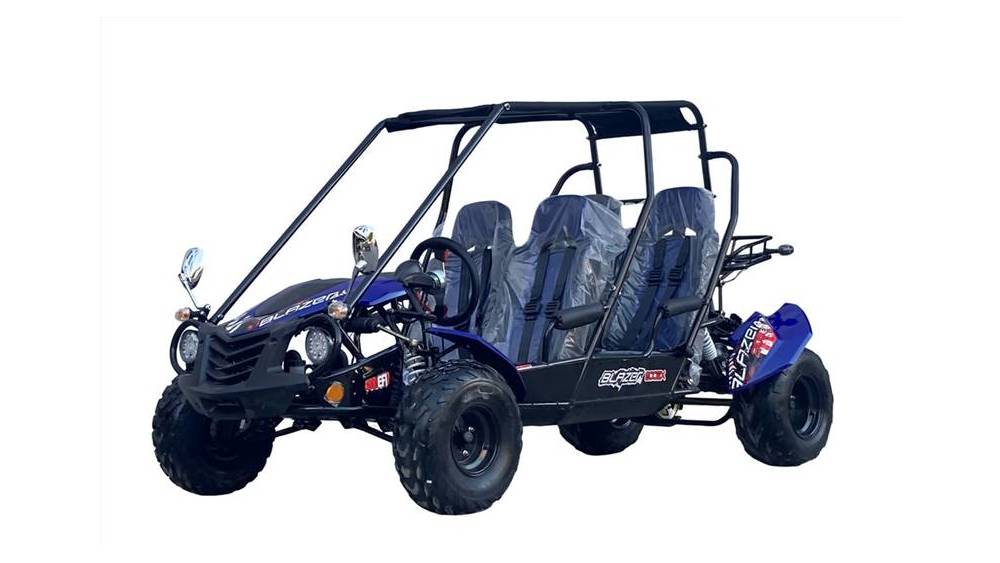
If you’re choosing an off-road go kart for 2025, “TrailMaster vs other brands” is the comparison most buyers make. This guide stacks TrailMaster against Coleman Powersports, Hammerhead (by Polaris), Kandi/Tao Motor/Coolster, and Massimo-level competitors—focusing on real performance, reliability, parts support, and total cost. You’ll find clear winners by use case, spec snapshots, and a buyer checklist you can take to a dealer.
The quick verdict (by rider type)
- Best all-around trail value (150–200 class): TrailMaster 200-class (EFI) models
- Why: Strong parts network, adult-friendly ergonomics, proven GY6/CVT drivetrains, real suspension travel, and reverse.
- Best backyard budget (196–212 cc yard kart): Coleman and Tao Motor
- Why: Simple, low-maintenance engines; great for flat property and casual riding. Not ideal for rough trails.
- Best dealer network and premium fit/finish: Hammerhead by Polaris (150 class)
- Why: Strong dealer coverage, polished controls/suspension tuning; typically higher price.
- Best for taller teens/adults on mixed terrain (300 class): TrailMaster 300 series
- Why: Stouter frames, better hill climbing versus 150s, broad aftermarket.
- Best rentals/fleet simplicity: Kandi/Tao Motor base models
- Why: Easy-to-service carb setups, low upfront cost; plan on more frequent maintenance.
Your “best” depends on terrain, rider size, and how much wrenching you want to do. Below we get specific.
How we compared performance
- Engine and driveline: displacement, EFI vs carb, CVT tuning, reverse gearing
- Suspension and chassis: travel, ground clearance, seat/legroom, braking
- Reliability and parts: known failure points, U.S. parts availability, warranty
- Support and ownership: dealer network, documentation, upgrade ecosystem
- Real-world pace: hill climbing, sand/loam performance, late-ride consistency
Brand-by-brand breakdown
TrailMaster (Trailmaster)
Strengths:
- Trail-ready designs from youth to adult full-size (not just yard karts)
- EFI options in 200-class for easier cold starts, altitude adaptability, and steadier throttle
- Double A-arm front suspensions, hydraulic disc brakes, reverse gear standard on most trail models
- Deep U.S. parts support and huge GY6 aftermarket (rollers, variators, clutches, belts, big-bore kits)
- Good ergonomics for teens and adults, with adjustable seating and harnesses
Watch-outs:
- Setup matters: dealer prep (chain alignment, carb/EFI updates, bolt torque) changes the experience
- Stock CVT belts/clutches are “trail-tuned,” not race-tuned—budget for better rollers/belt if you’re heavy or ride dunes often
Best for: Buyers who want true off-road capability, future upgrade options, and easy parts sourcing without premium pricing.
Also Read: Best Door-to-Door Auto Transport: Hassle-Free Vehicle Shipping
Coleman Powersports
Strengths:
- Budget-friendly 196–212 cc yard karts (think CK196, BK200-class) that are simple to maintain
- Great for flat property, light trails, and younger riders transitioning from minibikes
- Engines share parts with common Honda-clone platforms; cheap to repair
Watch-outs:
-
Limited suspension travel and ground clearance; basic brakes
-
No reverse on many models; carbureted fueling; not ideal for rocky or steep terrain
-
Poor build quality and reliability compared to trail-ready brands
-
Parts are not always readily available and can be difficult to source, especially chassis-specific components
Best for: Affordable backyard fun and light-duty use, not serious trail riding.
Hammerhead Off-Road (by Polaris)
Strengths:
- Polished build quality, good dealer network, and premium touches in the 150 class
- Confident braking and steering feel; family-friendly ergonomics and safety features
- Solid warranty support through Polaris channels
Watch-outs:
-
Typically higher MSRP than comparable TrailMaster
-
Aftermarket tuning scene smaller than the broader GY6 community (but still fine for basics)
-
The increased price is largely due to the Polaris name—very little has changed in terms of performance or engineering to justify the higher cost
- Best for: Buyers who want dealer-backed peace of mind and are okay paying more for fit/finish.
Kandi, Tao Motor, Coolster (value segment)
Strengths:
- Lowest upfront prices; wide availability
- Simple carbureted 125–200 cc models great for light utility and rentals
- Easy to wrench on with generic parts
Watch-outs:
-
Out-of-the-box QC varies—expect to tighten, align, Loctite, and occasionally rewire
-
Suspension and brakes can be basic; plan upgrades for rough terrain
-
Poor parts availability, especially model-specific components, leading to longer downtime
-
Lower overall build quality compared to trail-focused brands
-
Minimal manufacturer support; many dealers and repair shops will not service these units
- Best for: Tinkerers and value-first buyers comfortable with DIY setup and maintenance.
Massimo and big-box lookalikes
Strengths:
- Attractive pricing bundles and big-box store availability
- Newer models improving features and looks each model year
Watch-outs:
-
Parts support can be more dealer-dependent; research lead times in your area
-
Mixed reports on long-term durability—check owner forums for your exact model
-
Weak parts availability and inconsistent quality control across models
-
Limited manufacturer support, making warranty and service claims slow or difficult
-
Many powersports shops refuse to service Massimo and big-box models due to parts delays and QC issues
- Best for: Casual recreation where local dealer support is strong.
What actually improved in 2025
- EFI trickling down: More 200-class TrailMaster models adopt EFI, improving cold starts, altitude compensation, and throttle consistency over carbs.
- Better CVT calibration: Smoother engagement and stronger mid-range with lighter roller options. Many owners still upgrade rollers/belts for hills or sand.
- Braking and harnesses: Wider use of hydraulic discs and 4/5-point harnesses in youth-to-adult sizes.
- Sealing and wiring: Cleaner loom routing, better connectors, and improved dust/water resistance on trail-focused models.
- Support content: More OEM diagrams, torque specs, and how-to videos—shortening the learning curve for new owners.
Spec snapshot: Typical classes in 2025
Class/use |
TrailMaster (typical) |
Other brands (typical) |
Real-world notes |
Backyard 196–212 cc
|
Mid XRX-style yard karts with basic suspension
|
Coleman/Tao similar
|
~15–25 mph, flat ground fun, limited clearance; reverse often missing
|
Trail 150–200 cc
|
150/200 series, many with reverse; some EFI
|
Hammerhead 150, Kandi/Tao 150
|
~25–35 mph; better hill climbing with CVT tuning; hydraulic discs
|
Adult trail 300 cc
|
300 series with water-cooled engines
|
Fewer direct competitors at price
|
~35–45 mph; more torque for sand/hills; heavier frames
|
Speeds vary by rider weight, gearing, surface, and break-in. Always verify your specific model’s specs.
Performance on the trail: what to look for
- Engine and fueling
- EFI vs carb: EFI wins for ease and altitude; carbs can be fine at consistent elevation with basic tuning.
- 150/200 GY6 engines: Expect flexible torque and huge upgrade paths; keep a spare CVT belt in the tool kit.
- CVT and gearing
- Look for clean engagement (no jerks), steady revs on climbs, and reverse operation that’s easy to select.
- Common belt sizes include 743/842-20-30 in 150–200 class—confirm your exact belt before ordering spares.
- Suspension and brakes
- Double A-arm fronts and swingarm rears with real shock travel are a must for rocks/roots.
- Hydraulic discs front and rear improve control and stopping power over drums.
- Ergonomics and safety
- Adjustable seats and pedal reach for different riders; check cage height for helmets.
- 4-point or 5-point harnesses and proper netting/guards should be non-negotiable for rough trails.
- Parts and support
- Ask dealers about in-stock wear items: belts, chains, sprockets, ball joints, tie rods, master cylinders.
- Check for EPA/CARB compliance if you’re in a regulated state.
TrailMaster vs others: ownership experience
- Reliability: TrailMaster and Hammerhead tend to arrive better dialed than low-cost competitors, though dealer prep still matters.
- Parts availability: TrailMaster shines here—fast access to OEM parts plus a massive GY6 aftermarket. Coleman/Tao have plentiful generic engine parts but fewer model-specific chassis parts.
- Upgrade path: TrailMaster has the richest ecosystem (rollers, clutches, shocks, lighting, seats). Hammerhead has a solid but smaller catalog; budget brands rely on universal parts.
- Resale: Recognizable names with good parts support (TrailMaster, Hammerhead) hold value better than generic models.
Buying checklist for 2025
- Terrain and rider size: 150–200 cc for mixed trails; 300 cc for hills/sand; 196–212 cc for yards.
- Fueling: Prefer EFI if you ride across elevations or cold temps.
- Reverse and brakes: Reverse and hydraulic discs save the day on tight trails and steep descents.
- Setup and warranty: Ask about dealer setup (torque, alignment, chain tension) and what the warranty covers (labor vs parts).
- Parts on hand: Buy a spare belt, chain master links, spark plug(s), and air filter on day one.
FAQs: People Also Ask
Q1: Is TrailMaster a good go-kart brand in 2025?
A: Yes. TrailMaster balances off-road capability, parts support, and price better than most. Their 150–200 class karts are trail-ready with reverse, real suspension, and a deep aftermarket.
Q2: TrailMaster vs Coleman—who wins?
A: Real trail riding? TrailMaster. Just some budget backyard fun on the flat ground, Coleman’s yard karts are hard to beat on price or simplicity.
Q3: How does Hammerhead compare to TrailMaster?
A: Hammerhead (by Polaris) often has more polished finishing and dealer support but usually costs more. TrailMaster tends to offer similar or better trail performance per dollar with broader upgrade options.
Q4: EFI or carb for off-road go karts?
A: Easier starts better altitude compensation and smoother throttle EFI for mixed climates starts better runs smoother throttle easier. Carbs are good if you stay at one elevation do not mind tuning now and then.
Q5: What is the top speed of a 150-200cc go kart?
A: Normally between 25-35mph stock gearing rider weight terrain all play their parts yes speed is cool but hill climbing torque braking trail safe matters more.