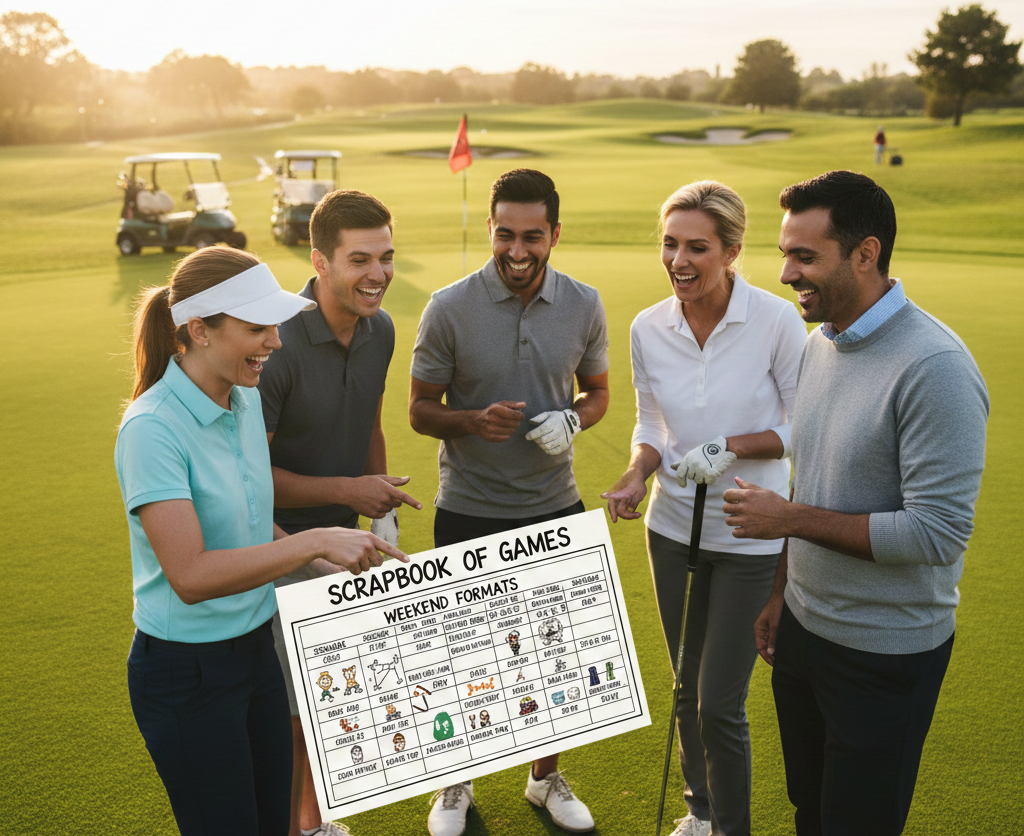
For many, golf is a simple game of addition: hit the ball, find the ball, and count every stroke until it disappears into the cup. However, for those who play the game regularly, the “standard” way of playing is just the tip of the iceberg. The beauty of golf lies in its versatility. Depending on the format you choose, a quiet Sunday morning can transform into a high-stakes strategy session, a collaborative team effort, or a fast-paced points race.
Whether you are planning a weekend trip with friends, organizing a charity event, or preparing for your first club tournament, understanding the various golf formats is essential. Different formats not only change how you score but also how you approach every shot. In this guide, we will break down the 10 best golf formats, explaining the rules, the scoring nuances, and the strategic secrets to winning each one.
The Foundations of Golf Scoring
Before diving into specific formats, it is vital to understand the “math” that governs the game. Every golf course is built with a specific par in mind, but the difficulty of that par isn’t universal. To make different formats fair—especially when players of varying skill levels compete—the game relies on a few key metrics.
The course rating tells you how difficult a course is for a scratch golfer, while the slope rating measures the relative difficulty for bogey golfers. When you play different formats, your handicap index or handicap acts as the great equalizer, allowing a beginner to compete against a seasoned veteran on a level playing field. Understanding these benchmarks is the first step toward mastering any format.
Individual Golf Formats
Individual formats are the purest test of a golfer’s skill. There is no partner to bail you out; it is just you, your clubs, and the course.
1. Stroke Play
Stroke play is the most common format in golf and the one used by professional tours like the PGA. The rules are simple: you count every stroke taken on every hole, including penalty strokes, and the player with the lowest total score at the end of the round wins.
In stroke play, the goal is often to shoot even par or better. Because every shot counts, the pressure is constant. A single “blow-up” hole, such as a quadruple bogey, can ruin an entire round. Success in stroke play requires high-level course management and the ability to minimize damage when things go wrong.
2. Stableford
Stableford is a points-based format that is incredibly popular in Europe and among amateur groups. Instead of aiming for the lowest total strokes, players earn points based on their score relative to par on each hole.
The typical points scale is:
- Double Eagle (Albatross): 5 points
- Eagle: 4 points
- Birdie: 3 points
- Par: 2 points
- Bogey: 1 point
- Double Bogey or worse: 0 points
The primary advantage of Stableford is that it speeds up play and rewards risk-taking. If you have a terrible hole and are staring at a triple bogey, you simply pick up your ball, take zero points, and move to the next tee. Your total score isn’t ruined by one bad hole, making it a favorite for those who like to hunt for birdies.
3. Match Play
Match play is a head-to-head battle. Instead of counting total strokes for 18 holes, you compete for individual holes. If you score a 4 and your opponent scores a 5, you win the hole. If you tie, the hole is “halved.”
This format changes the psychology of the game. You aren’t playing against the course; you are playing against the person standing next to you. Strategic concessions are common in match play—you might “give” your opponent a short putt to keep the game moving. It is the ultimate test of nerves, often used in the Ryder Cup and amateur championships.
Team-Based Golf Formats
Team formats take the solitary pressure of golf and turn it into a collaborative experience. These are often the most fun for social outings and tournaments.
4. Scramble
The Scramble is the king of social golf. In this format, every player in the group (usually a team of 2 or 4) tees off. The team then chooses the best shot, and everyone plays their second shot from that exact spot. This process continues until the ball is in the hole.
Because the team always plays from the best available position, the scores are incredibly low. Scrambles provide the best opportunity for a group to record a green in regulation on almost every hole. It is the perfect format for beginners because it allows them to contribute to the team without the fear of a high individual score.
5. Best Ball (Fourball)
In Best Ball, everyone plays their own ball throughout the entire hole. However, at the end of the hole, only the lowest score among the teammates is recorded for the team. For example, if Player A scores a par and Player B scores a bogey, the team records the par.
This format allows players to play their own game while still having the “safety net” of a partner. It is a fantastic way to enjoy a competitive round while keeping the atmosphere friendly.
6. Alternate Shot (Foursomes)
Alternate shot is exactly what it sounds like. Partners play one ball, taking turns hitting it until it is holed. One player tees off on the odd-numbered holes, and the other tees off on the even-numbered holes.
This is arguably the most difficult team format. It requires deep trust and a similar style of play. If you leave your partner in a deep bunker, they are the ones who have to hit the next shot. Success in alternate shot is about “leaving the ball in the right place” for your teammate rather than going for glory yourself.
7. Shamble
A Shamble is a hybrid of a Scramble and a regular stroke play match. Like a scramble, everyone tees off and the team selects the best drive. However, from that point on, everyone plays their own ball until it is holed.
The Shamble is excellent because it rewards a great drive but still requires every player to exhibit individual skill on the approach shots and putts. It is often used on courses with a high slope rating to help groups get off the tee successfully while maintaining the integrity of individual scoring.
Popular & Social Games
For those who want to add a little extra spice to their Saturday morning “skins” game, these formats focus on specific achievements and side-bets.
8. Nassau
The Nassau is perhaps the most famous game in golf. It is actually three separate bets in one:
- Who wins the Front 9?
- Who wins the Back 9?
- Who wins the overall 18-hole match?
The beauty of the Nassau is that if you play poorly on the first few holes, you can “press” the bet or simply focus on winning the Back 9 to break even. It keeps players engaged for the entire four hours, even if their start was less than ideal.
9. Skins
In a Skins game, each hole is assigned a value (a “skin”). The player with the lowest outright score on a hole wins the skin. If the hole is tied (halved), the skin “carries over” to the next hole.
This can lead to massive tension. If four holes in a row are halved, the fifth hole is worth five skins. This is where a rare, high-skill shot like an albatross or a long eagle putt can result in a huge win for a single player.
10. Bingo Bango Bongo
This format is perfect for groups with a wide range of skill levels because it doesn’t necessarily reward the lowest score. Instead, three points are available on every hole:
- Bingo: The first person to get their ball on the green.
- Bango: The person whose ball is closest to the pin once everyone is on the green.
- Bongo: The first person to hole out.
This format rewards accuracy and putting under pressure, giving every golfer a chance to win points regardless of how many strokes it takes them to get from tee to green.
Choosing the Right Format for Your Skill Level
Not every format is suitable for every group. To ensure everyone has a good time, consider the skill level of the participants.
- For Beginners: Stick to Scrambles or Bingo Bango Bongo. These formats take the pressure off individual performance and prevent the frustration of a quadruple bogey from ruining the day.
- For Competitive Groups: Match Play and Stroke Play are the gold standards. They provide a clear, undeniable result of who played the best golf on that specific day.
- For Large Outings: Stableford is the best choice for pace of play. It encourages players to pick up their ball once they can no longer score points, which keeps the course moving.
Ultimately, the best format is the one that keeps everyone engaged and smiling. Whether you are a scratch golfer chasing a course record or a casual player just looking to enjoy the fresh air, the way you score the game should enhance the experience, not detract from it.
Conclusion
Mastering the various golf formats makes you a more versatile and informed player. It allows you to participate in club tournaments with confidence and organize better outings with your friends. From the high-stakes pressure of a Nassau to the collaborative fun of a Scramble, these formats are what make golf a lifelong pursuit.
The next time you head to the first tee, don’t just reach for the scorecard to count strokes. Talk to your group, pick a format that fits your mood, and enjoy the unique challenges that come with it. Whether you end the day at even par or just happy to have won a few skins, you’ll find that golf is always more interesting when you change the way you play.
FAQs
What is the easiest golf format for beginners?
The Scramble is widely considered the easiest format. Because you always play from the best shot in the group, beginners don’t have to worry about the consequences of a bad shot and can contribute to a low team score.
How do handicaps work in team games?
In team games like Best Ball or Scramble, handicaps are usually calculated as a percentage of the players’ individual handicaps. This ensures that a team of two high-handicappers can compete fairly against a team of two low-handicappers.
Is par always 72?
While 72 is the most common par for an 18-hole course, it can vary. Many courses are par 70 or 71, and some executive courses may be par 60 or lower.
What is the difference between a Scramble and a Shamble?
In a Scramble, the team plays the best shot for every stroke. In a Shamble, the team only chooses the best drive, and then every player plays their own ball from that spot until the end of the hole.
What does it mean to “halve” a hole?
In Match Play, if both players or teams record the same score on a hole, the hole is “halved,” meaning no one wins the hole and the score for that hole is a draw.
Visit: https://regic.net/