White label delivery app development refers to building a fully functional delivery platform that businesses can rebrand, customize, and launch as their own product without developing everything from scratch. As on-demand services become a core customer expectation, companies across food, grocery, pharmacy, logistics, and retail are choosing ready-to-deploy platforms to enter the market faster and at a lower risk.
A white label delivery app allows businesses to focus on operations, marketing, and customer experience while relying on a pre-built technical foundation that has already been tested and optimized. This approach is especially valuable for startups, franchises, and enterprises expanding into new regions or service categories.
What Is a White Label Delivery App and How Does It Work?
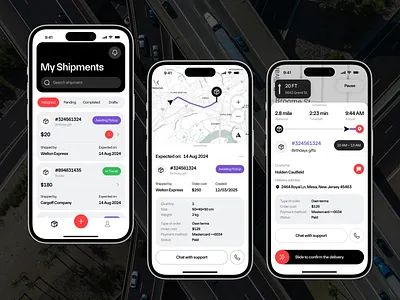
A white label delivery app is a pre-developed software solution that includes all essential delivery features such as user ordering, driver dispatch, real-time tracking, payments, and admin controls. Businesses purchase or license the solution, apply their branding, configure workflows, and launch it under their own name.
A Readymade Delivery app typically includes:
-
Customer-facing mobile apps (iOS and Android)
-
Delivery partner or driver app
-
Admin and vendor management dashboards
-
Integrated payment and notification systems
Instead of coding the system from the ground up, businesses customize workflows, UI elements, pricing logic, and integrations to match their operational needs.
Why Businesses Are Choosing White Label Delivery App Solutions
The rapid growth of the on-demand economy has made speed and scalability critical. Building a delivery platform from scratch often takes months of development, testing, and iteration. In contrast, white label solutions significantly reduce time to market.
Businesses choose this model because it offers:
-
Faster launch timelines with predictable development cycles
-
Lower upfront investment compared to custom development
-
Proven architecture that supports scale and performance
-
Flexibility to expand into multiple cities or service categories
For companies testing a new business model or expanding existing services, this approach minimizes technical risk while maintaining full ownership of the brand experience.
Key Features Included in a Modern White Label Delivery App
A well-designed white label delivery app includes enterprise-grade features that support smooth operations across customers, drivers, vendors, and administrators.
Customer App Capabilities
The customer application is designed to simplify ordering and build long-term engagement. It typically supports service discovery, item browsing, cart management, real-time order tracking, secure payments, and order history. Advanced solutions also include loyalty programs, in-app support, and personalized recommendations.
Delivery Partner or Driver App
The driver app enables efficient order fulfillment. Drivers can receive delivery requests, navigate optimized routes, update order status, and track earnings. Built-in communication tools help drivers coordinate with customers and support teams in real time.
Admin and Operations Dashboard
The admin panel acts as the control center for the entire platform. Businesses can manage users, vendors, delivery zones, pricing rules, commissions, promotions, and analytics. Real-time dashboards provide insights into order volume, delivery performance, and revenue trends.
Vendor and Store Management
For marketplace-style platforms, vendor dashboards allow restaurants, stores, or service providers to manage menus, inventory, pricing, availability, and order processing independently.
Customization and Branding Capabilities Explained
One of the biggest advantages of a white label solution is the ability to fully align the app with your brand identity. Businesses can customize visual elements such as colors, logos, fonts, and layouts while also configuring workflows to match operational processes.
Customization goes beyond appearance. It includes delivery logic, pricing structures, tax rules, service areas, and feature enablement. This ensures the platform supports unique business requirements rather than forcing companies to adapt to rigid software limitations.
Technology Stack Used in White Label Delivery App Development
Modern delivery platforms are built using scalable, cloud-ready technologies to handle high traffic and real-time data processing. While exact stacks vary by provider, most solutions rely on robust backend frameworks, secure APIs, cloud hosting, and real-time databases.
Mobile apps are usually developed using native or cross-platform frameworks to ensure performance and device compatibility. Integration with mapping services, payment gateways, SMS, email, and push notification systems is standard to deliver a seamless user experience.
Security, Compliance, and Data Protection Considerations
Security is a critical component of any delivery platform. White label delivery app development includes measures such as encrypted data transmission, secure payment processing, role-based access controls, and regular system monitoring.
Compliance with regional regulations related to payments, data privacy, and consumer protection is equally important. A professionally built Readymade Delivery app is designed to meet these requirements from the start, reducing legal and operational risks for businesses.
Cost Factors Involved in White Label Delivery App Development
The cost of a white label delivery app depends on several factors including feature depth, customization level, supported platforms, and ongoing maintenance requirements. While it is more affordable than building from scratch, pricing can vary based on scalability needs and third-party integrations.
Businesses should also consider long-term costs such as hosting, updates, technical support, and feature enhancements. A transparent pricing model and clear scope definition help avoid unexpected expenses after launch.
Deployment, Scaling, and Ongoing Support
Once customized, the platform goes through final testing and app store deployment. Post-launch support plays a vital role in ensuring smooth operations, handling updates, and responding to user feedback.
White label solutions are designed to scale. As order volumes grow or new regions are added, the infrastructure can be expanded without rebuilding the system. This makes it suitable for businesses planning long-term growth rather than short-term experiments.
Who Should Invest in a White Label Delivery App?
White label delivery app development is ideal for food delivery startups, grocery chains, pharmacies, logistics providers, franchises, and enterprises launching hyperlocal services. It is particularly beneficial for businesses that want control over branding and customer data without investing heavily in in-house development teams.
Companies looking to validate market demand quickly or expand digital operations efficiently often find this approach strategically advantageous.
Conclusion
White label delivery app development offers a practical, scalable, and cost-effective path for businesses entering or expanding within the on-demand delivery market. By leveraging a White label delivery app or a Readymade Delivery app, companies can launch faster, reduce technical complexity, and focus on building strong customer relationships. With the right customization, security, and support, this model enables sustainable growth in a highly competitive digital landscape.
Frequently Asked Questions (FAQs)
How long does it take to launch a white label delivery app?
The launch timeline depends on customization requirements, but most businesses can go live within a few weeks to a couple of months compared to several months for custom development.
Can a white label delivery app support multiple business models?
Yes, modern solutions are flexible enough to support food delivery, grocery, pharmacy, courier services, and multi-vendor marketplaces within a single platform.
Is a Readymade Delivery app scalable for high order volumes?
Well-built readymade platforms are designed with scalable architecture, allowing them to handle growing user bases, increased order volumes, and multi-city operations.
Do businesses fully own their white label delivery app?
In most cases, businesses retain full branding ownership and operational control, while the technology provider handles maintenance and updates based on the agreement.
What kind of support is available after launch?
Most providers offer ongoing technical support, performance monitoring, security updates, and feature enhancements to ensure long-term stability and growth.