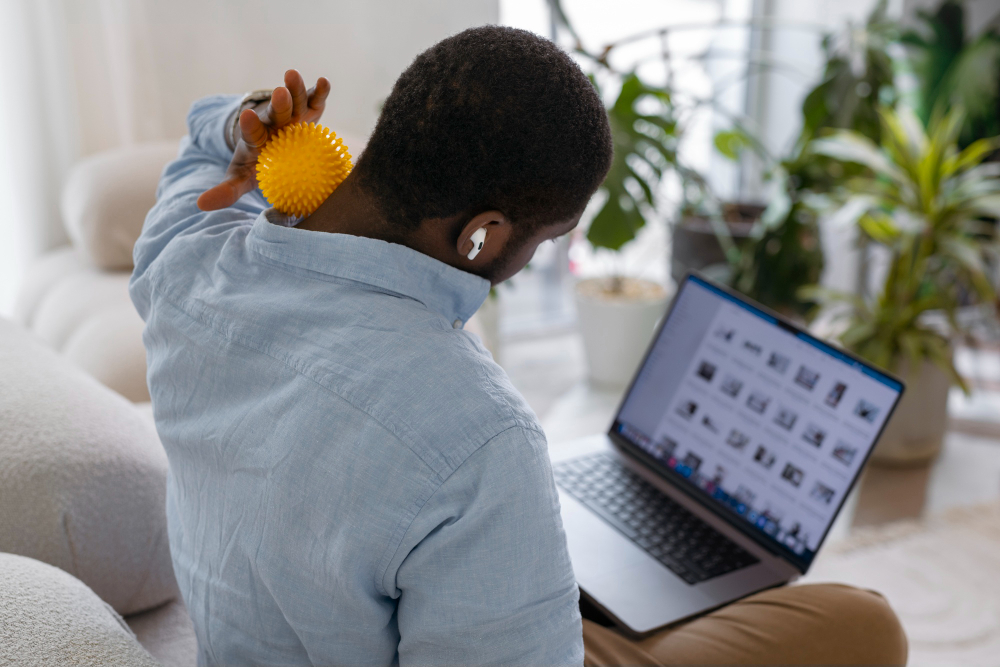
We have all seen it. A teen on the couch, head bent forward, thumbs flying, completely lost in a phone. Laptops at the desk. Tablets in bed. Screens everywhere. And honestly, we get it. School, friends, games, homework… it all lives on a screen now. But here is the part that does not get talked about enough… what all this screen time is doing to growing spines.
At a family chiropractic centre, we see more teens than ever walking in with neck pain, upper back stiffness, headaches, and posture issues. Not from sports injuries. From screens. Yep, really.
Why Teen Spines Are More at Risk
Teen bodies are still growing. Bones are developing, muscles are learning how to support posture, and habits formed now stick for life. When a teen spends hours hunched forward, the spine adapts to that position. And not in a good way.
Research has shown that bending the head forward increases pressure on the neck. At a neutral position, the head weighs about 10 to 12 pounds. But when the head tilts forward at a 45-degree angle, that pressure can jump to nearly 50 pounds. That is a lot for a young neck to handle day after day.
And let us be honest… how many teens sit straight while scrolling? Exactly.
The Real-Life Posture Problem
We often call it “tech neck.” Rounded shoulders. Head pushed forward. Upper back curved more than it should be. Over time, this posture strains muscles, tightens joints, and puts stress on discs.
Some studies have linked long screen hours with increased neck pain, shoulder pain, and even early spinal wear. One study published in the journal Spine found that adolescents who spent more time on screens reported higher rates of neck and back discomfort. Not shocking, but still concerning.
And the tricky part? Pain does not always show up right away. Sometimes it sneaks in slowly. A little stiffness here. A headache there. Then one day, it is constant.
Screens Are Not the Enemy… Habits Are
We are not here to say teens should throw their phones away. That is not realistic. Screens are part of school, social life, and fun. The issue is how they are used.
Slouching for hours. Using phones in bed. Laptops too low. No breaks. That is where trouble starts.
We like to remind families that posture is not about sitting perfectly all day. That would be exhausting. It is about movement. Changing positions. Giving the spine a break.
Signs Parents Should Not Ignore
Sometimes teens brush off pain. Or they think it is normal. But there are signs worth paying attention to:
- Frequent neck or upper back pain
- Headaches after screen use
- Rounded shoulders that do not correct easily
- Complaints of stiffness, especially in the morning
- Trouble sitting or studying for long periods
If any of this sounds familiar, it might be time to look closer at spinal health.
Small Changes That Actually Help
Here is the good news. Small tweaks can make a big difference.
Screens at eye level. Feet flat on the floor. Shoulders relaxed. Short breaks every 30 to 40 minutes. Stretching the neck and upper back. Even simple posture checks during the day help.
Encouraging physical activity also matters. Sports, walking, swimming, or just moving around. The spine loves motion.
And sometimes, despite best efforts, the body needs extra support.
How Chiropractic Care Fits In
Chiropractic care for teens focuses on alignment, mobility, and muscle balance. It is gentle and tailored to growing bodies. Studies have shown that spinal care can help reduce neck pain, improve posture awareness, and support overall musculoskeletal health.
More importantly, it helps teens understand their bodies. They start noticing posture. They become more aware. That awareness alone can prevent years of discomfort later.
In the last para, what really matters is balance. Screens are not going away. But pain does not have to be part of growing up. Supporting teens with better habits, movement, and professional care when needed can protect their spine long term. And that is something every parent wants… healthy kids today, and fewer back problems tomorrow.