
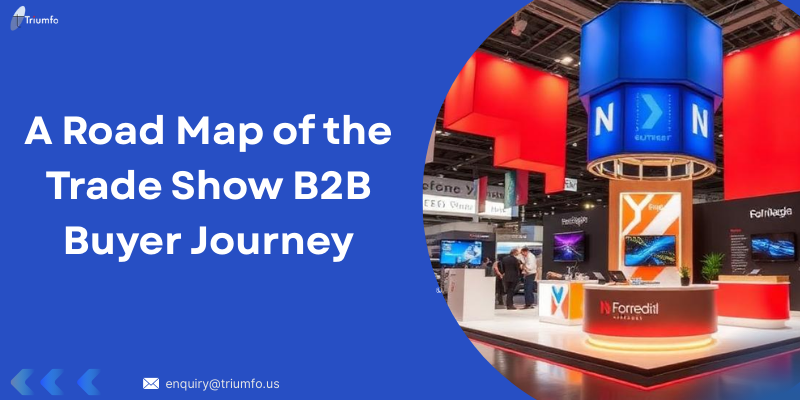
Trade shows are one of the most influential sources of b2b buying process, and unlike online interactions b2b offer face-to-face communication, hands-on experience, and direct access to the decision makers, all in one single platform. B2B buyers don’t arrive to sign the contract directly. They follow a roadmap set by beings long before the event begins and continue even after it ends. As an exhibitor, it is essential to understand this roadmap to engage buyers effectively, shorten sales cycles, and deliver measurable ROI.
What is the Trade Show B2B Buyer Journey?
The B2B buyer journey is a multi-stage process that involves many stakeholders, an extended evaluation period, and high-value decisions. Trade shows serve as a stage where buyers validate solutions, compare vendors, and build trust. This road map can be broken into three important phases, which are given below:
- Pre-event Awareness and planning
- On-site engagement and evaluation
- Post-event decision and conversion
Let’s study these stages in depth: what buyers do at each stage and what your action plan should be as an exhibitor.
1. Pre-Event Stage
Before attending any trade show, buyers are typically in the research and consideration stage. They are identifying the challenges, exploring solutions, and shortlisting the vendors. B2B buyers arrive at the venue with clear objectives: learning, networking, and evaluation.
Buyers Actions
- Researching the exhibitors and speakers.
- Studying the event agendas and the floor plan of the venue.
- Setting a meeting with the exhibitors in advance.
- Setting a budget expectation and timelines.
Exhibitor Strategy
This is a critical stage for you as an exhibitor, as buyers are planning their event strategy. They are deciding with whom they should do business. So do the following things during this stage:
- Reach out to the potential client through LinkedIn and email campaigns.
- Offer the buyers pre-booked demos and meetings.
- Promote educational content related to buyers’ pain points.
- Highlight thought leadership through interviews and white papers.
These strategies can help buyers decide whom to meet upon reaching the show floor.
2. During Event Stage
a. First Impression
Once the buyer reaches the exhibition hall, they begin evaluating solutions to their problems. Creating a strong first impression is critical at this stage, as buyers decide within a few seconds whether the trade show exhibit booth is worth their time.
Buyers Actions
- Buyers will notice your booth design, lighting, and messaging.
- They will assess the credibility of your brand and the professionalism of your staff.
- They’ll do a quick comparison with the competitors.
Exhibitor Strategy
- At your booth, use clear, value-driven messaging that is visible from a distance.
- Keep your booth design that reflects trust and expertise.
- Train your booth staff to quickly and respectfully qualify visitors.
- Use your booth lighting and layout to grab attention.
b. Engagement
At this stage, buyers are carefully evaluating whether the solution fits their requirements. At this stage, they are looking for a meaningful conversation, not sales pressure.
Buyers Actions
- They will ask detailed questions.
- They will attend the demos or presentations
- Buyers will compare features, pricing, and scalability
- Evaluating cultural and strategic fit
Exhibitor Strategy
Your booth staff should focus on consultative conversation. Customize demos as per the buyer’s specific needs. Provide the proven data, case studies, and real-world results to support your claims. Use CRM toolsto capture leads accurately.
c. Building Relationships
At this stage, the buyer requires reassurance before proceeding. They seek validation from peers, long-term ROI, and faith in the long-term support.
Buyer Actions
- They will request references or testimonials.
- They will be discussing implementation timelines.
- Evaluating post-sale support and partnerships
- Involving additional stakeholders
If you want to represent your brand with a professional trade show booth, connect with Triumfo Inc. From a 10×30 trade show booth to a customized, modular rental, every booth type and size is available.
Exhibitor Strategy
As an exhibitor, you need to share customer success stories and case studies. You can also introduce the technical or leadership team members. Position your brand as a long-term partner and offer private meeting spaces for deeper discussions. Strong relationship building here can increase the post-show conversion rate.
3. Post Event Stage
a. Nurturing
After the event, buyers typically review their conversations and narrow the list of vendors they are interested in. This phase is critical, and delayed or generic follow-ups often reduce conversion chances.
Buyer Actions
- They will request references or testimonials.
- They will be discussing implementation timelines.
- Evaluating post-sale support and partnerships
- Involving additional stakeholders
Exhibitor Strategy
You need to create a follow-up strategy and complete the follow-up process within 48-72 hours, using personalized messages. In your email, refer to a specific conversation you had with the buyer. Then you need to share relevant content and guide them to the next steps. Assign the sales team to a structured nurturing process. With a consistent, appropriate follow-up strategy, you can turn their interest into action.
b. Conversion
In the final stage, buyers select a solution. Their decisions are driven by trust, value alignment, and clear ROI.
Buyer Actions
- Comparing final proposals
- Negotiating terms
- Seeking executive approval
Exhibitor Strategy
A positive trade show experience can accelerate this stage. Clearly communicate ROI and business impact, address objections transparently, and maintain momentum with timely communication. Reinforce the value of partnership beyond the sale.
Measuring Success Across the Buyer Journey
To evaluate effectiveness, exhibitors should track:
- Pre-event engagement rates
- Booth traffic and dwell time
- Lead quality and qualification scores
- Follow-up response rates
- Pipeline value influenced by the trade show
These insights help you improve your future strategies and make sure your trade show investments support your revenue goals.
A Road Map to Success
Trade shows are not just one-off marketing events. They are key steps in the B2B buyer journey. When you understand how buyers move from awareness to making a decision, you can create better trade show booth ideas, have more meaningful conversations, and follow up more effectively. Mapping the buyer journey helps you achieve better results and build long-term relationships that endure beyond the event.