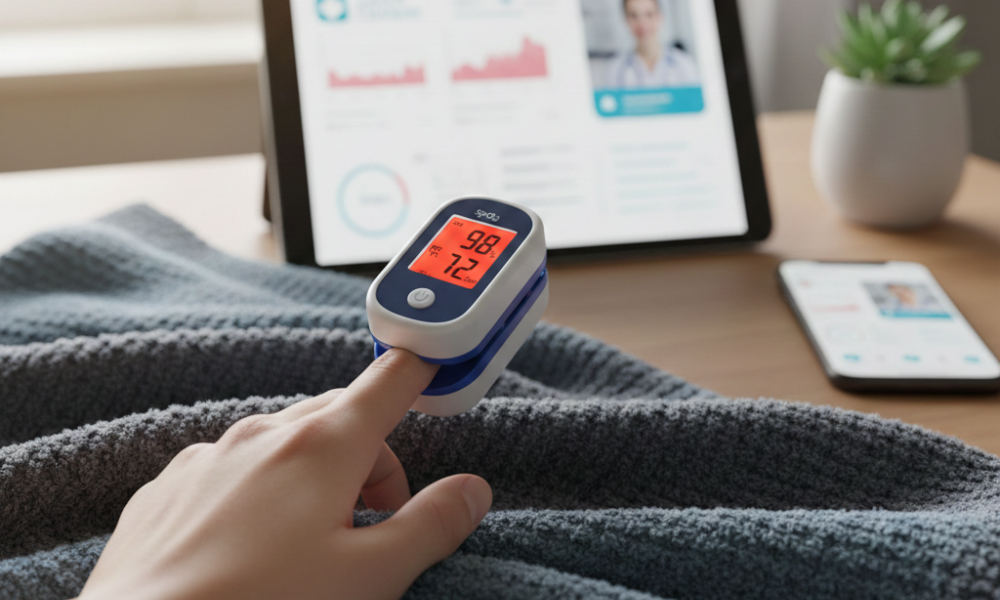
Remote Patient Monitoring (RPM) has transformed how healthcare is delivered, especially for patients who require continuous observation but cannot remain in clinical settings. Among the various medical devices used in RPM, pulse oximeters play a critical role in tracking vital health indicators and enabling timely medical intervention.
A pulse oximeter is a simple, non-invasive device that measures blood oxygen saturation (SpO₂) and pulse rate. While it may appear small, its impact on remote healthcare is significant, particularly for patients with respiratory, cardiac, or chronic health conditions.
Continuous Monitoring Beyond Hospital Walls
One of the biggest advantages of pulse oximeters in remote patient monitoring is their ability to provide real-time health data outside traditional healthcare facilities. Patients recovering at home or managing long-term conditions can regularly track their oxygen levels without frequent hospital visits. This continuous flow of data allows healthcare providers to monitor patient status remotely and identify early signs of deterioration.
For individuals with conditions such as COPD, asthma, heart disease, or sleep apnea, even a slight drop in oxygen saturation can be a warning sign. Pulse oximeters help detect these changes early, often before symptoms become severe.
Early Detection and Timely Intervention
Remote monitoring with pulse oximeters enables proactive care rather than reactive treatment. When abnormal readings are detected, healthcare professionals can quickly adjust treatment plans, recommend medication changes, or advise hospital visits if necessary. This early intervention significantly reduces the risk of complications and emergency situations.
During post-surgical recovery or respiratory infections, consistent SpO₂ monitoring can reveal hidden issues that may not be immediately noticeable to patients, improving overall outcomes.
Improved Patient Safety and Comfort
Pulse oximeters are easy to use, painless, and suitable for patients of all ages. Their simplicity makes them ideal for home use, even for elderly patients or caregivers with limited technical knowledge. This ease of use enhances patient compliance, ensuring regular monitoring without discomfort or stress.
By allowing patients to remain in their own homes while staying under medical supervision, remote monitoring also promotes emotional well-being and comfort—an often overlooked but essential part of recovery.
Reduced Healthcare Burden and Costs
Remote patient monitoring using pulse oximeters helps reduce unnecessary hospital admissions and outpatient visits. Continuous at-home monitoring minimizes the need for in-person checkups while still maintaining high-quality care. This not only lowers healthcare costs for patients but also eases the burden on hospitals and medical staff.
For healthcare systems, RPM improves resource allocation, allowing providers to focus on critical cases while still maintaining oversight of stable patients remotely.
Better Management of Chronic Conditions
For patients living with chronic illnesses, long-term monitoring is essential. Pulse oximeters support ongoing disease management by helping healthcare professionals analyze trends over time rather than relying on occasional clinic readings. This data-driven approach enables more personalized care and better long-term health planning.
Patients also become more engaged in their own care, gaining awareness of how lifestyle, medication, and activity levels affect their oxygen saturation.
Supporting Telehealth and Digital Healthcare
As telemedicine continues to expand, pulse oximeters have become a key tool in virtual consultations. Accurate SpO₂ and pulse data enhance clinical decision-making during online appointments, allowing doctors to assess patient conditions more effectively without physical examinations.
When integrated with digital health platforms, pulse oximeters can transmit data automatically, creating a seamless connection between patients and healthcare providers.
Conclusion
Pulse oximeters are no longer limited to hospitals and emergency rooms. In the era of remote patient monitoring, they have become essential tools for ensuring patient safety, improving care quality, and enabling early intervention. Their simplicity, reliability, and clinical value make them indispensable in modern healthcare.
As healthcare continues to shift toward patient-centered and technology-driven models, pulse oximeters will remain a cornerstone of effective remote patient monitoring and long-term health management.