Your furnace has one job: to keep your home warm when the weather turns cold. But when it starts making noise, blowing cold air, or just stops working entirely, you have a decision to make: furnace repair or new furnace installation?
Here’s what you need to know before you call for help.
First: What’s Actually Wrong?
A furnace that won’t heat properly could have one of many issues:
- Dirty or clogged filters
- A faulty thermostat
- Worn-out ignition components
- A damaged blower motor
- Cracks in the heat exchanger
Sometimes, the issue is minor. Other times, the cost to fix it comes close to what you’d pay for a full furnace installation. That’s why the first step is always a professional inspection.
3 Signs a Furnace Repair Will Do the Job
Not every furnace problem means it’s time to buy a new one. In many cases, furnace repair is all that’s needed. Here’s when it’s usually the best option:
- The unit is less than 10 years old: Most furnaces last 15–20 years. If yours is relatively new, repairs make sense.
- The fix is simple and affordable: Replacing a flame sensor or blower belt is much cheaper than replacing the whole system.
- You’ve kept up with maintenance: A well-maintained system is more likely to bounce back from small issues.
4 Signs You Should Consider a New Furnace Installation
There are times when repairing your furnace is a waste of money. A new furnace installation might cost more upfront, but it can save you more in the long run.
- The furnace is 15+ years old: Older units are less efficient, and parts wear out more often. Repairs get more frequent and more expensive.
- Energy bills keep rising: A struggling furnace uses more energy. If your costs are climbing even after a repair, the system may be on its last legs.
- The repairs are stacking up: If you’ve already called for service more than once this year, it’s time to rethink your approach.
- Uneven heating or odd smells: These can be signs of deeper damage or even safety issues. A new unit could solve multiple problems at once.
What to Expect During a Furnace Repair
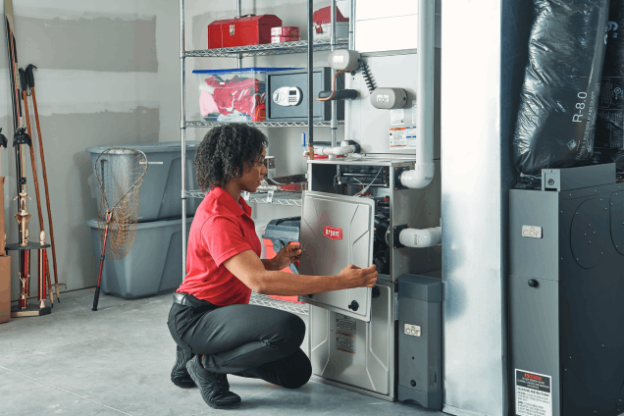
If a technician recommends furnace repair, the process is usually quick and straightforward:
- The technician will inspect the system and identify the issue.
- They’ll replace the damaged part (like a switch, ignitor, or valve).
- They’ll test the unit to make sure the issue is fixed and the system is safe.
Most repairs take less than a day and cost far less than a new unit as long as the system is still in good shape.
What to Expect During a Furnace Installation
If you go ahead with a furnace installation, expect a bit more time and planning. Here’s a basic overview:
- A licensed installer will help you choose the right unit size and type for your home.
- They’ll remove the old furnace and install the new one, usually in one day.
- They’ll connect it to your existing ductwork and thermostat, test everything, and make sure it’s safe and efficient.
Installation is more expensive upfront, but newer furnaces are more energy-efficient, quieter, and more comfortable. Many come with solid warranties too.
Local Example
Let’s say you live in Waukesha. It’s January, and your heat cuts out overnight. A technician comes out and finds a cracked heat exchanger, which means an expensive, serious repair. Your unit is 18 years old. In this case, a new furnace makes more financial and safety sense than patching a failing system.
But if you live in New Berlin and your furnace just needs a new ignitor and a filter change, a repair will have you warm again in no time.
What Homeowners Often Ask
Can I wait a few weeks to fix it?: Delaying repairs can make problems worse. A faulty part can damage other parts or cause your system to stop entirely.
Is it worth upgrading to a more efficient furnace?: If your current unit is over 15 years old, definitely. High-efficiency systems can cut heating bills by 15% or more.
Do I need permits for a furnace installation?: Yes, in most cities. That’s why you should always hire a licensed technician; they’ll handle all permits and codes.
Homeowners also ask: “Is it worth upgrading to a more efficient furnace?” If your furnace is more than 15–20 years old, the answer is usually yes. Older furnaces lose efficiency with age. A new high-efficiency model will consume less energy, lower your heating bills, and generally run more reliably than a worn-out system.
Another common question: “Do I need permits for a furnace installation?” In most areas, the answer is yes — especially if you are replacing the unit or changing gas/electrical connections. Permits ensure the installation is safe, up to code, and properly inspected. Licensed HVAC technicians handle the paperwork and help protect your family’s safety and home insurance validity.