Modern enterprises move quickly toward intelligent automation because they want faster decisions and stronger customer experiences. At the same time, agentic AI systems demand large datasets, strong computing power and steady performance across many environments.
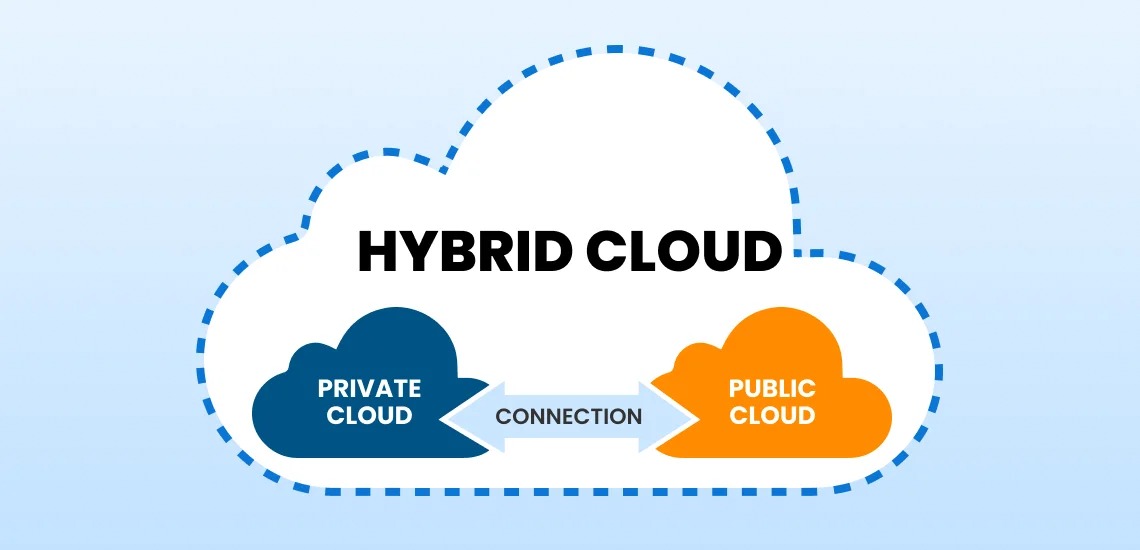
Therefore, organizations need an architecture that supports both innovation and control without slowing operations. A well designed hybrid cloud environment brings private infrastructure and public platforms together in one connected model. As a result teams gain flexibility while they protect sensitive data and meet compliance needs.
This balance allows organizations to test, train and deploy agentic AI with confidence. Moreover IT and business teams can align goals because they share visibility across systems. When companies build on hybrid cloud foundations they create a stable path from experimentation to enterprise scale deployment.
1. Enables Scalable Training for Complex Agentic Models
Agentic AI systems require continuous learning and large scale model training. However training advanced models demands high performance compute resources that many private environments cannot always provide. Therefore organizations use public cloud capacity to expand compute power during peak workloads.
With a hybrid cloud, organizations seamlessly integrate on-premises data centers with elastic public cloud resources. This approach enables teams to train large-scale AI models without committing to costly, permanent hardware upgrades.
This flexibility supports rapid experimentation because data scientists can test multiple models at the same time. Consequently development cycles become shorter and innovation moves faster.
2. Protects Sensitive Data While Supporting AI Innovation
Agentic AI relies on high quality data that often includes customer records, financial details or operational insights. Therefore security and compliance remain top priorities. A hybrid cloud architecture allows organizations to keep critical data inside private infrastructure while they use public platforms for analytics and model training.
This approach reduces risk because sensitive information stays within controlled environments. At the same time teams still gain access to advanced AI services and modern development tools. As a result companies can deploy agentic AI solutions without compromising governance standards.
Strong data protection also builds trust across departments and with customers. That trust becomes essential when AI systems make decisions that affect real business outcomes.
3. Speeds Up Development Through Integrated Platforms
Agentic AI deployment requires collaboration between developers, data engineers and operations teams. Therefore organizations need integrated environments that support shared workflows. Hybrid cloud platforms connect development tools testing environments and production systems in one unified structure.
Because teams work across connected systems they move code from development to production more quickly. In addition they automate testing and validation processes which reduces delays.
Key Advantages for Development Teams
- Teams deploy models faster because they use shared pipelines across private and public environments
- Engineers access modern AI frameworks without rebuilding internal systems
- Operations teams monitor performance in real time across environments
As a result collaboration improves and deployment cycles become more predictable.
4. Improves Resource Optimization Across Environments
Agentic AI systems often run continuous inference tasks that require steady performance. At the same time training workloads may spike at specific times. Therefore organizations must allocate resources carefully.
A hybrid cloud strategy allows teams to match workloads with the most suitable environment. For example they can run steady inference tasks in private infrastructure for cost stability. Meanwhile they can use public cloud services for heavy training periods.
This intelligent workload distribution improves efficiency because teams avoid overloading one environment. Consequently performance remains stable and operational costs stay under control.
5. Strengthens Business Continuity for AI Operations
Agentic AI often supports critical operations such as customer support automation, supply chain management and predictive analytics. Therefore downtime can directly affect revenue and service quality.
Hybrid cloud architecture enhances resilience because it distributes workloads across multiple environments. If one system experiences disruption teams can shift workloads to another environment.
Resilience Benefits
- Organizations reduce single points of failure
- Teams maintain service continuity during maintenance windows
- AI agents continue operating even during infrastructure issues
Because systems remain available businesses protect both productivity and customer trust.
6. Supports Real Time Data Processing and Edge Integration
Agentic AI systems often interact with users’ devices and enterprise applications in real time. Therefore latency and data flow become important factors. A hybrid cloud environment connects central data centers with edge locations and public platforms.
This connectivity allows organizations to process data close to the source when speed matters. At the same time they send aggregated data to central systems for deeper analysis and long term learning.
As a result AI agents respond quickly to user actions while they continue learning from broader datasets. This balance between local responsiveness and centralized intelligence strengthens overall system performance.
7. Aligns IT Strategy with Business Growth
Agentic AI deployment does not end with model training. Instead organizations must integrate AI agents into business processes, customer journeys and operational systems. Therefore long term flexibility becomes essential.
Hybrid cloud architecture supports gradual transformation because it connects legacy systems with modern AI platforms. Teams modernize workloads step by step instead of replacing everything at once.
Strategic Business Outcomes
- Leaders scale AI initiatives without disrupting core operations
- Finance teams manage costs through flexible resource planning
- IT teams maintain governance while enabling innovation
This alignment ensures that agentic AI supports measurable business value rather than isolated experiments.
Conclusion
Agentic AI promises smarter decisions, faster responses and stronger business outcomes. However successful deployment requires more than advanced algorithms. Organizations need a flexible, secure and scalable foundation that supports growth over time.
Hybrid cloud architecture delivers that foundation by combining control with innovation. It enables large scale training, protects critical data, improves collaboration and strengthens resilience. As a result businesses move from pilot projects to full scale AI operations with confidence.
When leaders invest in the right architecture they empower their teams to build intelligent systems that truly serve customers and employees. In the end hybrid cloud does not only support agentic AI deployment. It helps organizations grow with clarity, purpose and long term strength.