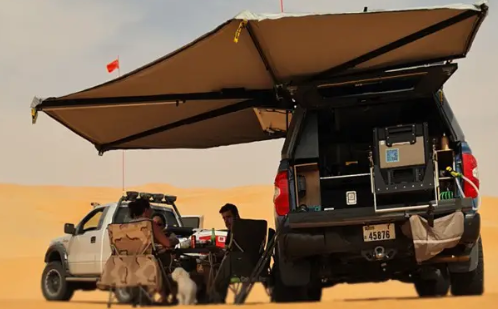
Overland travel has long played a defining role in shaping movement, trade, and cultural exchange across the Arabian Peninsula. In the United Arab Emirates, overland routes connect deserts, mountains, coastal plains, and urban centers, creating a unique network that reflects both history and modern development. Understanding overland travel in the UAE offers insight into how geography, infrastructure, and tradition intersect in this region.
Understanding Overland Travel in the UAE
Overland travel refers to journeys conducted primarily by land, using roads, tracks, or traditional routes rather than air or sea. In the UAE, overland movement has evolved from camel caravans crossing deserts to advanced road networks linking emirates and neighboring countries. Despite rapid modernization, the essence of overland travel remains rooted in exploration, connection, and adaptation to the environment.
The UAE’s strategic location between Asia, Africa, and Europe has historically made it a crossroads for overland trade. Long before modern borders, merchants and travelers relied on established land routes to transport goods such as spices, textiles, and metals. These early overland paths laid the groundwork for today’s highways and logistical corridors.
Geography and Its Influence on Overland Routes
The UAE’s diverse geography significantly shapes overland travel. Vast deserts dominate much of the landscape, particularly the Rub’ al Khali, or Empty Quarter, which extends into the southern regions. Overland journeys through these areas historically required deep knowledge of terrain, water sources, and seasonal conditions.
In contrast, the Hajar Mountains in the east present rugged terrain with winding roads and natural passes. Overland routes through these mountains connect inland cities with coastal areas, offering access to valleys, agricultural zones, and historical settlements. The northern emirates, with their mix of mountains and plains, further illustrate how overland travel adapts to varied landscapes within a relatively small country.
Historical Significance of Overland Movement
Overland travel in the UAE is closely tied to its pre-oil history. Bedouin tribes depended on overland mobility for survival, moving with livestock in search of grazing land and water. These journeys were not only practical but also cultural, shaping social structures, oral traditions, and knowledge systems.
Trade caravans formed another crucial aspect of overland history. Routes linking the interior to coastal ports allowed goods to flow between inland communities and maritime traders. These overland connections supported local economies and facilitated cultural exchange, introducing new ideas, languages, and technologies.
Modern Infrastructure and Overland Connectivity
Today, overland travel in the UAE is supported by an extensive and well-maintained road network. Highways connect major cities such as Abu Dhabi, Dubai, Sharjah, and Al Ain, enabling efficient movement across the country. Border crossings also allow overland travel to neighboring Gulf countries, reinforcing regional connectivity.
Despite modern infrastructure, overland journeys still reflect the influence of natural geography. Long stretches of road cross open desert, while mountain routes require careful navigation. These contrasts highlight how overland travel in the UAE balances technological advancement with environmental realities.
Overland Travel and Cultural Landscapes
Overland routes often pass through culturally significant areas, including oases, heritage villages, and archaeological sites. Places such as Al Ain, with its ancient falaj irrigation systems, illustrate how overland movement supported settlement and agriculture in arid conditions.
Desert tracks leading to remote areas reveal another dimension of overland travel: the relationship between people and the land. These routes are reminders of traditional navigation methods based on stars, landmarks, and seasonal patterns. Even as modern navigation tools are widely used, the cultural memory of these practices remains strong.
Environmental Considerations
Overland travel in desert environments requires an understanding of ecological sensitivity. The UAE’s deserts are home to diverse plant and animal species adapted to harsh conditions. Historically, overland travelers respected these ecosystems out of necessity, as survival depended on maintaining balance with nature.
In the contemporary context, awareness of environmental impact has become increasingly important. Overland routes are often planned to minimize disruption to wildlife habitats and fragile desert surfaces. This reflects a broader recognition that overland movement is not just about reaching a destination but also about interacting responsibly with the environment.
Overland Travel as Exploration
For many, overland travel represents a form of exploration that allows closer engagement with the landscape. In the UAE, traveling overland offers opportunities to experience vast open spaces, changing horizons, and the quiet rhythms of the desert. Unlike air travel, which compresses distance, overland journeys reveal gradual transitions between regions.
Mountain roads, desert highways, and coastal routes each provide distinct perspectives on the country’s natural and human-made features. This layered experience underscores why overland travel continues to hold appeal despite the availability of faster alternatives.
Regional and Cross-Border Dimensions
Overland travel in the UAE also has a regional dimension. Land routes connect the country to neighboring states, facilitating trade, tourism, and cultural exchange. Historically, these connections were vital for the movement of goods and people across the Gulf region.
Today, cross-border overland travel reflects shared histories and economic interdependence. Checkpoints and modern logistics systems have replaced informal crossings, but the underlying principle of land-based connection remains unchanged. Overland routes continue to serve as arteries linking communities across borders.
The Future of Overland Travel in the UAE
As the UAE continues to develop, overland travel is likely to evolve further. Infrastructure projects aim to improve safety, efficiency, and connectivity while considering environmental and cultural factors. At the same time, interest in heritage and landscape-based experiences suggests that traditional aspects of overland travel will remain relevant.
Technological advances may change how journeys are planned and managed, but the core experience of moving across land—observing terrain, weather, and human settlement—will continue to define overland travel. In the UAE, this balance between innovation and tradition is a recurring theme.
Conclusion
Overland travel in the UAE is more than a means of transportation; it is a lens through which the country’s history, geography, and culture can be understood. From ancient caravan routes to modern highways, overland movement has shaped connections within the nation and beyond its borders.
By examining overland travel in the UAE, one gains insight into how people adapt to challenging environments, build networks across landscapes, and maintain cultural continuity amid change. The enduring relevance of overland journeys highlights their role as a foundational element of life in the region, linking past experiences with present realities and future possibilities.