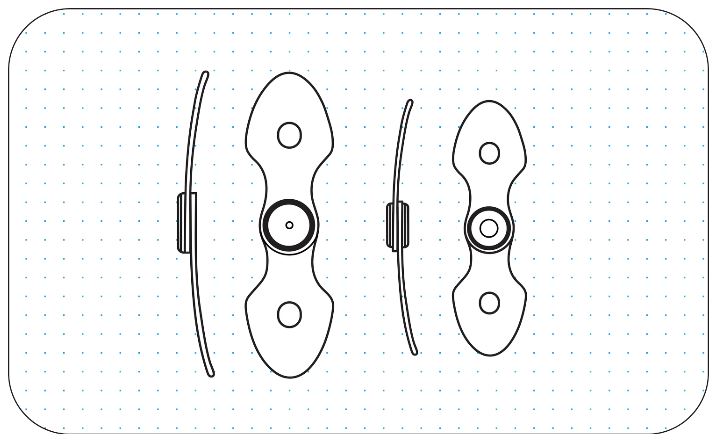
You’ve probably seen an orthotic and wondered how such a compact device manages controlled motion so precisely. The real magic often sits inside its mechanical core, and that’s where the Hinge Pivot Joint comes in.
If you’re trying to understand how it works, when it helps, and why clinicians rely on it, we break it down in a simple, practical way. You’ll walk away with a clear picture of the mechanism and the stability it creates for real-world movement.
The Core Idea Before We Break Everything Down
Every orthotic aims to guide motion without blocking the body’s natural movement. The Hinge Pivot Joint helps do that by mixing two types of rotation.
One controls direction. The other controls how much motion you allow. When both work together, the device delivers smoother transitions during gait, improved alignment, and better support under load.
Why This Mechanism Matters More Than Most People Realize
Understanding this joint is easier when you think about how the human body actually moves. The ankle doesn’t operate with one simple hinge. It rolls, pivots, stabilizes, absorbs impact, and adapts to the ground. A fixed hinge can’t replicate that. A rotating joint alone can’t replicate that either.
A dual-action joint lets clinicians fine-tune both dynamic and controlled movement. This matters for users with gait deviations, contractures, instability, or conditions where misalignment affects balance and safety.
When tuned correctly, the system brings a more natural step pattern and reduces compensations higher up the chain.
How the Mechanics Work Inside an Orthotic
The Hinge Pivot Joint sits between the uprights and the shell of the orthotic. Think of it as a compact engine that manages both rotation and directional control.
Inside the joint, you’ll usually find a pivot pin, housing plates, a control surface, and adjustable stops. Each component keeps the joint stable while still allowing the ankle to move through controlled arcs.
The mechanism doesn’t simply swing forward and back. As the joint rotates, it also shifts slightly around its pivot. That secondary action improves alignment through mid-stance and helps users maintain smoother transitions.
This design also helps clinicians set restrictions for plantar flexion or dorsiflexion based on the user’s specific needs. Because the motion isn’t rigid, the user often feels more natural support during walking, climbing stairs, or standing for longer periods.
Brands integrate this architecture into their orthotic solutions so clinicians can make on-the-spot adjustments without compromising stability.
When You Need More Than a Standard Hinge
A traditional hinge allows basic flexion and extension. That’s fine for mild support. But if someone has rotational issues, toe-in or toe-out tendencies, or struggles with terminal stance, a dual-action mechanism offers better control.
In this kind of joint, the pivot action helps guide the foot toward a straighter path. The rotational element reduces excess torque on the knee. The controlled flexion limits drop-off, especially in the late phase of gait. This combination improves efficiency and reduces compensation in the hips and lower back.
Clinicians value this because they can target multiple gait problems using one integrated mechanism rather than adding extra components that increase bulk or weight. And for users, that usually translates to better comfort and easier long-term wear.
A Clear Comparison Table for Confusion-Free Understanding
Below is a quick comparison showing how the mechanism differs from typical hinges and fixed joints.
| Feature / Benefit | Standard Hinge | Fixed Joint | Dual-Action Joint (with pivot) |
| Movement Type | Flex/extend only | No movement | Flex/extend + guided rotation |
| Stability Level | Moderate | High but rigid | High with natural motion |
| Adjustability | Limited | None | Customizable stops and tuning |
| Gait Support | Basic | Restrictive | Natural alignment + smooth transitions |
| Ideal For | Mild support | Severe control | Users needing stability + mobility |
The Engineering Behind Smooth, Predictable Movement
The mechanics only matter when they translate into reliable real-world outcomes. Inside the joint, the pivot mechanism distributes pressure across a broader control surface.
This reduces wear, prevents grinding, and keeps alignment steady under repeated load. It also helps maintain consistent behavior over time, even with active users.
Another useful detail: dual-action systems reduce stress on the uprights and straps because the motion is guided rather than forced. That makes the orthotic feel lighter and reduces the effort needed to move through each step.
Real users often notice less fatigue, fewer hot spots, and smoother progression through stance. All of this happens because the internal mechanics direct motion through a predictable arc rather than letting the limb wander under load.
FAQ
- How does this type of joint help with stability?
It stabilizes movement by controlling motion in two planes at once. The pivot guides alignment while the hinge manages flexion. Users often experience steadier steps, reduced wobbling, and more confidence on uneven surfaces.
- Can clinicians adjust this system easily?
Yes. Most designs allow quick changes to flexion limits or alignment control. Adjustments usually take only a few minutes, which helps clinicians fine-tune support during evaluations.
- Is this joint suitable for children?
It often works well for kids because it supports natural motion without forcing rigid patterns. Clinicians can adjust it as a child grows or as gait patterns evolve, which helps extend the lifespan of the device.
- Does this mechanism make the orthotic heavier?
Not typically. Modern materials keep weight low while still offering strong mechanical support. Most users don’t notice extra weight and often feel more balanced because of improved control.
- Where does this type of system provide the most benefit?
It helps in cases involving rotation issues, drop-off in terminal stance, or instability through mid-stance. Users dealing with neuromuscular or orthopedic conditions often see the biggest improvements.
- How does this compare with newer lightweight systems?
Lightweight systems reduce fatigue, but many still lack dual-action control. The pivot-hinge setup blends mobility and stability more effectively, especially for users with complex gait needs.
The Final Words
The internal mechanics of this system may look complex, but the outcome is simple: safer, smoother, more natural movement.
A dual-action design helps guide alignment, control flexion, and support the user through every phase of gait.
When paired with thoughtful engineering, it becomes a powerful tool for clinicians and users who want dependable, real-world stability.