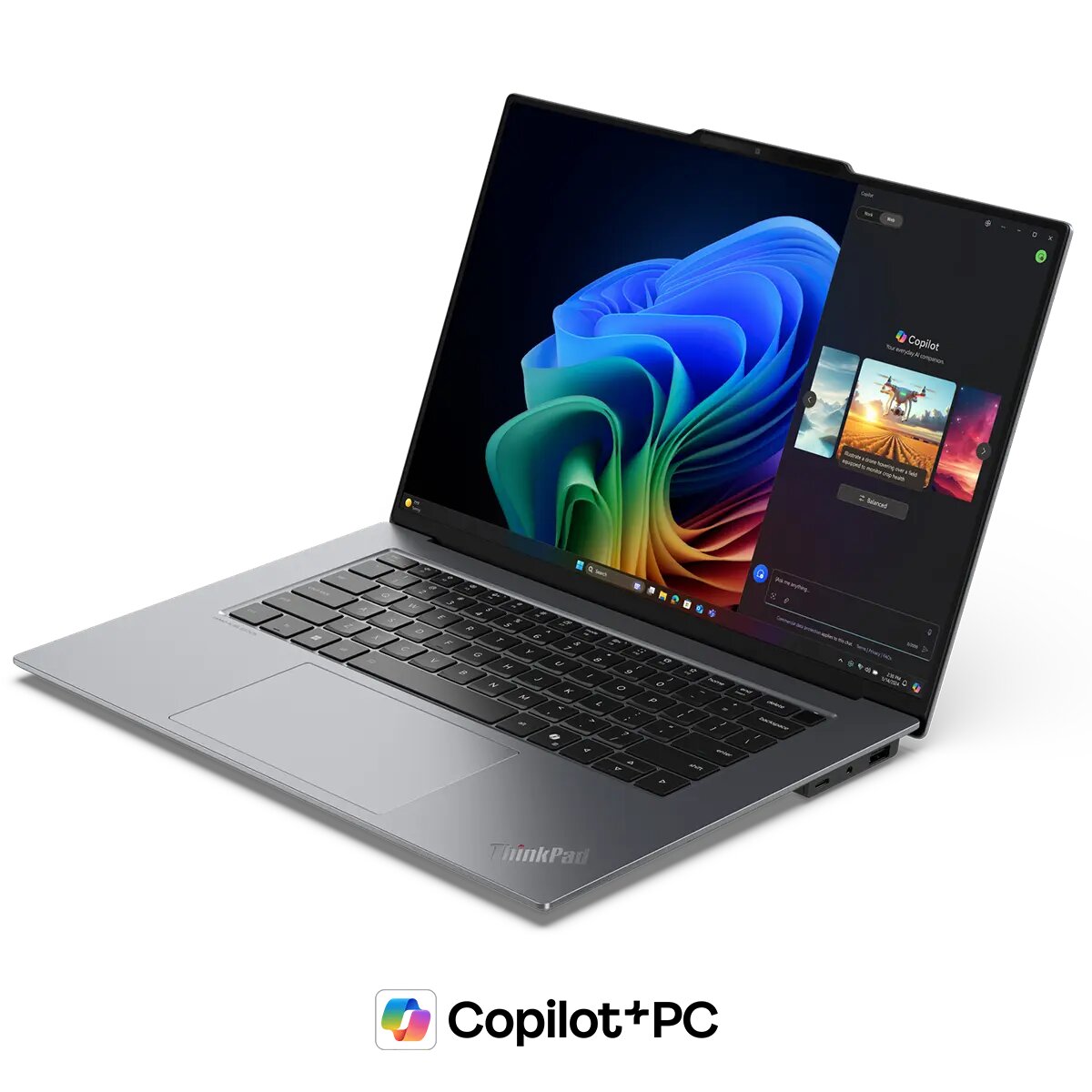
Machine learning grows fast across many industries. Many developers now run models on personal systems instead of only cloud servers. A modern AI-powered PC helps make this possible. These systems include strong CPU cores, fast GPU units, and a dedicated NPU for AI tasks.
Industry surveys report 84 percent of developers now use or plan to use AI tools in their development process.
This trend grows because local processing gives better speed control and data safety. A smart AI PC handles training testing and inference without sending data to remote servers. This setup reduces delay and improves privacy. As a result, developers, students, and engineers use local AI systems more often.
Today, we’ll learn six clear ways a smart AI PC runs local machine learning models with strong speed, stability, and efficiency.
1. Powerful CPU Handles Model Logic
The central processing unit plays a key role in machine learning tasks. The CPU manages instructions and coordinates all computing operations. In a smart AI PC, the processor includes many high-performance cores. These cores run algorithms and manage data flow.
When developers run machine learning code, the CPU loads the model and organises memory access. Libraries such as TensorFlow and PyTorch rely on the CPU to schedule tasks. This step ensures the system runs smoothly.
Because of this design, an AI-powered PC can run complex models locally without heavy delays and a powerful CPU also helps during model training and testing. It performs matrix calculations and handles preprocessing tasks.
Key benefits of strong CPU performance include
- Faster data preparation.
- Better control of training pipelines.
- Smooth execution of machine learning frameworks.
- Reliable coordination between GPU and memory.
2. Dedicated GPU Accelerates Parallel Computing
Machine learning models perform thousands of calculations at the same time. Graphics processing units handle this type of workload very well. GPUs use parallel processing, which means many cores work together.
A smart AI PC includes a high-performance GPU that speeds up neural network computation. Deep learning models such as convolutional neural networks require strong parallel processing. GPUs perform these tasks much faster than a CPU alone.
Developers use GPU acceleration through frameworks like CUDA and OpenCL. These platforms allow machine learning libraries to run heavy workloads on the graphics processor.
GPU acceleration improves
- Neural network training speed
- Matrix multiplication tasks
- Image recognition workloads
- Video data processing
3. High-Speed RAM Feeds Data to AI Models
Memory plays an essential role in machine learning. Models require fast access to datasets and parameters. High-speed RAM helps deliver this data quickly.
A smart AI PC usually includes a large memory capacity. Systems often include sixteen gigabytes or more. This amount allows the machine to load datasets and model weights into memory.
Why Memory Speed Matters in Machine Learning
Fast RAM helps reduce waiting time during training. When models access large datasets, slow memory creates bottlenecks. High-bandwidth memory ensures smooth data flow.
Developers benefit from strong memory performance in several ways
- Faster batch processing during training.
- Smooth execution of data pipelines.
- Better handling of large datasets.
- Stable performance during multitasking.
These advantages allow an AI-powered PC to handle machine learning workloads without interruption.
4. Neural Processing Unit Handles AI Tasks Efficiently
Modern smart PCs now include a neural processing unit or NPU. This chip focuses on artificial intelligence tasks. The NPU runs inference workloads with very high efficiency.
Machine learning inference means the model makes predictions using trained data. Many applications use this step, such as speech recognition, image classification, and language processing. The NPU handles these calculations with low power consumption. It also reduces workload on the CPU and GPU.
Key benefits of NPU acceleration include
- Faster AI inference speed.
- Lower power consumption.
- Reduced CPU workload.
- Better real-time AI processing.
5. Fast Storage Loads Models Quickly
Machine learning models often include large files. Some models require several gigabytes of storage. Fast storage technology helps load these models quickly. Smart AI PCs use solid-state drives based on NVMe technology. These drives deliver very high read and write speeds. This performance allows the system to access model files rapidly.
Role of Storage in Machine Learning Workflow
Machine learning workflows include many data operations. Developers load datasets, save checkpoints, and store trained models. Slow storage can delay these steps. With high-speed storage, an AI-powered PC becomes a strong platform for local machine learning experimentation.
Fast SSD storage improves the entire workflow
- Quick loading of training datasets.
- Faster model checkpoint saving.
- Smooth data preprocessing.
- Reduced application startup time.
6. AI Software Frameworks Optimise Local Execution
Hardware alone does not run machine learning models. Software frameworks control how models execute on the system. Modern frameworks optimize local hardware very well.
Popular frameworks such as TensorFlow, PyTorch, and ONNX Runtime support hardware acceleration. They detect available resources such as CPU, GPU, and NPU. These frameworks distribute workloads across hardware components. This process ensures the system uses every computing unit effectively.
Benefits of optimised AI frameworks include
- Efficient resource management.
- Faster model inference.
- Reduced training time.
- Improved hardware utilisation.
Conclusion
The latest computers are equipped with the capability to run powerful AI computations. This means the AI PC has the capability to carry out strong CPU cores, high-speed RAM, high-speed GPU units, and AI processor units. This enables the PC to carry out training, testing, and inference operations.
The PC has the capability to carry out high-speed storage, which enables the loading of data and models. This means the latest frameworks are equipped with the capability to optimise the execution of the operations on the PC. This enables developers to carry out the development of the machine learning solutions on their computers.
This means the AI-powered PC continues to gain popularity as a significant development tool for engineers, students, and researchers working with the machine learning models.