
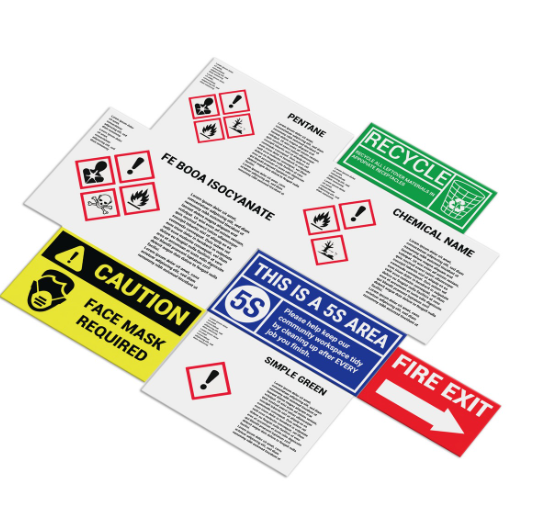
Workplace safety is one of the most important priorities in modern industrial environments. From manufacturing facilities and warehouses to laboratories and chemical processing plants, employees regularly work with materials that can pose serious health and safety risks. To minimize these risks and maintain compliance with safety regulations, businesses rely heavily on hazard labels.
Hazard labels play a critical role in communicating chemical dangers, handling instructions, and emergency precautions. They support compliance with the Globally Harmonized System of Classification and Labeling of Chemicals (GHS) and Occupational Safety and Health Administration (OSHA) standards while helping create a safer and more organized workplace.
Understanding Hazard Labels
Hazard labels are designed to provide clear and immediate information about hazardous chemicals and materials. Their main purpose is to alert workers to potential dangers and guide them on proper handling procedures.
These labels help employees quickly identify:
Chemical Hazards
Hazard labels explain the risks associated with a chemical or material, including flammability, toxicity, corrosiveness, explosiveness, or environmental hazards.
Safe Handling Procedures
Labels provide instructions on how to safely use, transport, and store hazardous substances.
Emergency Response Information
During spills, leaks, or accidental exposure, hazard labels provide important precautions and response guidelines.
Protective Measures
Labels may include information about required personal protective equipment (PPE), ventilation requirements, or first-aid measures.
By making safety information visible and easy to understand, hazard labels help reduce accidents and improve workplace awareness.
The Importance of GHS Compliance
The Globally Harmonized System of Classification and Labeling of Chemicals (GHS) was created to establish a standardized approach to chemical hazard communication worldwide.
Before GHS, different countries used varying labeling systems, which often caused confusion and increased safety risks. GHS introduced consistent labeling standards that improve communication across industries and international markets.
Key Elements of GHS Hazard Labels
GHS-compliant hazard labels contain standardized components that clearly communicate chemical hazards.
Product Identifier
This identifies the hazardous chemical and links it to the appropriate Safety Data Sheet (SDS).
Signal Words
Signal words indicate the severity of the hazard.
Danger
Used for more severe hazards requiring immediate caution.
Warning
Used for less severe but still significant hazards.
Hazard Statements
These statements describe the nature and degree of the hazard, such as skin irritation, toxicity, or fire risk.
Precautionary Statements
These instructions explain how to minimize risks during handling, storage, disposal, and emergency situations.
Pictograms
Pictograms use visual symbols inside red diamond borders to communicate specific hazards quickly and effectively.
Supplier Information
Labels should include manufacturer or supplier contact information for additional support and emergency reference.
These elements work together to improve workplace communication and chemical safety.
Why OSHA Standards Matter
In the United States, OSHA’s Hazard Communication Standard (HCS) aligns closely with GHS requirements and establishes rules for workplace hazard communication.
OSHA requires employers to:
Properly Label Hazardous Chemicals
Every hazardous substance must have accurate and clearly visible labels.
Provide Safety Data Sheets
Employees must have access to updated Safety Data Sheets for all hazardous chemicals in the workplace.
Train Employees
Workers must understand how to interpret hazard labels, pictograms, and safety procedures.
Maintain Safe Working Conditions
Employers are responsible for reducing workplace hazards and protecting employee health and safety.
Compliance with OSHA standards helps businesses avoid penalties while improving workplace safety culture.
The Role of Durable Industrial Labeling Solutions
Industrial environments can expose labels to harsh conditions that may cause fading, peeling, or damage. Durable labeling solutions are essential for maintaining readability and compliance over time.
Chemical Resistance
Hazard labels should withstand exposure to oils, solvents, cleaning agents, and hazardous chemicals.
Temperature Resistance
Industrial facilities may experience extreme heat or cold, making temperature-resistant labels necessary.
Moisture Protection
Labels should remain intact and readable even in humid or wet environments.
Abrasion Resistance
Frequent handling, movement, and cleaning can wear down ordinary labels. Durable materials help maintain visibility.
Strong Adhesion
Labels must remain securely attached to containers, drums, pipes, equipment, and storage areas.
Using high-quality industrial labels ensures important safety information remains accessible in demanding environments.
Improving Hazard Communication in the Workplace
Effective hazard communication involves more than simply placing labels on containers. A complete workplace safety strategy should include ongoing communication and employee education.
Employee Training Programs
Regular training helps workers understand hazard labels, pictograms, and proper chemical handling procedures.
Easy Access to Safety Data Sheets
Employees should be able to quickly locate Safety Data Sheets whenever needed.
Routine Label Inspections
Businesses should regularly inspect labels to ensure they remain readable, accurate, and compliant.
Standardized Labeling Systems
Consistency throughout the workplace reduces confusion and improves operational efficiency.
Employee Feedback
Encouraging workers to report damaged labels or safety concerns helps strengthen workplace safety programs.
A strong hazard communication system improves both safety awareness and operational performance.
Emerging Trends in Hazard Labeling
Technology continues to improve industrial safety and hazard communication systems.
QR Code Integration
Many hazard labels now include QR codes that link directly to Safety Data Sheets, training videos, or emergency instructions.
RFID Labeling Systems
RFID technology helps businesses track hazardous materials throughout storage and transportation processes.
Smart Safety Systems
Digital platforms and mobile applications are being integrated into workplace safety programs for faster access to hazard information.
Sustainable Label Materials
Manufacturers are developing environmentally friendly labeling materials that maintain durability while reducing environmental impact.
These advancements improve efficiency, accessibility, and long-term compliance.
Conclusion
Hazard labels are an essential part of workplace safety and industrial compliance. They help employees identify chemical hazards, follow safe handling procedures, and respond appropriately during emergencies. By supporting GHS and OSHA standards, effective hazard labeling systems help businesses create safer, more organized, and more compliant workplaces.