
Hot outlets. Warm cables. A strange burning odor drifting from the switchboard. Nothing about that reads as normal — nothing about that gets brushed aside. As an Electrician In Dubai, calls about overheating land on our desk more often than most people expect. Nearly always preventable. Below are the real causes, the signs worth watching, and the fix we recommend to clients.
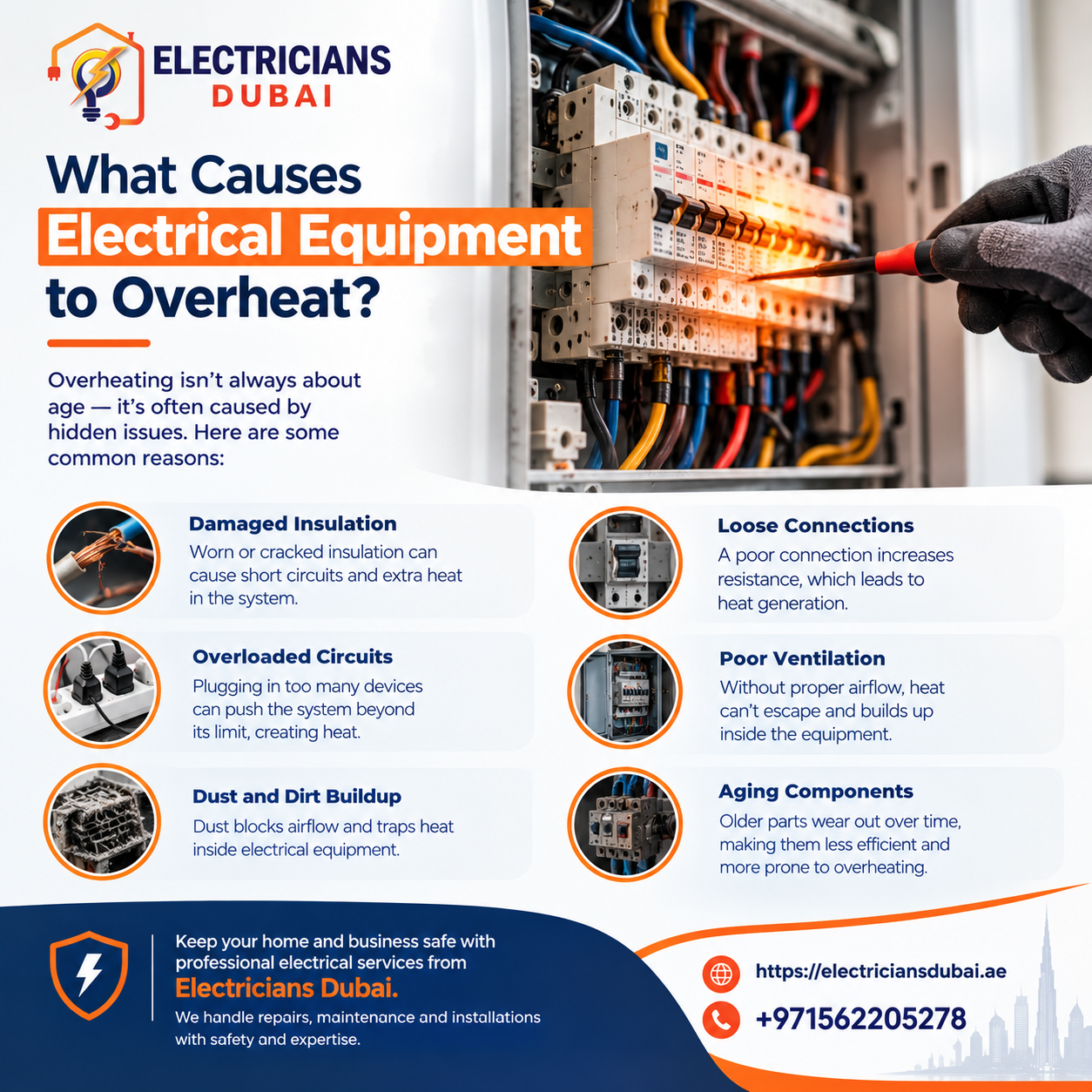
Electrician In Dubai: Top Causes of Overheating
Heat and building density in Dubai push electrical systems past what many setups were built to handle.
- Overloaded Circuits
- Too many appliances drawing from a single circuit
- Common across older villas — outlet capacity never matched modern power demands
- Wires end up carrying current well beyond rated limits
- Loose or Faulty Wiring Connections
Loose terminals build resistance. Resistance builds heat. That’s the whole equation.
- Frequently linked back to rushed Electrical Socket Installation work — connections never torqued correctly at the start
- Symptoms creep in slowly. Sometimes months pass before anything visible shows
- Poor Ventilation Around Panels
- Panels squeezed into enclosed cabinets, no airflow to speak of
- Dust locks heat inside equipment
- Storage rooms and cramped utility closets show up again and again
- Voltage Fluctuations
Spikes and drops put stress on internal components. Summer makes it worse, right when cooling demand spikes hardest.
- Shortens the working life of sensitive electronics
- Easy to overlook since damage rarely shows immediately
- Aging or Substandard Equipment
- Insulation breaking down with age
- Non-branded sockets rated far below actual load
- Corroded contacts quietly adding resistance until failure hits
Warning Signs Not Worth Ignoring
- Discolored or scorched outlet covers
- A lingering plastic-burning smell
- Breakers tripping repeatedly
- Switches or sockets that feel warm to the touch
- Flickering lights paired with a low buzzing sound
A Villa in Jumeirah — Real Case
A kitchen socket kept tripping the breaker. Same time, every evening. Turned out one outlet was carrying both a fridge and a microwave — a plain overload, compounded by wiring that had worked itself loose inside. Solved with an upgraded Electrical Socket Installation, splitting the load across two separate circuits. The problem never returned.
How We Help Prevent It
- Full load assessments for homes and offices alike
- Swapping out outdated wiring and weak connection points
- Fitting sockets and breakers rated for actual, real-world use
- Routine inspections that catch trouble before it surfaces
- Guidance on voltage stabilization for sensitive equipment
FAQs
- Why does my socket feel warm with nothing plugged in?
Usually points to a loose internal connection generating resistance heat, even under low load. Worth a proper check before the issue grows. - Is a warm phone charger normal?
Mild warmth is fine. Excessive heat or any burning smell signals a problem — either the charger or the socket itself. - Can voltage swings damage appliances?
Yes. Repeated spikes and drops wear down internal circuitry over time, cutting lifespan short and raising overheating risk. - How often should panels get inspected?
Once a year at minimum. Sooner if frequent trips, flickering lights, or odd smells start showing up near the panel. - Does a new Electrical Socket Installation actually help?
It does. Modern sockets manage higher loads and come installed with proper connections — less resistance, less heat buildup.
Conclusion
Overheating rarely comes out of nowhere. A warning usually shows up first — a loose connection, an overloaded socket, something along those lines. Catch it early, and cost and risk both drop. Noticing extra warmth around a switch or outlet at home? Don’t sit on it. Electricians Dubai can get it checked properly by an Electrician In Dubai.