
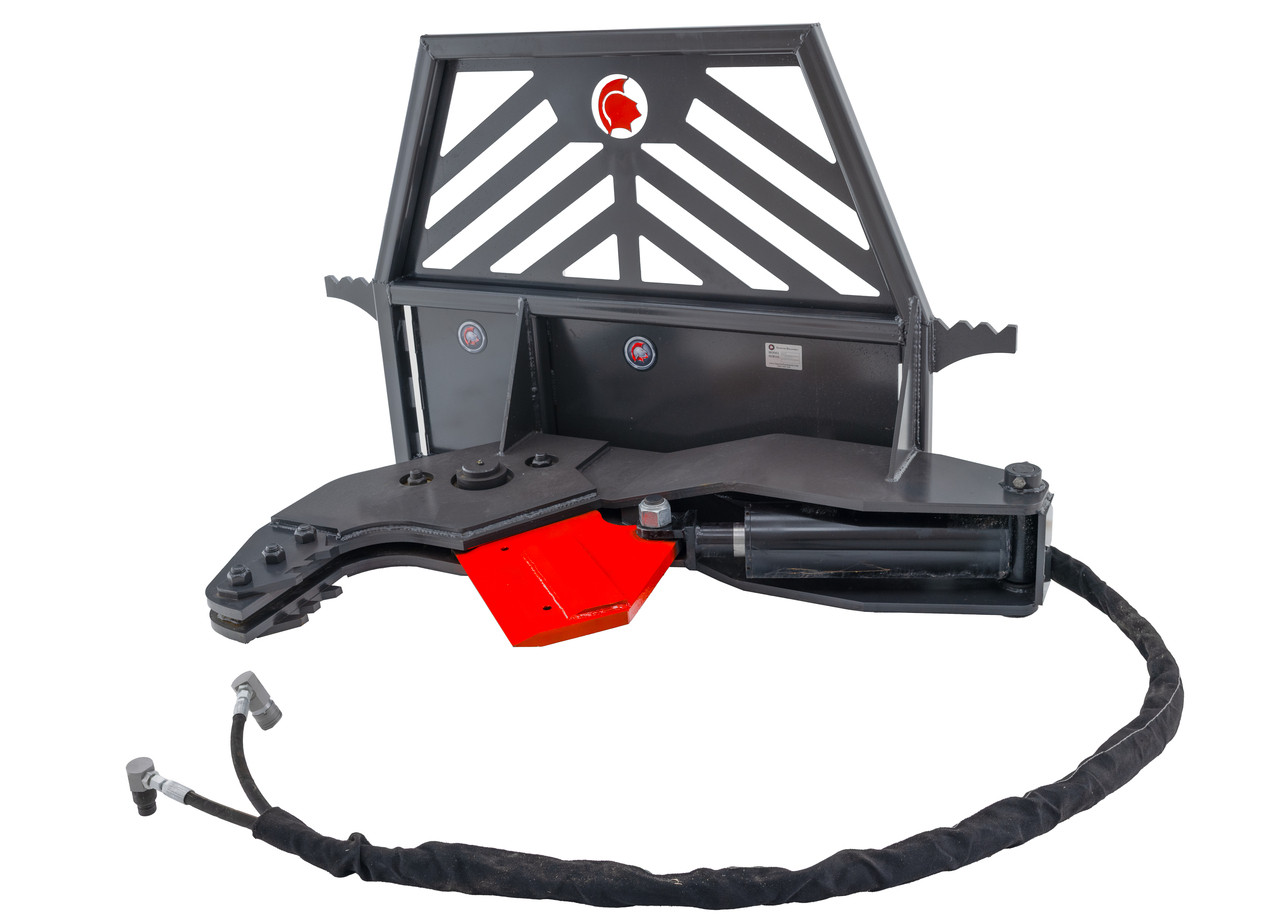
Tree removal can become a slow and expensive job when the equipment is not matched to the work. Cutting through smaller trees is one thing. Dealing with thicker trunks, branches, brush, and awkward growth around a jobsite is another. The attachment sitting on the front of the machine can make a noticeable difference.
A skid steer tree shear gives operators a way to cut and handle trees without relying on several different pieces of equipment for every part of the job. But not every tree shear is built the same. Before buying one, it helps to understand the specifications that actually affect performance, compatibility, and day-to-day use.
Why Tree Shear Specifications Matter
A tree shear may look fairly simple from the outside. There is a cutting mechanism, a frame, hydraulic components, and a mounting system. But those details determine how well the attachment works once it is connected to your skid steer.
For contractors and land-clearing crews, the wrong specification can mean slower cutting, poor hydraulic performance, or an attachment that simply does not match the machine.
That is why looking beyond the product name matters.
Cutting Capacity Is One of the First Things to Check
The maximum cutting diameter is an important specification when comparing tree shears.
Think about the type of trees you normally encounter. If most jobs involve smaller trees and brush, you may not need the same cutting capacity as a contractor working on heavier land-clearing projects.
Manufacturers may list a maximum tree diameter, but operators should still consider the actual conditions of the job. Tree species, wood density, position, and access can all affect how the attachment performs.
A larger advertised cutting capacity does not automatically mean it is the right choice. The specification needs to make sense for the machine and the work.
Hydraulic Requirements Should Match the Skid Steer
Hydraulic compatibility is another specification that should not be overlooked.
A tree shear relies on the skid steer’s hydraulic system to operate its cutting functions. If the attachment requires more flow or pressure than the machine can provide, you may not get the performance you expect.
Before ordering, check the attachment’s required gallons per minute and pressure specifications against the skid steer’s available hydraulic output.
This is especially important when moving between standard-flow and high-flow machines. A contractor may have several skid steers in the fleet, but that does not mean every machine will run the same attachment the same way.
Matching the hydraulic requirements from the start can save a lot of frustration.
Pay Attention to Attachment Weight
Weight is another specification that deserves attention.
A tree shear needs enough structure to handle demanding work, but the attachment still becomes part of the overall load carried by the skid steer. An attachment that is too heavy for a particular machine can affect handling, lifting capacity, visibility, and stability.
Look at the operating capacity of the skid steer along with the weight of the tree shear.
This becomes even more important when the job requires carrying or positioning cut material after the tree is separated. You are not only thinking about whether the attachment can cut. You also need to think about what the machine can safely handle afterward.
Mounting Compatibility Can Save You a Headache
A tree shear is only useful if it actually fits the machine.
Most skid steer operators are familiar with universal quick-attach systems, but compatibility should still be confirmed before purchase. Mounting dimensions, hydraulic connections, and coupler configuration all matter.
For equipment owners who already have several attachments, keeping compatibility consistent can make switching between tools much easier.
Spartan Equipment offers attachments designed around practical machine compatibility, giving contractors and operators more flexibility when building an attachment setup for their skid steer.
Blade and Cutting System Design Matters Too
Specifications are not only about numbers.
The design of the cutting system can have a direct effect on how the attachment handles trees. A strong cutting edge and properly designed structure are important when the attachment is repeatedly exposed to heavy wood and demanding conditions.
Look at how the blade is designed, how the tree is held during cutting, and how the overall frame is constructed.
A tree shear is going to see hard use. It needs to be built for more than occasional cleanup around a property.
This is where construction quality becomes just as important as maximum cutting capacity.
Tree Shear vs Other Tree Removal Attachments
Different attachments handle different parts of vegetation management.
A tree shear is focused on cutting. A grapple or similar attachment may be better suited for moving material once it is already on the ground.
A skid steer tree puller approaches the job differently. Instead of cutting through a trunk, it can be used for pulling trees or vegetation from the ground where the application and equipment setup make that approach practical.
For some contractors, having both types of attachments can make sense because tree removal is rarely one simple task. Cutting, pulling, stacking, and cleanup can all be part of the same project.
The important thing is matching the attachment to the specific work instead of expecting one tool to handle every situation.
Consider the Jobs You Actually Take
Before buying a tree shear, think about your typical jobs.
A landscaping contractor clearing smaller trees around properties may have different requirements than a land-clearing contractor preparing several acres for development.
Farm operators may be dealing with unwanted trees along field edges or fence lines. Municipal crews may need equipment for clearing rights-of-way, parks, drainage areas, or other public property.
Government and municipal buyers also have to consider equipment utilization across different crews and jobs. An attachment that can handle multiple practical applications may provide more value than a tool designed around one very narrow use.
The specification sheet should support the jobs you actually perform.
Don’t Ignore Serviceability and Attachment Construction
Tree removal puts equipment through rough conditions. Dirt, wood chips, branches, vibration, and repeated hydraulic cycles are part of the job.
Look at the overall construction and whether the attachment is designed for regular maintenance and service. Hydraulic components should be accessible, wear points should make sense, and the frame should be built to handle repeated use.
For equipment owners, these details can matter just as much as the initial purchase price.
A cheaper attachment that does not hold up under regular use can become expensive pretty quickly.
Questions to Ask Before Buying a Tree Shear
Before purchasing, ask a few basic questions:
- What is the maximum cutting diameter?
- What hydraulic flow and pressure does the attachment require?
- Is it compatible with the skid steer quick-attach system?
- How much does the attachment weigh?
- Is the attachment designed for the type of trees and vegetation on your jobs?
- How is the cutting system constructed?
- Are hydraulic connections included?
- What type of support or warranty is provided?
These questions help narrow down the options without getting distracted by specifications that do not matter to your actual work.
FAQ
What size skid steer do I need for a tree shear?
It depends on the specific tree shear and its operating requirements. Check the attachment’s recommended machine size, weight, hydraulic flow, and pressure requirements before choosing a skid steer.
What is the most important tree shear specification?
Cutting capacity is important, but it should not be considered by itself. Hydraulic requirements, attachment weight, mounting compatibility, and construction also affect how well the attachment will perform.
Can a tree shear remove large trees?
Some tree shears are designed for larger-diameter trees, while others are intended for smaller vegetation. Always compare the attachment’s rated cutting capacity with the trees you expect to encounter.
Is a tree shear better than a tree puller?
They perform different jobs. A tree shear cuts vegetation, while a skid steer tree puller is designed around pulling trees or vegetation from the ground. The better choice depends on the specific removal application.
Final Thoughts
Choosing the right tree shear comes down to more than finding the biggest attachment or the highest cutting capacity. Hydraulic compatibility, machine weight, mounting setup, cutting diameter, construction, and the type of work you actually perform all need to line up.
For contractors, farmers, landscapers, municipal crews, and equipment owners, the right attachment can make tree removal a much more manageable part of the job. And if your work involves pulling vegetation as well as cutting it, comparing a skid steer tree puller with your other attachment options can help you build a setup that covers more of the work.
Spartan Equipment provides attachments built around real equipment needs, helping operators find tools that fit their machines and the jobs they take on.
SEPTEMBER SALE — Free Shipping + Save 15% On Orders Over $2,500 With Code SPARTAN15