
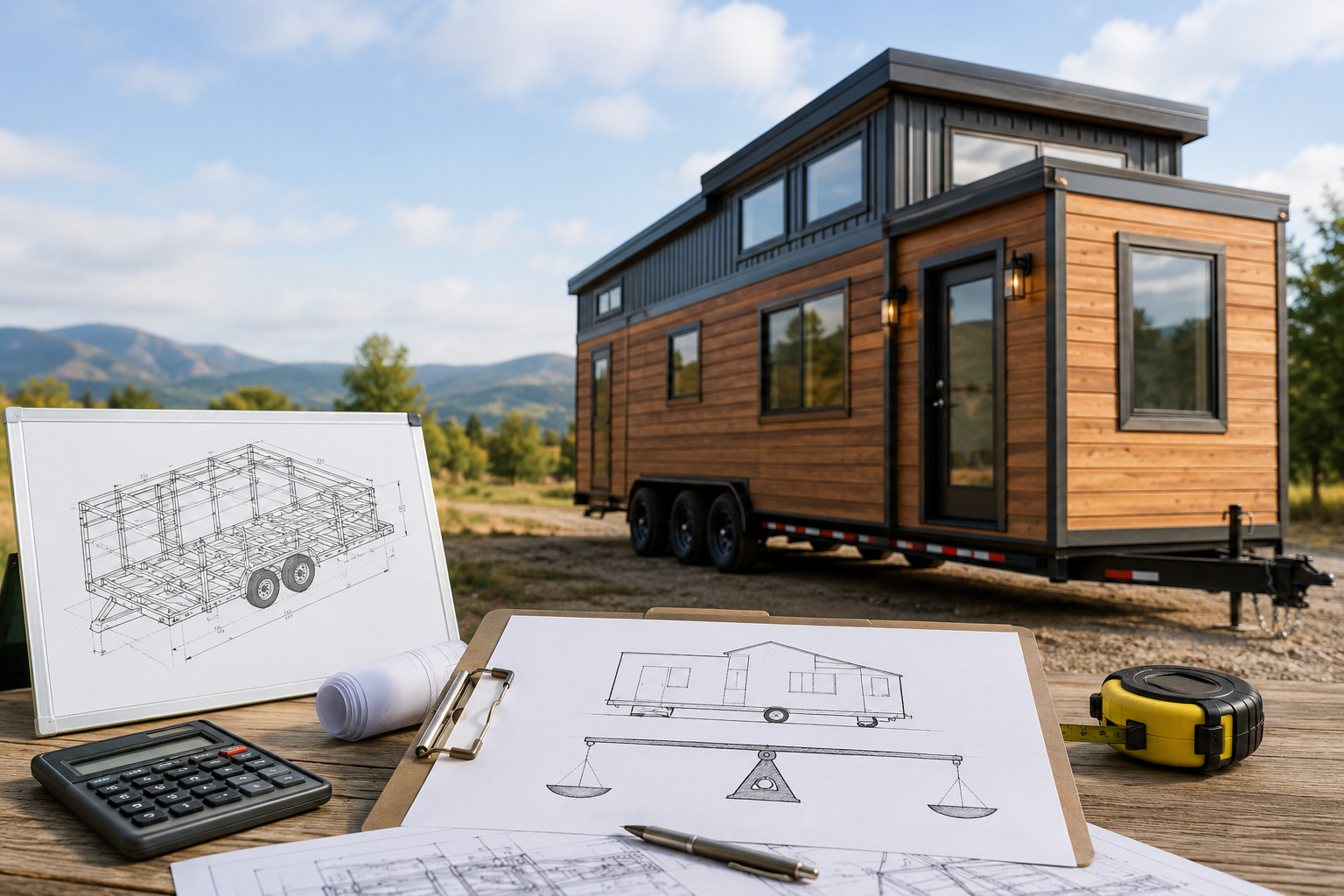
We usually get excited about the fun parts first, right?
The layout… the cozy loft… maybe that cute little kitchen we have been dreaming about for weeks. That is what pulls most of us into the tiny living world. But if we slow down for a second, tiny house experts will always remind us of one thing…
Everything starts with the trailer.
And yeah… it is not the most exciting topic. But honestly, it is one of the most important ones.
So let us talk about it in a simple way. No complicated stuff.
What Does GVWR Actually Mean?
Alright, let us break this down like we are chatting over coffee.
GVWR stands for Gross Vehicle Weight Rating.
Sounds big and technical… but it really just means this:
How much total weight your trailer can safely carry.
That includes everything…
- The trailer itself
- The house structure
- Furniture
- Appliances
- Water
- Your everyday stuff
Think of it like carrying a bag. If you keep adding things to it, at some point… it is going to struggle. Same thing happens with a trailer.
So Where Do Engineers Start?
Here is where things get interesting.
Engineers do not just guess the weight. They go piece by piece.
They look at:
- The wood or steel used for framing
- Flooring and roofing
- Insulation
- Windows and doors
- Kitchen cabinets
- Bathroom setup
- Appliances
Even small things add up. One shelf might feel light… but ten shelves? Different story.
It is kind of like packing for a trip. You start small, then suddenly your bag feels way heavier than expected.
Life Adds More Weight Than We Think
Here is something we do not always think about.
Once your tiny house is ready… it is not empty anymore.
We bring in:
- Clothes
- Dishes
- Books
- Tools
- Food
- Random little things we swear we “need”
And let us not forget water tanks. Fill those up, and wow… that is some serious weight.
That is why engineers do not stop at the basic structure. They always leave a little extra room. Not too much… just enough so the trailer is not constantly under stress.
Everything Has to Work Together
A trailer is not just one piece. It is a whole system.
You have:
- The frame
- Axles
- Tires
- Suspension
- Brakes
- Hitch
Now imagine this…
You upgrade the tires but keep weak axles. Does it help? Not really.
The whole setup is only as strong as its weakest part. That is why engineers match everything carefully. It all needs to support the same weight safely.
Weight Balance… Yeah, That Matters Too
Here is a part people often overlook.
Even if your total weight is “fine”… how that weight is spread matters a lot.
If everything is pushed to the back, towing becomes shaky.
If too much sits in the front, the hitch takes more load than it should.
Not great either way.
So engineers think about placement:
- Where the kitchen goes
- Where the bathroom sits
- Where heavy items like tanks or appliances are placed
It is kind of like loading a suitcase. If all the heavy stuff is on one side, it just feels off.
Planning Ahead (Because Things Always Change)
Let us be honest… no tiny house stays the same forever.
We add things later:
- Solar batteries
- Extra storage
- Better appliances
And suddenly… more weight.
Good trailer design takes this into account from the start. It gives you some breathing room instead of pushing everything to the limit.
That little bit of planning can save a lot of trouble later.
Why This Matters for DIY Builders
When we look at Tiny House kits, it is easy to focus on the visible parts.
Walls… finishes… design ideas…
That is the fun stuff.
But the trailer? That is the foundation holding everything together.
If it is strong and properly rated, everything above it feels more secure. Whether you plan to move your home or keep it parked, it just gives you peace of mind.
Final Thoughts
So yeah… calculating GVWR is not about picking the biggest, strongest trailer you can find.
It is more about balance.
Engineers look at:
- How heavy the home will be
- Where that weight will sit
- How all the parts work together
- What might change in the future
It is careful planning… not guesswork.
And honestly, when that part is done right, everything else becomes easier.
FAQs
1. Can we estimate GVWR ourselves?
We can make a rough guess, sure. But engineers go much deeper by looking at every component, which makes it far more accurate.
2. Does GVWR include the trailer itself?
Yes, it includes everything… the trailer plus everything loaded onto it.
3. Why is weight distribution so important?
Because balance affects how safely the trailer moves. Poor balance can make towing feel unstable and stressful.
4. Can we increase the trailer’s GVWR later?
Not really. Changing one or two parts does not change the official rating since everything works as one system.
5. Is choosing a higher GVWR always better?
Not always. The best choice is a trailer that fits your actual needs… not something oversized for no reason.