
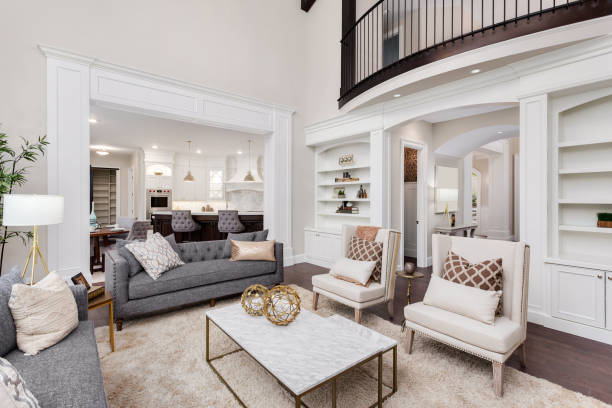
Most rooms feel busy because people skip the boring part. They jump straight into mixing stuff—wood, metal, fabrics, patterns—without setting any kind of base. That’s where it goes sideways. If you look at how Las Vegas Interior Design Services approach a space, they usually start quiet. Plain walls. Simple flooring. Nothing screaming for attention. It might even feel too plain at first. That’s fine. You need that breathing room. Without it, every texture you add later just piles on top of noise.
One Material Leads, The Rest Follow
You don’t need ten “statement” pieces. That’s not a thing, no matter what Pinterest says. Pick one material that carries the room. Could be natural wood, could be stone, maybe a big upholstered sofa with some weight to it. Let that be the anchor. Then everything else just… supports it. When everything tries to stand out, nothing actually does. It just feels messy. A clear lead makes decisions easier too. You’re not guessing every time you add something new.
Slow Down With the Layers
This part is where people lose patience. They want the finished look in one weekend. Doesn’t work like that. You add a rug, live with it a bit. Then maybe curtains. Then maybe a textured lamp or a side chair. Give it time. Your eye adjusts slowly, not instantly. When you rush, you end up over-layering because you can’t tell what’s enough. And yeah, then the room feels crowded. Go slower than you think you should. It actually saves you from fixing mistakes later.
Contrast Is Good, But Don’t Go Wild
You do want contrast. A room full of the same texture feels flat. But there’s a limit. Pairing soft with hard works—like a linen sofa with a metal table. Or rough wood with smooth ceramic. That kind of mix feels natural. But when every piece has its own strong texture, it gets chaotic fast. There’s no place for your eye to rest. So yeah, mix things up, just don’t turn it into a texture competition.
Keep Colors Under Control
Here’s a simple truth—too many colors make textures look louder than they are. Even nice materials start clashing if the palette is all over the place. Keep your colors tight. Neutrals work well because they let texture do the talking. Doesn’t mean boring, just controlled. Maybe warm tones, maybe cooler shades, but stay in a lane. When color is calm, you can layer more without things getting overwhelming.
Leave Some Space Alone
Not every corner needs something. This is where people overdo it. They feel like empty space means unfinished. It doesn’t. It actually helps everything else look better. When there’s space around objects, you notice textures more. They stand out in a good way. When everything is packed together, it just blends into clutter. So yeah, leave a wall empty. Skip a side table if you don’t need it. The room won’t suffer, it’ll breathe.
Small Repeats Make a Big Difference
You don’t have to match things exactly, but repeating elements helps tie the room together. Maybe the wood tone shows up in two or three spots. Maybe a fabric texture appears again in a cushion or throw. Keep it subtle though. If it’s too obvious, it starts looking staged. The goal is that everything feels connected without people being able to point out exactly why. That’s when it works.
Lighting Can Ruin or Fix Everything
This one gets ignored way too much. The same material can look completely different depending on lighting. Natural light softens things. Harsh lighting can make textures feel sharp or cheap. Before you commit to anything, look at it in your space, not just in a store. What looked great under showroom lights might feel off at home. Happens all the time. Sometimes you don’t need new materials, you just need better lighting.
Know When to Stop Adding
This is the part most people struggle with, even some pros. You keep adding because you think something’s missing. But sometimes nothing is missing. It just needs editing. A lot of Las Vegas Home Interior Designers will actually remove items before adding new ones. That’s the trick. Step back. If the room feels heavy, take something out. Don’t keep piling on hoping it’ll fix itself. It won’t.
Conclusion: Less Noise, More Intent
Layering textures isn’t complicated, but it’s easy to mess up if you rush or overthink it. Keep the base simple. Choose one material to lead. Add slowly. Stop before it feels crowded. That’s really it. The goal isn’t to impress people with how much you added. It’s to make a space that feels good to sit in. If it feels calm but still interesting, you got it right. If it feels busy… you probably just need to take one or two things away.