
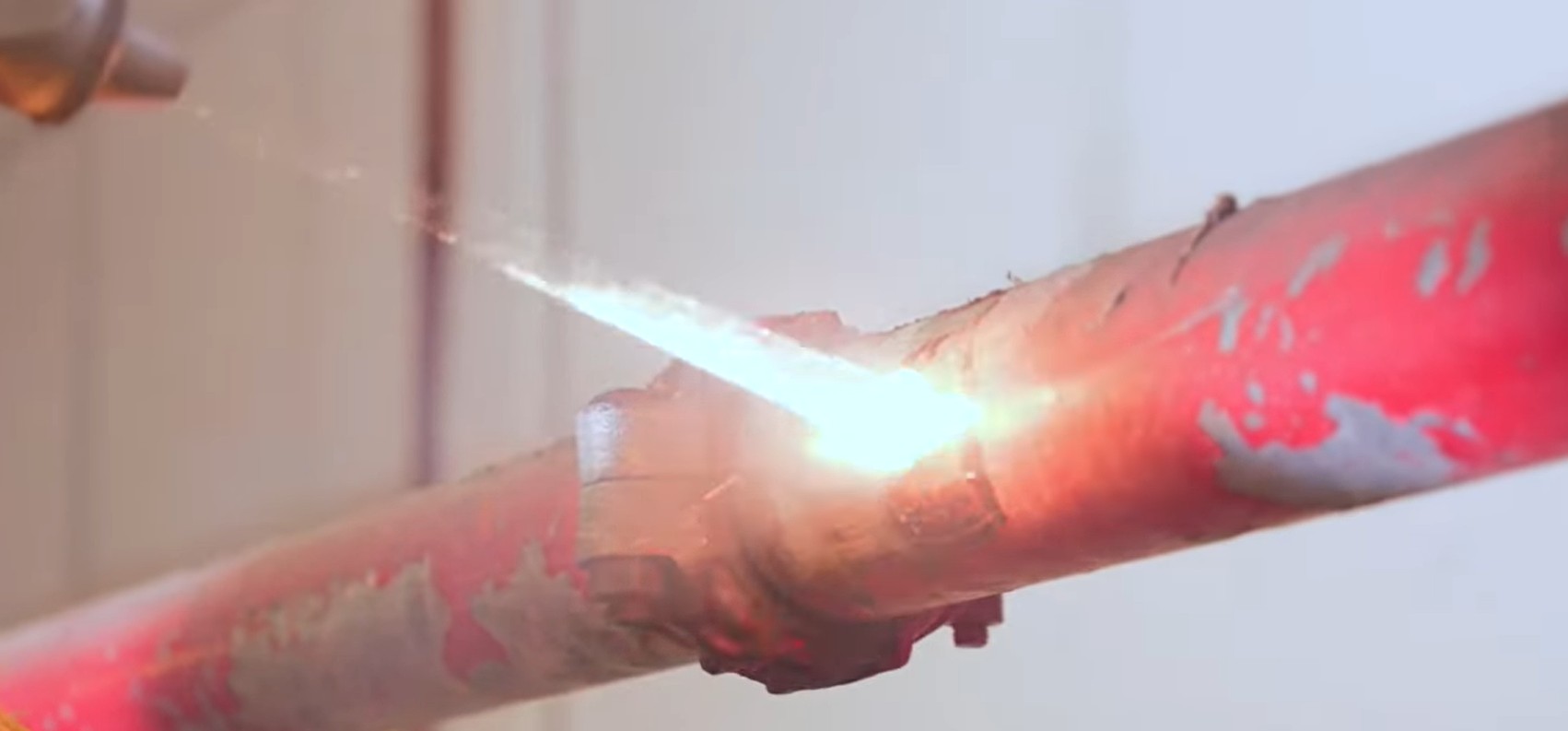
Rust doesn’t wait. Once oxidation takes hold on metal surfaces, it spreads fast and quietly, eating through structural integrity, compromising coatings, and driving up repair costs.
For facilities managers, industrial contractors, and commercial property owners, the question isn’t whether to treat it. It’s how.
Laser rust removal services have emerged as one of the most precise and efficient answers to that problem, and understanding how they work can help you make a smarter call on your next project.
What Are Laser Rust Removal Services and How Do They Work
Laser rust removal services use concentrated light energy to break down rust, oxidation, and surface contaminants at the molecular level. The laser beam heats the corroded layer rapidly, causing it to vaporize or flake off without touching the base metal underneath.
This process is called laser blasting, and it’s fundamentally different from anything mechanical or chemical. There’s no abrasive media, no harsh solvents, and no secondary waste stream to deal with. The laser targets only what needs to go, leaving the clean metal surface behind and ready for coating.
The technology works on steel, aluminum, cast iron, and a range of alloys. It handles flat surfaces, structural beams, pipe joints, and detailed areas that traditional methods struggle to reach cleanly.
Why Traditional Methods Fall Short
Abrasive blasting has been the industry standard for decades, and it does the job. But it comes with real drawbacks. It generates large volumes of spent media and dust, requires containment setups, and can introduce surface stress or dimensional changes on thinner materials.
Chemical rust removal works for smaller applications but brings its own set of issues: disposal regulations, handling hazards, inconsistent results on heavy oxidation, and long dwell times that slow a project down.
Manual scraping and grinding are labor-intensive and almost never get into tight corners, weld seams, or complex geometries without leaving contamination behind.
That contamination matters. If rust or mill scale stays on a surface before coating, adhesion fails. A coating failure on a commercial or industrial asset isn’t just an aesthetic problem. It’s a recurring cost.
Key Benefits of Laser Blasting for Industrial and Commercial Surfaces
Laser cleaning services offer a set of advantages that are hard to match with conventional surface preparation:
- Precision: The laser removes only the oxidation and contamination, not the base material. This matters for tight-tolerance components or surfaces where dimensional accuracy is important.
- No media waste: Unlike abrasive blasting, there’s no spent grit to collect, bag, and dispose of. This simplifies cleanup and reduces project downtime.
- Better coating adhesion: A surface cleaned by laser blasting has a consistent, clean profile that paint and protective coatings bond to reliably.
- Reduced surface stress: No mechanical impact means no micro-cracking or warping, especially relevant on thinner steel sections.
- Safer work environment: No silica dust, no chemical exposure. Industrial rust removal via laser significantly reduces airborne hazards on job sites.
For projects where surface integrity and coating performance are non-negotiable, laser rust removal services consistently deliver a cleaner starting point.
When Should You Consider Laser Rust Removal
Not every project calls for laser blasting, but several situations make it the clear choice:
Industrial rust removal on structural components that can’t afford dimensional changes. Any surface going into a high-performance coating system where adhesion is critical. Confined spaces or complex geometries where abrasive blasting creates containment headaches.
Projects with strict environmental controls or waste disposal limitations. Maintenance cycles on equipment that needs to stay partially operational during treatment.
If your project involves any combination of these conditions, it’s worth getting a surface preparation assessment before defaulting to older methods.
FAQs
What surfaces can laser rust removal services treat?
Laser rust removal services work on most metal surfaces, including carbon steel, stainless steel, aluminum, and cast iron. The process is especially effective on structural components, machinery housings, and fabricated assemblies.
Is laser blasting safe for thin metal sections?
Yes. Because the process uses light energy rather than mechanical force, there’s no risk of warping or stress damage on thinner materials, making it suitable for applications where abrasive blasting would be too aggressive.
How does laser cleaning compare to abrasive blasting in terms of cost?
The upfront cost of laser cleaning services can be higher per square foot, but the reduction in media disposal, containment setup, and rework from coating failures often makes the total project cost comparable or lower.
The Final Words
Rust treatment is one part of the surface preparation equation. Getting it right the first time means fewer coating failures, longer asset life, and fewer unplanned maintenance cycles down the road. If your next project involves corroded metal surfaces, consulting with a professional surface preparation specialist before work begins is one of the better investments you can make.