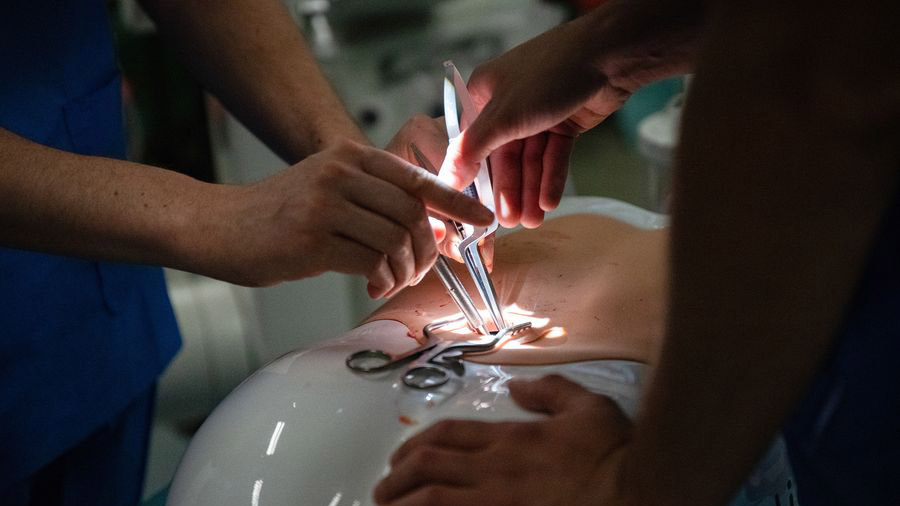
For many suffering from chronic back or neck pain, the thought of spine surgery can be as daunting as the condition itself. Visions of large incisions, lengthy hospital stays, and a difficult recovery often create significant anxiety. Fortunately, modern surgical advances have ushered in a transformative alternative: Minimally Invasive Spine Surgery (MISS). This sophisticated approach prioritizes precision and tissue preservation, offering patients effective treatment with the significant benefits of less post-operative pain, smaller scars, and a faster return to daily life.
Minimally Invasive Spine Surgery is not a single procedure, but a philosophy and a set of advanced techniques. Unlike traditional “open” spine surgery, which requires large incisions and often involves pulling muscles and soft tissues aside to access the spine, MISS utilizes specialized technology and instruments to perform the necessary repairs through much smaller openings. The core principle is to achieve the same surgical goal whether decompressing a pinched nerve or stabilizing a vertebra while causing the least possible disruption to the surrounding healthy anatomy.
How MISS Works: Precision Through Technology
The success of MISS hinges on advanced technology that acts as an extension of the surgeon’s skill:
-
Specialized Tubular Retractors: Instead of cutting through muscles, surgeons use a series of sequential dilators to gently separate muscle fibers along their natural planes. A small tube, often less than an inch in diameter, is then inserted, creating a protected “working channel” directly to the problem area of the spine.
-
Advanced Visualization: Surgeons operate using a high-definition surgical microscope or an endoscope (a thin tube with a camera) fed through the retractor. This provides a brilliantly illuminated, magnified view of the surgical site on a monitor, allowing for exceptional precision despite the small incision.
-
Navigational and Robotic Guidance: For procedures requiring spinal instrumentation (like screws), real-time image guidance systems act as a GPS for the spine. This technology enhances the accuracy of implant placement, improving safety and outcomes.
The Patient-Centered Benefits
The technical advantages of MISS translate directly into tangible benefits for the patient:
-
Less Muscle Trauma and Blood Loss: By avoiding large muscle dissection, MISS significantly reduces soft tissue damage. This leads to minimal blood loss during surgery and far less post-operative muscle pain and spasm.
-
Reduced Post-Operative Pain: With less tissue disruption, patients typically experience considerably less pain after surgery. This often results in a decreased need for opioid pain medications and their associated side effects.
-
Shorter Hospital Stay and Faster Recovery: Many MISS procedures are performed as outpatient surgeries or require only a one-night hospital stay. Patients can often return to light activities and sedentary work much sooner than with traditional surgery.
-
Smaller Scars: The incisions are typically just a few centimeters long, leading to minimal, cosmetic scarring.
It is important to understand that Minimally Invasive Spine Surgery is not suitable for every condition or patient. It is most commonly used for procedures like discectomies, laminectomies, and certain spinal fusions. A thorough evaluation by a qualified spine specialist is essential to determine if a patient is an ideal candidate.
Ultimately, MISS represents a major shift in spinal care, aligning surgical intervention with the goal of maximizing recovery and quality of life. By minimizing the physical toll of the operation itself, it allows patients to focus their energy on healing and returning to the activities they love with greater speed and comfort.