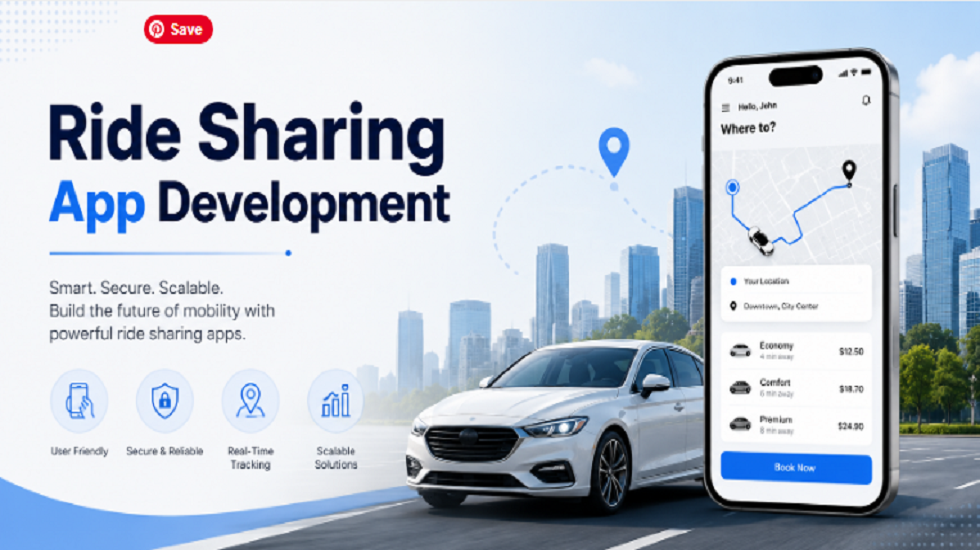
Building a ride-sharing platform is a major digital product undertaking that goes far beyond just creating a mobile application. It involves designing a real-time transportation ecosystem where riders, drivers, payments, routing systems, and administrative operations all work together seamlessly.
For anyone planning a rideshare business, one of the earliest and most important questions is how long ride-sharing app development actually takes—from the initial idea to a live product available to users.
The honest answer is that there is no single fixed timeline. A simple MVP can be launched in a few months, while a fully scalable, market-ready platform can take over a year. The timeline depends heavily on the complexity of features, technical architecture, team experience, and long-term vision.
To understand this properly, we need to break the journey into phases and examine what actually happens during each stage.
The Real Complexity Behind a Ride Sharing Platform
At first glance, a ride-sharing app may look similar to any other booking application. But in reality, it is a real-time distributed system that processes thousands of events per second—driver availability, rider requests, location updates, fare calculations, and payment transactions.
A complete ride-sharing ecosystem typically includes three core components:
The rider application is what customers use to book rides, track drivers, view fares, and complete payments. The driver application manages incoming ride requests, navigation, earnings, and availability status. In addition, there is an administrative dashboard that allows the business to manage users, monitor rides, handle disputes, and analyze revenue.
Behind all of this sits a backend infrastructure that ensures real-time matching, data synchronization, and system reliability. Many platforms also integrate fleet management systems when dealing with corporate transport or vehicle-owned operations.
Because of this layered structure, ride-sharing app development is closer to building a logistics infrastructure than a simple mobile product.
Phase 1: Idea Validation and Concept Formation
Every successful platform begins with clarity of purpose. Before any design or development work begins, founders must understand what problem they are solving and for whom.
In ride-sharing, this often involves defining whether the platform is targeting daily commuters in urban cities, corporate transportation needs, intercity travel, or niche markets such as women-only rides or electric vehicle fleets.
This stage also includes analyzing competitors. Established platforms already dominate many regions, so understanding their strengths and weaknesses helps identify opportunities for differentiation.
Another important aspect of this phase is deciding the business model. Some platforms operate on commission per ride, others use subscription-based models for drivers, and some combine both approaches.
Although this stage does not involve coding, it is extremely important because unclear planning here leads to scope changes later, which can significantly delay development.
Phase 2: Market Research and Feasibility Study
Once the idea is clearly defined, the next step is to evaluate whether it is feasible in the real world. This involves studying market demand, driver availability, pricing expectations, and regulatory requirements.
For example, launching a ride-sharing service in a dense metropolitan area like Delhi or Mumbai presents different challenges compared to launching in smaller tier-2 cities where driver supply may not be consistent.
This stage also helps determine whether the platform should begin as a hyperlocal service or a broader regional solution.
Many startups work with an on demand app development company during this stage because technical feasibility is just as important as business feasibility. The goal is to ensure that the idea can be built within realistic budget and technology constraints.
Typically, this phase includes detailed research reports, competitor analysis, and early cost estimations. It usually takes a few weeks, but its impact lasts throughout the entire project lifecycle.
Phase 3: Defining Product Scope and Feature Planning
After validation, the next step is deciding exactly what will be built in the first version of the product. This is where many ride-sharing projects either stay focused or become overly complex.
A common mistake is trying to replicate large-scale platforms from day one. However, successful launches usually begin with a minimum viable product that includes only essential features such as user registration, ride booking, driver matching, GPS tracking, and payment processing.
The purpose of an MVP is not to be perfect, but to test real user behavior in the market. Once usage data is available, additional features can be introduced based on demand.
Advanced features such as surge pricing, ride pooling, AI-based route optimization, and loyalty programs are typically reserved for later stages of development.
At this point, ride sharing app development companies often help businesses prioritize features based on cost, complexity, and time-to-market considerations. This ensures that development efforts are focused on what truly matters in the early stages.
Phase 4: UI/UX Design and User Journey Mapping
Once the scope is finalized, attention shifts toward designing the user experience. In ride-sharing applications, design plays a critical role because users expect extremely fast and frictionless interactions.
A rider should be able to open the app, confirm pickup location, select destination, and book a ride within seconds. Similarly, drivers should be able to accept or reject ride requests without confusion or delay.
To achieve this, designers begin by mapping complete user journeys for both riders and drivers. This helps identify every interaction point in the system.
Wireframes are created first to define structure, followed by interactive prototypes that simulate user behavior. Once approved, the final UI design is developed for mobile and web interfaces.
Since ride-sharing platforms usually include multiple systems—rider app, driver app, and admin dashboard—design complexity is significantly higher than standard applications. This phase alone can take several weeks depending on the level of customization required.
Phase 5: System Architecture and Technical Planning
Before development begins, the technical foundation of the platform must be carefully designed. This is one of the most important stages in ride-sharing app development because it determines how well the system will scale in the future.
The architecture defines how different components communicate with each other. For example, how ride requests are processed, how drivers are matched, how location updates are transmitted, and how payments are handled.
Real-time communication is a core requirement. Unlike traditional apps, ride-sharing platforms must continuously process live data streams, which requires efficient backend systems.
Technology stack selection also happens here. Developers decide whether to use Node.js, Python, Java, or other backend frameworks, along with database systems such as SQL or NoSQL depending on data structure requirements.
Cloud infrastructure planning is equally important because scalability is essential. Platforms must be able to handle sudden spikes in usage without performance issues.
Phase 6: Core Development Begins
This is the longest and most resource-intensive phase of the entire process. It is where all planning transforms into actual working software.
Development typically happens in parallel across multiple components. The rider application is built to handle booking, tracking, payments, and ride history. The driver application is developed to manage ride requests, navigation, and earnings.
At the same time, the backend system is built to handle core logic such as ride matching, pricing calculations, user authentication, and notification delivery.
The admin panel is also developed to give business operators control over the platform, allowing them to monitor rides, manage users, and analyze performance metrics.
Because all these systems are interconnected, coordination between teams is critical during this phase. Even small delays in backend development can affect frontend progress, making project management extremely important.
Phase 7: Third-Party Integrations and External Dependencies
Once the core applications and backend systems are under development, another critical layer of ride sharing app development begins—integrating third-party services. These integrations are essential because a ride-sharing platform cannot function in isolation.
One of the most important integrations is mapping and navigation. Services like Google Maps or Mapbox are used to calculate routes, estimate fares, and provide real-time tracking of drivers. This is not just a plug-and-play feature; it requires careful configuration to ensure accuracy in distance calculation and ETA predictions.
Payment gateways are another crucial dependency. Whether the platform uses Stripe, Razorpay, or another provider, secure and reliable transaction handling is mandatory. This includes ride fare calculation, wallet systems, refunds, and commission deductions. Any issue in payment flow directly impacts user trust, making this integration highly sensitive.
Communication systems also play a key role. SMS gateways are used for OTP verification, while push notification services ensure users receive real-time updates about ride status. Email services may also be used for invoices and account alerts.
Although these integrations may seem straightforward, they often introduce delays due to API limitations, regional restrictions, and compliance requirements. In many real-world projects, this stage adds unexpected time to the overall development cycle.
Phase 8: Fleet Management Systems and Operational Expansion
As ride-sharing platforms grow beyond a basic MVP, many businesses begin integrating fleet management systems to handle larger operational structures. This is especially important for companies that own or manage vehicles rather than relying purely on independent drivers.
Fleet management systems help operators track vehicle usage, assign drivers efficiently, monitor maintenance schedules, and analyze overall fleet performance. In more advanced setups, these systems also manage fuel usage, driver shifts, and vehicle availability across multiple locations.
From a development perspective, integrating fleet management significantly increases complexity. It introduces additional dashboards, reporting layers, and operational workflows that must sync with the core ride-matching system.
For enterprise-level platforms, this stage is not optional. It becomes the backbone of operational efficiency and scalability, especially in corporate transport, logistics-based rides, or B2B mobility services.
Phase 9: Testing and Quality Assurance
After development and integration work begins to stabilize, the focus shifts toward testing. This is one of the most critical stages in ride-sharing app development because real-time systems must perform reliably under unpredictable conditions.
Testing is not a single activity but a continuous process that runs alongside development and intensifies toward the end of the build cycle.
Functional testing ensures that all features work as intended. For example, ride booking should correctly match drivers, fare calculations should be accurate, and payments should process without errors.
Performance testing is equally important. Ride-sharing platforms must handle high traffic volumes, especially during peak hours. Even a few seconds of delay in ride matching can lead to poor user experience.
Load testing simulates thousands of simultaneous users to check system stability. This helps identify bottlenecks in backend systems or database queries that could fail under pressure.
Security testing is also essential. Since these platforms handle sensitive user data and financial transactions, protecting against breaches and vulnerabilities is a priority.
GPS accuracy testing is another unique requirement for this industry. Even small deviations in location tracking can lead to incorrect pickups or dropped rides.
This phase often takes several weeks because issues discovered here must be fixed and retested, sometimes repeatedly, before the system is stable enough for launch.
Phase 10: Deployment and Launch Preparation
Once testing is complete and the platform is stable, the next step is preparing for launch. This involves deploying backend systems to production servers, configuring cloud infrastructure, and ensuring all services are ready for real-world traffic.
Mobile applications are submitted to app stores for review. This process can take time depending on compliance with platform guidelines. Any rejection or required changes can further extend the timeline.
At the same time, monitoring tools are configured to track system performance after launch. These tools help detect issues in real time, such as server overloads, failed transactions, or GPS inconsistencies.
A soft launch is often recommended before a full-scale rollout. In this approach, the platform is released in a limited geographic area or user base to observe real-world behavior. This helps identify issues that may not have appeared during testing.
Phase 11: Post-Launch Optimization and Scaling
Launching the app is not the end of ride sharing app development—it is actually the beginning of the product’s real evolution.
Once users start interacting with the platform, real-world data begins to reveal new insights. Developers and product teams analyze user behavior, ride patterns, cancellation rates, and payment flows to identify areas of improvement.
Bug fixes are common in the early stages after launch, especially when dealing with real-time systems. Even well-tested platforms often require adjustments once exposed to actual traffic conditions.
Performance optimization also becomes important as user numbers grow. Servers may need scaling, database queries may need optimization, and caching strategies may be introduced to improve speed.
Over time, new features are introduced based on user feedback. These may include ride scheduling, loyalty programs, corporate dashboards, or AI-based ride matching systems.
Realistic Timeline Breakdown
When all phases are combined, the overall timeline becomes clearer.
A minimum viable product typically takes around three to six months to build. This version focuses on essential features and is designed to validate the business idea in the market.
A more competitive and feature-rich product usually takes six to twelve months. This version includes advanced functionality, better user experience, and improved backend systems.
Large-scale enterprise platforms, especially those integrating fleet management systems and advanced analytics, can take twelve to eighteen months or more. These systems are designed for long-term scalability and high-volume operations.
The variation in timeline is not random. It directly depends on how ambitious the product vision is and how much functionality is being built from the start.
Why Ride Sharing App Development Often Gets Delayed
Even with proper planning, many projects take longer than expected. One of the most common reasons is unclear requirements. When features are not well-defined at the beginning, teams often make changes mid-development, which leads to rework and delays.
Another common issue is underestimating integration complexity. External services like maps, payments, and messaging systems often behave differently in production environments compared to testing environments.
Lack of experienced technical teams can also slow down progress. Ride-sharing systems require expertise in real-time architecture, scalability, and distributed systems, which are not always available in general development teams.
Testing is another area where timelines often extend. Since ride-sharing apps operate in real-world environments, unexpected bugs and edge cases frequently appear during final testing stages.
Role of Development Partners in Timeline Efficiency
Choosing the right development partner plays a major role in how quickly and efficiently a platform is built. Experienced ride sharing app development companies often use pre-built modules, reusable architectures, and proven workflows that significantly reduce development time.
Similarly, specialized Taxi app development services providers understand industry-specific challenges such as dispatch systems, fare calculation models, and driver management workflows, which helps avoid common mistakes.
For startups exploring broader mobility solutions, working with an on demand app development company can be beneficial because they often have experience building scalable systems across different industries, including logistics and delivery.
However, the most important factor is not just speed but the ability to build a stable and scalable architecture that can support long-term growth.
Final Conclusion
So, how long does ride sharing app development take from idea to launch?
The most realistic answer is that it depends on the depth of your vision and the complexity of your platform. A simple MVP can be built in a few months, but a fully scalable ride-sharing ecosystem that can support thousands of users, drivers, and real-time operations requires significantly more time.
What often matters more than speed is how well the system is designed during the early stages. A rushed product may launch quickly but struggle with scalability and performance later. A well-planned product may take longer initially but performs far more reliably in real-world conditions.
In the end, building a ride-sharing platform is not just about launching an app—it is about creating a dependable mobility system that can evolve with user demand, market conditions, and technological advancements.