
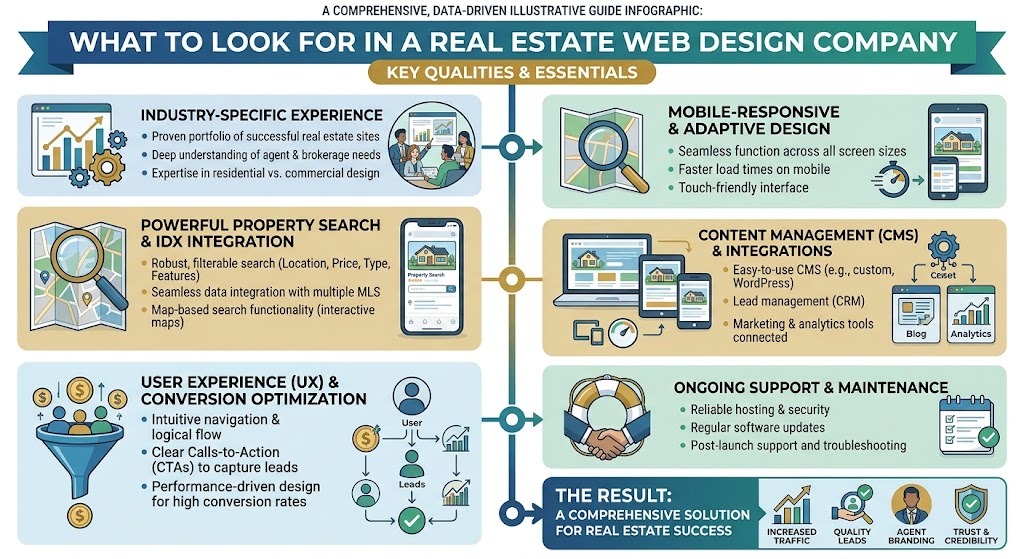
In real estate, your website is often the first impression a buyer, seller, or investor has of your brand. Before anyone calls your office or visits a listing, they are searching online, comparing agents, and judging credibility within seconds. A polished, fast, easy-to-use website can turn those visitors into leads. A clunky one sends them to a competitor.
Choosing the right real estate web design company is therefore a business decision, not just a creative one. Here is what to look for.
1. Proven Experience in Real Estate
Industry-Specific Knowledge
A general web designer may build a beautiful site, but real estate has unique needs: property listings, search filters, neighborhood pages, mortgage calculators, lead capture forms, and agent profiles. A company with real estate experience already understands how buyers and sellers browse and what makes them act.
A Relevant Portfolio
Ask to see live examples of real estate websites they have built. Look at the layout, the speed, and how easily you can find listings. A strong portfolio shows they can handle both design and function. If possible, contact past clients and ask about their experience and results.
2. Seamless IDX and MLS Integration
Why IDX Matters
Most real estate websites rely on IDX (Internet Data Exchange) to display live MLS listings. Without it, your site can feel static and out of date. A good web design company should integrate IDX smoothly, so listings update automatically and match your site’s design.
Questions to Ask
- Which IDX providers do you work with?
- Can listings be customized to match my branding?
- Will the listings help my site rank in search engines, or are they simply embedded from another source?
Clear, confident answers here are a good sign. Vague ones are a red flag.
3. Mobile-First, Responsive Design
Where Your Visitors Are
A large share of property searches happen on smartphones. Buyers browse listings on the go, check photos during lunch breaks, and tap to call agents directly from their phones.
What to Expect
Your designer should build for mobile first, not treat it as an afterthought. Look for fast loading, large tappable buttons, easy-to-read text, and photo galleries that work well on small screens. Test their previous sites on your own phone before you decide.
4. Strong SEO Foundations
Visibility Drives Leads
A beautiful website is worthless if nobody finds it. Search engine optimization (SEO) helps you appear when people search for terms like “homes for sale in [your city]” or “best realtor near me.”
Built-In SEO Features
A good real estate web design company should include:
- Clean, search-friendly site structure
- Optimized page titles, meta descriptions, and headings
- Fast page speed and Core Web Vitals compliance
- Schema markup for listings and local business details
- Dedicated neighborhood and community pages for local search
Ask how they approach SEO during the design phase rather than treating it as a separate add-on.
5. Lead Generation and CRM Integration
Designed to Convert
Your website should work as a lead generation machine. That means clear calls to action, home valuation tools, saved search options, contact forms, and chat features placed where visitors naturally look for them.
Connecting to Your Tools
Leads should flow straight into your CRM, such as Follow Up Boss, KVCore, or HubSpot. Confirm that the company can connect your site with your email marketing, automation, and tracking tools so no lead slips through the cracks.
6. Branding and Visual Quality
Reflecting Your Identity
Real estate is a relationship-driven business, and your website should reflect your personality, values, and market position. A luxury agent needs a very different look from a first-time-buyer specialist.
Professional Visuals
Look for a designer who understands high-quality photography, video, virtual tours, and clean typography. They should be able to guide your visual identity rather than simply apply a template. Custom design usually sets you apart better than a recycled theme that dozens of other agents are also using.
7. Speed, Security, and Reliability
Performance Matters
Slow websites lose visitors and rank lower in search results. Property sites are image-heavy, so your developer should know how to compress media and use modern hosting and caching to keep pages fast.
Security Essentials
You collect personal information from leads, so security is not optional. Make sure the company provides SSL certificates, regular backups, software updates, and protection against spam and hacking.
8. Transparent Pricing and Clear Communication
Understand the Full Cost
Pricing models vary widely. Some companies charge a one-time design fee, others use monthly subscriptions, and many combine both. Ask what is included: IDX fees, hosting, maintenance, content updates, and support. Hidden costs can turn an affordable quote into an expensive surprise.
Communication Style
Pay attention to how the company communicates during the sales process. Are they responsive? Do they explain things clearly without jargon? The way they treat you before signing is usually a preview of the working relationship afterward.
9. Ongoing Support and Training
Life After Launch
A website is never truly finished. Listings change, markets shift, and you will want to add blog posts, update photos, or launch new pages. Find out what support is available after launch, how quickly they respond to issues, and whether they offer training so your team can make simple updates independently.
Long-Term Partnership
The best companies act as partners, not just vendors. They may offer analytics reports, performance reviews, and suggestions for improvement as your business grows.
10. Content, Analytics, and Growth Features
Content That Builds Trust
Market updates, buyer and seller guides, neighborhood spotlights, and client testimonials help establish you as a local expert. Ask whether the company can support content strategy or blogging features.
Tracking Results
Your website should include analytics tools such as Google Analytics and Search Console. These show where visitors come from, which pages perform best, and which actions lead to inquiries. Without data, you are guessing at what works.
Red Flags to Watch For
- No real estate portfolio or client references
- Unclear or inflated promises about “guaranteed first-page rankings”
- Locked-in contracts that prevent you from owning your site or domain
- Template-only designs with no customization
- Poor communication or missed deadlines before the project even starts
Final Thoughts
The right real estate web design company combines industry knowledge, technical skill, and a genuine interest in your success. Focus on proven experience, IDX integration, mobile-first design, SEO, lead generation, and reliable support. Take the time to compare several providers, ask detailed questions, and review their past work.
A well-built website works for you around the clock, attracting visitors, building trust, and generating leads while you focus on clients. Choose a partner who understands that goal, and your website will become one of your most valuable business assets.