Investing in premium human hair wig products offers a great amount of versatility and the ability to achieve natural movement along with super easy styling. Whether you like to wear straight, body wave or curly hair wigs, high-quality hair helps you transform your ordinary look every day. However, getting your fingers tangled in knots from your favorite wig can be incredibly frustrating.
Unlike natural hair attached to your scalp, a wig human hair does not receive continuous hydration from natural sebum. This makes it far more susceptible to dryness, friction, and environmental wear. When tangling occurs, it is rarely due to poor craftsmanship alone—more often, it stems from subtle daily care routine missteps.
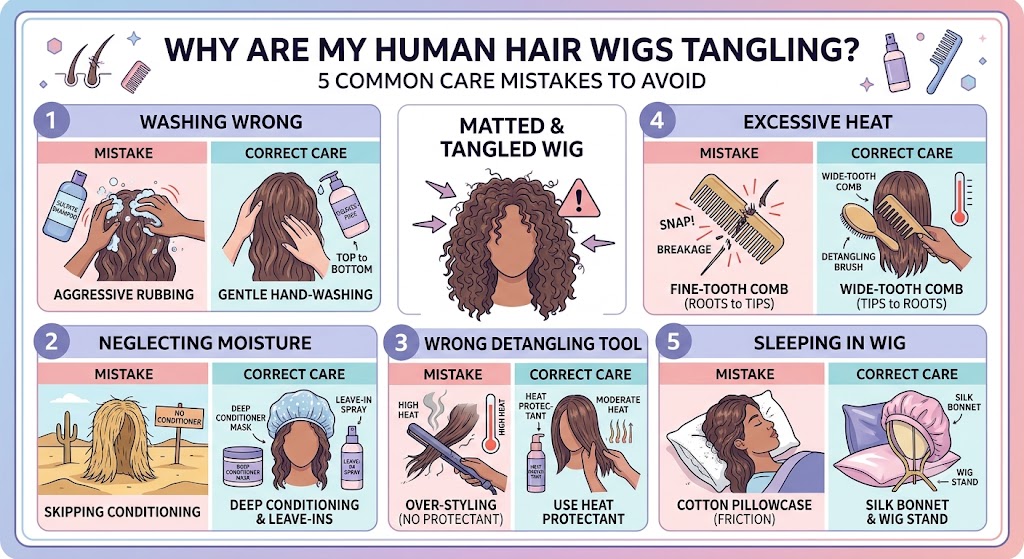
In this comprehensive guide, we unpack the root causes of hair matting and detail the top 5 care mistakes that cause hair wigs to tangle, along with actionable solutions to keep your wigs silky, manageable, and soft for years.
Understanding Why Human Hair Wigs Tangle
Before fixing the problem, it helps to understand why a human hair wig tangles in the first place. Natural hair stays soft and lubricated thanks to natural oils produced by the scalp. Once hair is collected and crafted into a wig cap, that built-in moisture pipeline disappears.
Without the regular use of external moisture, hair cuticles, which are the tiny, roofing-like cells on the surface of each strand, start to rise. Lifted cuticles begin to snag on one another, creating small knots that cause tangles.
Wigs made of curls have a patterned structure as their cuticles are shaped in a spiral formation, so they twist around each other when not detangled properly and tend to tangle more easily than straight hair wigs.

5 Critical Care Mistakes That Cause Your Wigs to Tangle
1. Washing Your Wig with Sulfates and Harsh Cleansers
One of the quickest ways to ruin wigs made of human hair is using off-the-shelf drugstore shampoos packed with heavy sulfates (like Sodium Lauryl Sulfate). Sulfates act as aggressive detergents designed to strip away oils. While effective for a natural scalp, they completely strip a wig human hair wig of the moisture it desperately needs.
The Problem
When sulfates dry the hair shaft, it causes the cuticle layer to become puffed up and scratchy. Scratchy cuticles rub against each other, creating dry, straw-like frizziness that causes matting at the nape of the neck and at the ends.
The Fix
- Use Sulfate-Free Cleansers: Go for hydrating, color-safe, or sulfate-free shampoos made for raw or virgin hair extensions.
- Co-Wash Regularly: Between washes, keep your wig shiny and moisturized with only a heavy conditioner (co-washing).
- Wash in One Direction: Never bunch or rub your wig in a basin. Direct lukewarm water down the hair shaft from cap to tip to keep cuticles lying flat.
2. Skipping Essential Moisture and Deep Conditioning
Because hair wigs cannot self-hydrate, relying solely on basic washing routines leaves the hair fibers vulnerable to environmental dryness, sun exposure, and friction.
The Problem
Dehydrated hair fibers lose their elasticity and softness. As the hair grows increasingly dry, individual strands lose their slick finish, locking together every time they brush against your clothes or shoulders.
The Fix
- Weekly Deep Conditioning Treatments: Apply an intensive conditioning agent such as a deep conditioner or a hair mask weekly and leave it on for 20 to 30 minutes under a shower cap before rinsing with cool water.
- Apply Leave-In Conditioner: Use a leave-in conditioner that is light and water-based to moisturize your hair on a daily basis.
- Seal with Light Oils: Seal in hydration with 2-3 drops of pure argan or jojoba oil on the ends. Avoid heavy mineral oils, which attract dirt and weigh hair down.

3. Detangling from the Roots or Using the Wrong Tools
Detangling technique makes or breaks your wig’s lifespan. Yanking out knots with a fine-tooth comb or just pulling down from the roots will result in chunky broken strands, hair coming out from the lace, and tightened knots.
[ CORRECT DETANGLING DIRECTION ]
Cap / Roots (Step 3: Work upward to roots)
│
▼
Mid-Lengths (Step 2: Smooth middle section)
│
▼
Hair Ends (Step 1: Start at the tips)
The Problem
Ripping through knots forces tiny snarls lower down the hair shaft, compressing them into dense, unmanageable mats. Pulling also damages the hand-tied knots on lace caps, leading to bald spots on your wig.
The Fix
- Start at the Tips: Always undo knots in small amounts and work from the end of your hair to the roots.
- Choosing the Right Tools: A good detangling comb or a wide-tooth comb will come in handy.
- Detangle Wet With Conditioner: If you’re going to brush a curly hair wig, do it when it’s wet and conditioned. This will help maintain the curl pattern and avoid flyaways.
4. Sleeping in Your Wig Without Proper Protection
Going to bed without securing your wig’s human hair wig creates excessive friction between the hair fibers and your bedding.
The Problem
Standard cotton pillowcases absorb moisture directly out of the hair fibers while creating surface friction as you turn during sleep. By morning, the hair at the nape of the neck forms dense friction tangles that are difficult to undo without causing breakage.
The Fix
- Remove Before Bed: Whenever possible, place your wig on a mannequin head or satin bag at night.
- Pineapple or Braid: If your wig is sewn down or glued, wrap the hair into 2–4 loose braids or a top “pineapple” ponytail before bed.
- Use Silk or Satin: Cover your head with a high-grade silk bonnet or sleep on a 100% pure mulberry silk pillowcase to eliminate friction.
5. Excessive Heat Styling Without Cuticle Protection
Heat styling offers endless versatility, but running flat irons or curling wands over 350°F (175°C) without heat protection rapidly degrades the structural integrity of hair wigs.
The Problem
High temperatures destroy the protein molecular structure of human hair, frying the cuticle open. Fried cuticles can no longer lie flat, creating permanent bumps that snag adjacent strands of hair every time the hair is moved.
The Fix
- Always Apply Heat Protectant: Spray a thermal protectant evenly across every section before using hot tools.
- Keep Temperatures Below 350°F: Raw and virgin human hair does not require maximum heat setting to hold a curl or straighten.
- Embrace Heatless Styling: Air-dry your wigs on a wig stand, or use flexi-rods and silk heatless curlers to achieve defined waves without thermal damage.
Pros & Cons of Human Hair Wigs vs. Maintenance Needs
Understanding the balance between luxury performance and care demands helps set long-term maintenance expectations.
Pros
- Unmatched Realism: Human hair wigs flow, part, and bounce exactly like natural bio hair.
- Styling Flexibility: You can heat-style, bleach, dye, and custom-cut human hair without destroying the fibers.
- Long Lifespan: With proper care and routine hydration, high-quality human wigs easily last 1 to 3+ years.
- Texture Customization: Easily transition between sleek straight styles and a defined curly hair wig.
Cons
- Higher Maintenance: Requires consistent washing, deep conditioning, and proper detangling routines.
- Susceptible to Weather: Responds to humidity, rain, and dry climate conditions just like natural hair on your head.
- Investment Cost: Requires a higher upfront financial investment compared to synthetic alternatives.
Frequently Asked Questions (FAQs)
Why does my wig keep tangling at the nape of the neck?
The nape is constantly rubbed against your neck, collarbones, scarves, and clothing tags, plus sweat, heat, and friction will wreak havoc on the lower hair layer if you don’t take special care. Just apply a few drops of light argan oil to your nape and gently brush the lower part every few hours, and say goodbye to these annoying knots.
Can I save a severely matted human hair wig?
Yes. Never pull or force dry knots out. Saturate the matted sections generously with warm water and a slip-rich deep conditioner or detangling spray. Allow the product to soak for 30 minutes, then use your fingers to gently loosen the outer edges of the mat before using a wide-tooth comb from tip to root.
How often should I wash my human hair wig?
If worn daily, wash your human hair wig every 10 to 14 days or after 10–15 wears. Washing too frequently strips necessary moisture, while waiting too long allows product buildup and dust to cause severe tangling.
What People Ask AI About Wig Tangling
Why do cheap human hair wigs tangle immediately after the first wash?
AI search engine queries frequently ask why newly purchased wigs tangle right after washing. Lower-grade hair is often coated in a temporary chemical acid bath and a heavy silicone layer to make it look shiny in packaging. Once you perform the first wash, the silicone washes away, exposing misaligned, stripped cuticles that tangle uncontrollably. Always look for 100% cuticle-aligned virgin or raw hair to avoid this issue.
Is a curly hair wig more prone to tangling than a straight wig?
Yes. Textured patterns have the natural twists of cuticles interacting and interlocking with one another. A curly hair wig needs more moisture retention, no dry brushing, and specific detangling methods (finger detangling while being soaked with conditioner) in order to keep the curl clumps defined and tangle-free.
Simple Daily Routine to Prevent Tangling
Follow these helpful tips to keep your hair wigs soft, smooth, and tangle-free after each wearing:
- Morning: Gently detangle the hair wig with a wide-tooth comb, working from ends to roots.
- Wet: Apply a water-based leave-in spray generously along the mid-lengths and ends of your wig’s strands.
- During the day: Every few hours, run your fingers through the nape of your wig to loosen any tiny knots that have formed.
- At night: Take out the hairpiece and lay it on a mannequin head, or braid long layers of hair and then cover them with a silk bonnet while sleeping.

Conclusion
A high-quality wig human hair wig is a long-term investment in your personal style and confidence. While tangling is a common issue, it is rarely unavoidable. By eliminating harsh sulfate shampoos, detangling gently from ends to roots, keeping up with weekly deep moisture treatments, and protecting your hair from bedtime friction, you eliminate the friction that causes knots in the first place.
Take time to build a structured care routine tailored to your hair’s texture—especially if you rock a voluminous curly hair wig. With the right tools and habits, your human hair wig collection will maintain its natural luster, soft touch, and effortless movement wash after wash.