
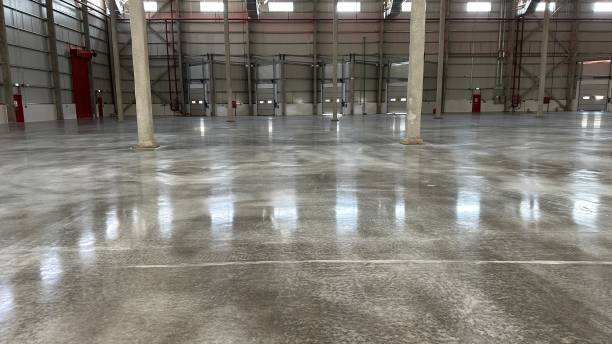
Neither one wins every time. Most commercial epoxy flooring companies will tell you that epoxy suits budget-minded jobs where the space can sit idle for a few days, while polyaspartic is the better pick when downtime, sunlight, or heavy abuse is a concern. Below is a side-by-side comparison of cost, cure speed, and durability, followed by a breakdown of what works best for warehouses, restaurants, showrooms, and other commercial spaces.
How the Two Coatings Differ
Both are tough, seamless coatings that go over prepared concrete. Both resist stains and make a floor far easier to clean than a bare slab. The difference is in the chemistry, and it shows up in how they behave on the job. Epoxy is thick, hard, and has been used in commercial buildings for decades. Polyaspartic is the newer option. It cures quickly, stays flexible, and doesn’t react badly to sunlight. That flexibility matters more than people expect. A floor that bends a little under stress is less likely to crack or peel.
Cost: Where Epoxy Has the Edge
Epoxy usually costs less upfront. If you’re coating a large back-of-house area, a storage room, or a space where looks matter less, that saving adds up fast. Polyaspartic is more expensive than epoxy per square foot, but it is only fair to wonder if it is worth the cost. The deciding factor comes down to how much it will cost you to have your business closed down for a few days.
Speed and Downtime
That’s where the divide truly starts. Epoxy takes anywhere from three to five days to be installed and cured. Polyaspartic coatings can be fully completed in one day from grinding to top coating. Light foot traffic can typically resume after just a few hours, while the rest of the work, including the use of forklifts, can start after a day. That’s the deciding factor in any project that can’t afford to delay for more than a weekend or Monday morning deliveries.
Durability and Sunlight
Polyaspartic is more resistant to abrasion than normal epoxy. Furthermore, polyaspartic works perfectly well with temperature fluctuations. While normal epoxy performs great under regular conditions, it may become subject to abrasion if there are steel wheels around. The final difference has to do with sunlight exposure. Normal epoxy may become yellow due to constant UV exposure. Polyaspartic remains clear in any conditions. Thus, if you have a lot of windows in your garage or bay doors, it becomes a clear choice.
What Works Best for Different Businesses
Warehouses and manufacturing. Forklifts and pallet jacks are hard on floors, and shutdowns are expensive. Most installers lean toward polyaspartic here, mainly for the abrasion resistance and quick return to service.
Auto shops and service bays. Oil, antifreeze, and brake fluid are the usual enemies. Both coatings resist chemicals well, so the choice often comes down to speed. A shop that loses money every day it’s closed tends to choose polyaspartic.
Restaurants and commercial kitchens. Hot oil, constant washing, and the need for a seamless, sanitary surface make polyaspartic a strong fit. Since most kitchens can’t close for long, the one-day install helps too.
Retail stores and showrooms. Appearance is everything, and bright light is common. Polyaspartic keeps its gloss and clarity, so it’s the usual recommendation.
Offices, schools, and low-traffic areas. If the schedule is flexible and the floor sees mostly foot traffic, epoxy does the job well and keeps the budget under control.
Storage rooms and utility spaces. This is where epoxy really earns its place. Saving money in areas customers never see is a smart way to spend more where it counts.
Picking an Installer You Can Trust
The product matters, but the team applying it matters just as much. Ask how they prepare the concrete, what system they would choose for your space and why, and whether they’ll put the warranty in writing. An honest contractor will sometimes recommend the cheaper option when it suits your situation. If you’re in North Alabama, Rocket City Epoxy is one local company worth adding to your shortlist. The Huntsville team installs both systems, schedules nights and weekends, and offers a three-year warranty on commercial floors. As always, get a couple of quotes before deciding.
Final Thought
When deciding between epoxy and polyaspartic, the three key factors to consider are money, downtime, and usage conditions. Consultation with several professional epoxy commercial floor companies will help you choose the coating that meets the needs of your project, taking into account budget constraints, downtime possibilities, and floor usage intensity. What is best for one project may not suit another one.
FAQs
Which is better for a commercial space, epoxy or polyaspartic?
It all boils down to your preference. Epoxy is cheaper and will be suitable for areas where you have the luxury of shutting down for several days. The polyaspartic coating is costly but cures faster, offers good resistance against UV rays, and has the ability to handle much abuse. The majority of companies opt for polyaspartic.
How long does polyaspartic take to cure?
Much quicker than epoxy. Four to six hours is enough for light foot traffic, and within 24 hours, full operations like forklifts are possible. Epoxy usually requires between three and five days. The exact time may vary based on the climate conditions and system employed, so ask your contractor about it first.
Does epoxy turn yellow in sunlight?
A regular epoxy floor coating will turn yellow due to UV exposure after some time. Since polyaspartic is resistant to UV rays, it will not become discolored. If you want to use your floor in an area that will receive plenty of sunlight, such as a showroom, then the polyaspartic coating would be safer.
Is polyaspartic worth the extra cost?
In many cases, yes. The increased cost is justified by reduced downtime, improved abrasion resistance, and durability. If the loss from shutting down for a few days exceeds the increase in cost, then the use of polyaspartic floors pays for itself. In case of low traffic and a flexible schedule, epoxy flooring works just fine.