Medical imaging plays a crucial role in modern healthcare, helping doctors diagnose conditions accurately and at an early stage. Among the various imaging techniques available today, Magnetic Resonance Imaging (MRI) is considered one of the most advanced and reliable diagnostic tools. MRI scans provide detailed images of internal organs and soft tissues without exposing patients to radiation.
At CareBox, we believe that informed patients make better healthcare decisions. Whether you are experiencing neurological symptoms or your doctor has advised advanced imaging, understanding MRI scans can reduce anxiety and improve your overall experience. This guide explains MRI scans, brain MRI applications, preparation, and how to choose a reliable diagnostic facility.
For many patients, the first step toward timely diagnosis begins with searching for a trusted MRI Scan Centre Near Me that offers accurate reporting and patient-centric care.
What Is an MRI Scan?
MRI, or Magnetic Resonance Imaging, is a non-invasive diagnostic test that uses a powerful magnetic field and radiofrequency waves to produce high-resolution images of organs and tissues inside the body. Unlike X-rays or CT scans, MRI does not use ionizing radiation, making it a safer option for repeated imaging.
MRI scans are commonly used to evaluate:
-
Brain and spinal cord conditions
-
Joint and muscle injuries
-
Ligaments and soft tissues
-
Blood vessels
-
Internal organs
Because of its superior image clarity, MRI helps doctors detect abnormalities that may not be visible through other diagnostic tests.
Understanding MRI Brain Scan
An MRI brain scan is a specialized imaging test focused on the brain and surrounding structures. It allows doctors to examine brain tissues, nerves, and blood vessels in great detail, helping diagnose a wide range of neurological conditions.
When Is an MRI Brain Scan Recommended?
Doctors may suggest a brain MRI if a patient experiences:
-
Persistent or severe headaches
-
Seizures or epilepsy
-
Sudden weakness or numbness
-
Memory loss or behavioral changes
-
Head injury or trauma
-
Suspected stroke or brain tumor
-
Infections or inflammation affecting the brain
In metropolitan areas, MRI Brain Scan In Delhi is frequently recommended due to the availability of advanced imaging technology and experienced radiology specialists.
Types of MRI Brain Scans
The type of MRI brain scan performed depends on the patient’s symptoms and clinical history.
1. Plain MRI Brain
A basic scan without contrast, used to identify structural abnormalities, bleeding, or swelling.
2. Contrast MRI Brain
Involves injecting a contrast agent to enhance image clarity, especially useful for detecting tumors, infections, or abnormal blood vessels.
3. Functional MRI (fMRI)
Measures brain activity by monitoring blood flow changes, often used in neurological research and pre-surgical planning.
4. MRI Angiography (MRA)
Focuses on brain blood vessels to diagnose aneurysms, blockages, or vascular malformations.
How to Prepare for an MRI Scan
One of the advantages of MRI is that it usually requires minimal preparation.
Before the Scan
-
Inform the radiologist about implants, pacemakers, or any metal inside your body
-
Remove all metallic objects, including jewelry and watches
-
Share your medical history, allergies, or pregnancy status
-
Fasting may be required if contrast is used
During the Scan
-
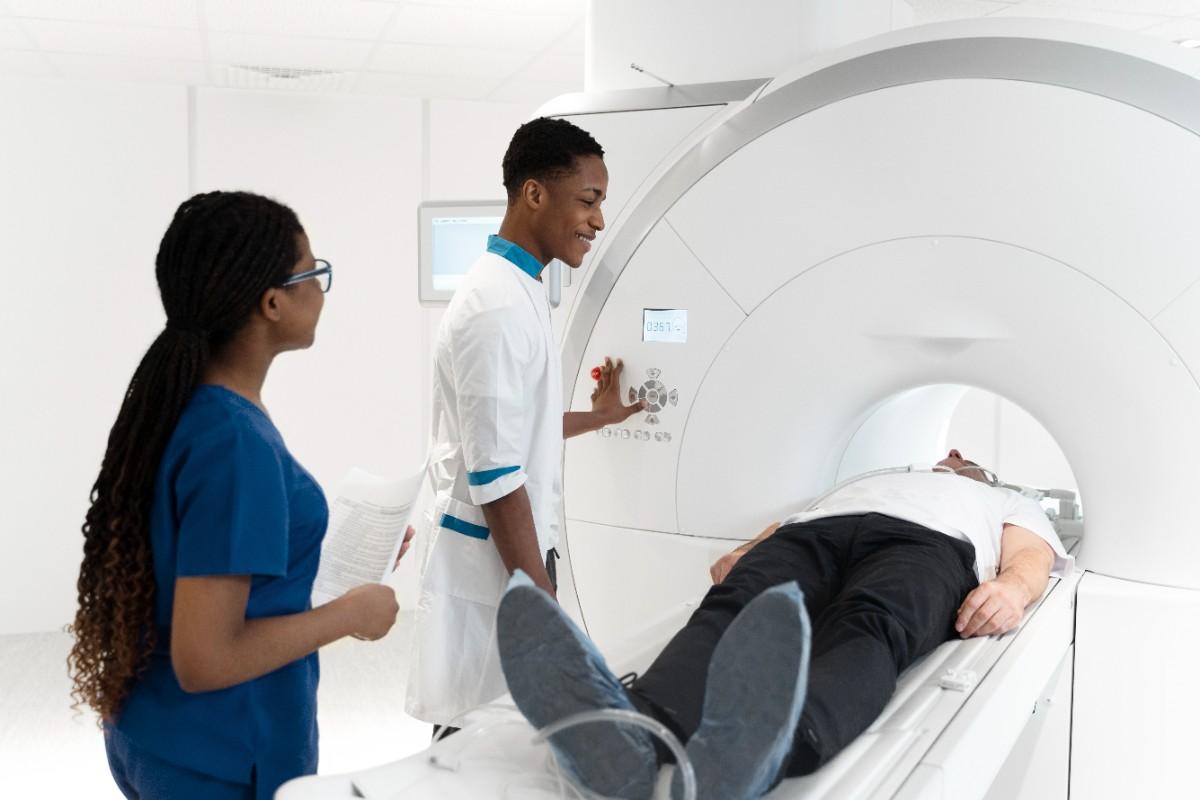
You will lie on a motorized table that moves into the MRI machine
-
The machine produces loud sounds; ear protection is provided
-
Remaining still is important for clear images
After the Scan
-
Normal activities can be resumed immediately
-
Drinking water is recommended if contrast was used
Is MRI Safe for Patients?
MRI scans are considered extremely safe for most individuals. Since no radiation is involved, MRI is suitable for both adults and children. However, patients with certain metallic implants or electronic devices may not be eligible. Always inform the MRI staff about any implants or medical devices before the scan.
At CareBox-associated diagnostic partners, patient safety protocols are strictly followed to ensure a secure and comfortable experience.
Choosing the Right MRI Centre
The accuracy of an MRI scan depends not only on the machine but also on the expertise behind it. When selecting an MRI centre, patients should consider:
Advanced Imaging Technology
High-field MRI machines such as 1.5T or 3T provide better image resolution and faster scan times.
Qualified Radiologists
Experienced radiologists ensure precise interpretation and accurate reporting.
Patient Comfort
Comfort features such as shorter scan times, clear instructions, and supportive staff help reduce anxiety.
Hygiene and Safety Standards
Clean facilities and strict safety protocols are essential for patient well-being.
In urban healthcare hubs, many patients prefer MRI Brain Scan In Delhi due to access to modern diagnostic infrastructure and skilled professionals.
Cost Considerations for MRI Brain Scan
The cost of an MRI brain scan can vary depending on:
-
Type of scan (plain or contrast)
-
Technology used
-
Location of the diagnostic centre
-
Additional imaging sequences
While affordability is important, CareBox emphasizes that quality, accuracy, and timely reporting should never be compromised when choosing diagnostic services.
Benefits of Early MRI Diagnosis
Early diagnosis through MRI scans offers multiple benefits:
-
Accurate identification of neurological conditions
-
Timely treatment planning
-
Monitoring disease progression
-
Avoiding unnecessary invasive procedures
-
Better long-term health outcomes
MRI scans play a key role in preventive and diagnostic healthcare, especially for brain-related conditions.
Frequently Asked Questions
Is an MRI scan painful?
No, MRI is completely painless.
How long does an MRI brain scan take?
Usually between 20 and 45 minutes.
Can claustrophobic patients undergo MRI?
Yes, many centres offer patient support, open MRI options, or relaxation techniques.
When will the MRI report be available?
Most centres provide reports within 24–48 hours.
Can MRI detect all brain disorders?
MRI is highly effective, but additional tests may be required depending on symptoms.
Conclusion
MRI scans have become an essential part of modern diagnostic medicine, especially for neurological and brain-related conditions. By offering detailed, radiation-free imaging, MRI helps doctors diagnose problems early and plan effective treatment strategies.
Through its network of trusted diagnostic partners, CareBox aims to make advanced imaging more accessible, reliable, and patient-friendly. Choosing a dependable diagnostic facility ensures accurate results, timely reporting, and peace of mind—starting with finding the right MRI Scan Centre Near Me.