
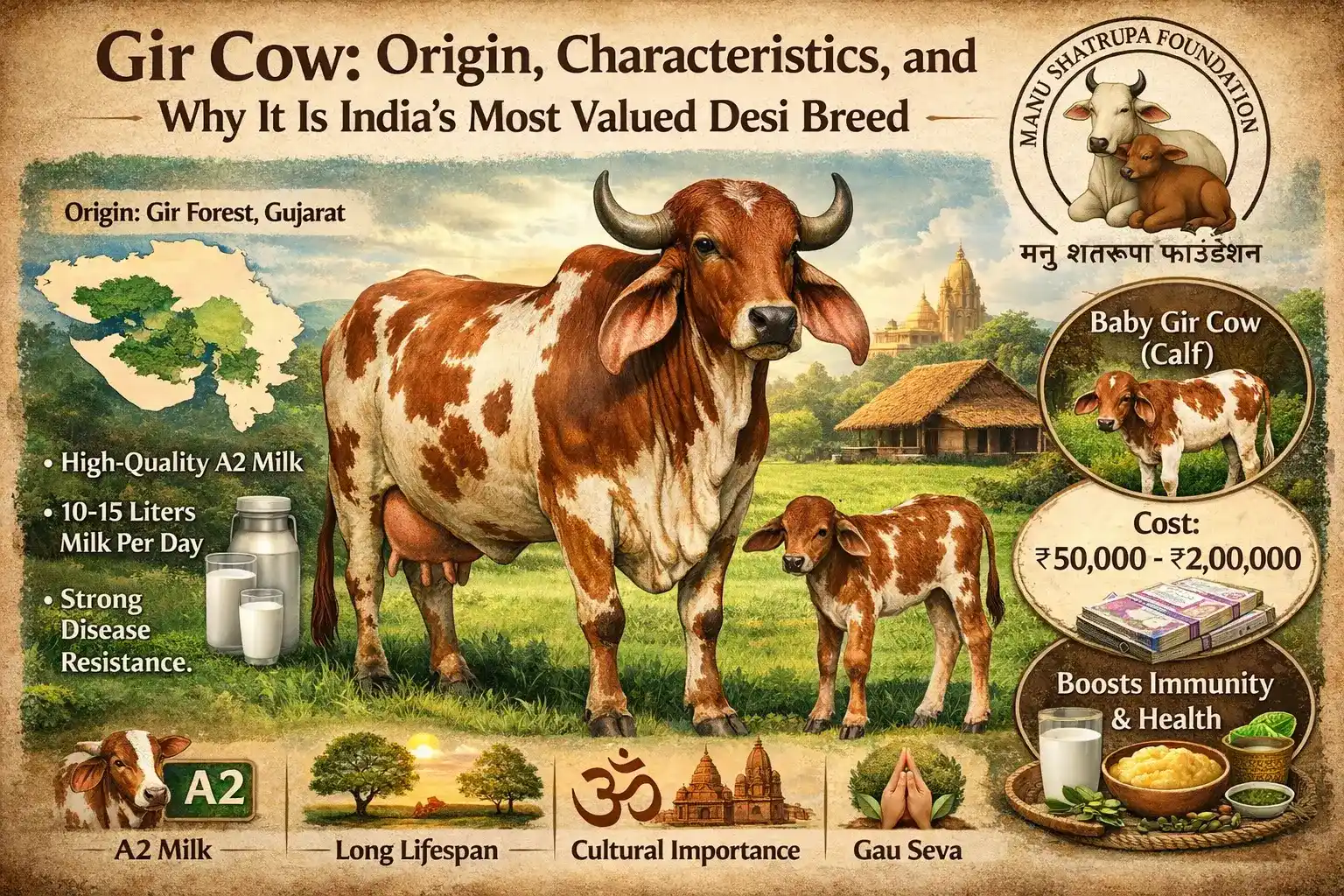
The Gir cow is one of India’s most respected and valuable indigenous cattle breeds. Known for its purity, resilience, and nourishing milk, the Gir cow holds a special place in Indian agriculture and culture. At Gausuta Anjali ji, we believe that protecting and promoting such desi cow breeds is essential for sustainable farming, rural livelihoods, and Gau Seva.
Origin and Historical Importance of Gir Cow
The Gir cow originates from the Gir forests and Kathiawar region of Gujarat. This breed has been nurtured for centuries by local communities who preserved its purity through traditional breeding practices. Because of its strong genetics and adaptability, the Gir cow later gained global recognition and was exported to countries like Brazil for dairy development.
At Gausuta Anjali ji, we actively support awareness about the historical value of indigenous cows like the Gir cow, which represent India’s rich livestock heritage.
Physical Characteristics of Gir Cow
Gir cows are easily recognizable due to their distinct appearance:
- Broad and domed forehead
- Long, leaf-shaped pendulous ears
- Strong, curved horns
- Prominent hump and loose skin
- Coat color ranges from reddish-brown to white with spots
These physical traits help the Gir cow survive in hot climates and resist many common cattle diseases, making them ideal for Indian conditions.
Gir Cow Milk and Daily Milk Yield
One of the biggest reasons the Gir cow is highly valued is its milk quality. Gir cow milk per day usually ranges between 8 to 15 liters, depending on diet, care, and environment. Though the quantity may be moderate compared to foreign breeds, the nutritional quality of Gir cow milk is exceptional.
Gir cow milk is rich in A2 beta-casein protein, which is known for easy digestion and overall wellness. At Gausuta Anjali ji, Gir cow milk is appreciated for making traditional dairy products like A2 Bilona ghee, curd, and butter, which are widely trusted for their health benefits.
Economic Value and Gir Cow Price
Due to its high demand, purity, and health benefits, the Gir cow price is higher than many other breeds. The price varies based on age, milk yield, and breed purity. A healthy Gir cow is considered a long-term investment for farmers because of:
- Consistent milk production
- Low maintenance cost
- High resale value
- Strong disease resistance
Gausuta Anjali ji encourages farmers and cow lovers to invest in desi cows as a step toward self-reliant and sustainable dairy farming.
Baby Gir Cow and Breed Conservation
A baby Gir cow is valued for its strong immunity and adaptability. Proper care, natural feeding, and a stress-free environment help calves grow into healthy, productive cows. Protecting purebred Gir calves is essential for maintaining India’s indigenous cattle population.
At Gausuta Anjali ji, special emphasis is placed on the care, nourishment, and protection of baby Gir cows as part of our broader Gau Raksha and Gau Seva mission.
Also Read:- How Our Gaushala Works: Cow Rescue, Treatment, and Care
Cultural and Spiritual Significance
In Indian tradition, cows are symbols of nourishment and compassion. Gir cows play an important role in religious rituals, organic farming, and Panchgavya-based practices. Their dung and urine are also used in natural fertilizers and eco-friendly farming solutions.
Through Gausuta Anjali ji, devotees and donors are encouraged to participate in cow welfare activities, helping preserve both cultural values and ecological balance.
Conclusion
The Gir cow is not just a dairy animal but a living symbol of India’s agricultural wisdom and spiritual heritage. Its nutritious milk, hardy nature, and economic value make it one of the most valued desi cow breeds in India. By supporting initiatives like Gausuta Anjali ji, we can ensure the protection, care, and promotion of Gir cows for future generations.