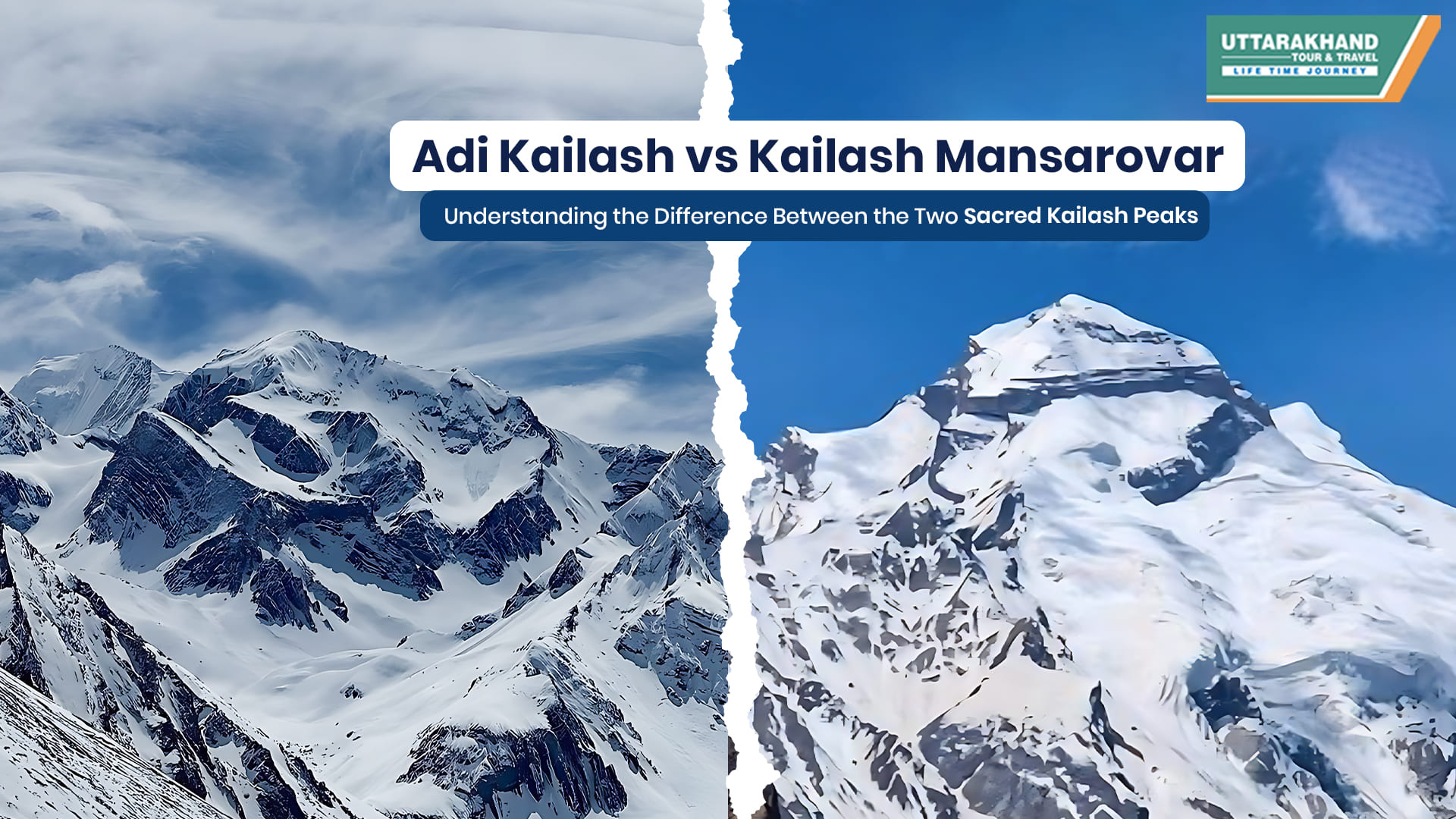
There are few places in the Himalayas as evocative, remote and otherworldly as Kailash. For ages followers of Lord Shiva have aspired to visit the holy abode this is said to be in center of the world. These days, devotees are sometimes forced to choose between Adi Kailash and Kailash Mansarovar — two pilgrimage destinations that are high on the list of places considered sacred but which present them with very different challenges. Even though both are incredibly religious and spiritual experiences, they couldn’t be further apart in mythology, location, approachability, difficulty level and overall ride.
This post compares Adi Kailash vs Kailash Mansarovar in detail, to enable you make an informed decision as to which pilgrimage suits your faith, fitness, time and travel requirements.
Spiritual and Mythological Significance
Mythology Adi Kailash (Chhota Kailash) is held in high esteem by Hindu believers as the earthly replica of Mount Kailash. It is said that Lord Shiva and Goddess Parvati used to live here before they made their recluse home on the real Kailash mountain in Tibet. The existence of Parvati Sarovar, Gauri Kund, and the marvelously sacred Om Parvat –where the snow has all by itself formed “ॐ”—imbues Adi Kailash with zones of sacredness. There are many sages and good persons who regard it as the physical form of kailas’s divine power.
On the contrary to this, Kailash Mansarovar is revered as the ultimate pilgrimage destination in Hinduism, Buddhism , Jainism and Bonpo traditions. Mount Kailash is considered by several religions as the axis mundi (the cosmic center of the universe) and also to be Lord Shiva regarded in his sand form. Mansarovar Lake nearby, is believed to have been created by Lord Brahma and is considered to wash off sins of many years. For some followers, doing Kailash Parikrama is a lifelong spiritual accomplishment.
Geographic Location and Accessibility
It is a part of the Kumaon Himalayas and lies in the eastern side of Uttarakhand, near the Tibetan and Nepalese border. The journey starts from Kathgodam or Pithoragarh and goes through Dharchula, Gunji and Nabi villages. Taking place entirely on Indian territory, the yatra accords with easy convenience for Indian pilgrims as it involves no passport or visa.
Kailash Mansarovar is in China, in the Tibet Autonomous Region, beyond the frontiers of India.Pilgrimages can only be conducted through Nepal (Simikot or Hilsa routes) and under a small number of agreed government channels if/when available. This route though depends on a Chinese visa and has quite a few permits, international coordination: all are expense, hassle and also uncertain.
👉 Stay connected — follow us on Facebook!
Physical Difficulty and Altitude Challenges
The most important difference between Adi Kailash and Kailash Mansarovar is the level of physical endurance needed. Adi Kailash generally lies in around the range of some 13,500 – 14,000 feet, so that even though it’s a mountainous place, the trek has got diminished by road connectivity as per modern times. With good acclimatization, itinerary is good for elderly pilgrims and first-time yatris with moderate fitness.
Kailash Mansarovar is a high-altitude pilgrimage in every sense of the word. Mount Kailash is at an elevation of about 22028 feet while the Kailash Parikrama includes trekking across Dolma La Pass (roughly 18600 feet). The risk of altitude sickness is real, air is thin and weather conditions are volatile. This trip required high levels of physical fitness as well as mental toughness and careful medical preparation.
Duration, Cost, and Logistics
Adi Kailash Yatra normally takes 7-10 days, also vary as per starting place and plan. It’s also relatively cheap, as it’s domestic to nature and the accommodation is easier and more affordable to round up. This yatra is usually opted for by pilgrims who wish to do penance without any rigorous financial or physical investment.
The Kailash Mansarovar Yatra typically spans 12-18 days, and sometimes even longer depending on the route and weather situation.There are also much higher costs for travel from home country, charter flight or helicopter and permits and high altitude logistical. For most pilgrims, this is a trip that they have planned and saved for years.
Cultural Experience and Scenic Beauty
Adi Kailash has close proximity with local Himalayan culture. Villages Nabi and Gunji are considered epitome of the traditional lifestyle of the Bhotiya, while the trek is rewarded by serene forests, river valleys and pristine mountain vistas. It’s intimate, tranquil and steeped in Indian spiritual traditions.
Kailash Mansarovar, by contrast is immense and otherworldly. The raw Tibetan plateau, eternal arid horizons, and the surreal facade of Mount Kailash induce a sense of spiritual smallness and cosmic curiosity. Pilgrims frequently call the experience transformational, not just devotional.
Which One Should You Choose?
I don’t think it’s a choice between Adi Kailash and Kailash Mansarovar as to one or the other is “better,” but more so what, you are prepared for. Adi Kailash is good for someone who wants to be with Shiva in India, have risk and accessible route or a time, age or health bound person everything suits here. Kailash Mansarovar Best for: Deep-faith believers who don’t mind a little hardship, altitude and international travel to make the ultimate Himalayan pilgrimage.
Several bhakts consider Adi Kailash as spiritual warm up or a substitute for kailash Mansarovar and some also feel they are equally powerful in divine energy.
Adi Kailash and Kailsh Mansarovar, two divine routes to one universal spiritual truth – the primeval Lord Shiva. One is there, soft and accessible; the other far away, hard, intense. Whichever way you choose, both treks promise to stir your soul and bring a sense of deeper respect for nature and relationship with the sacred Himalayas.