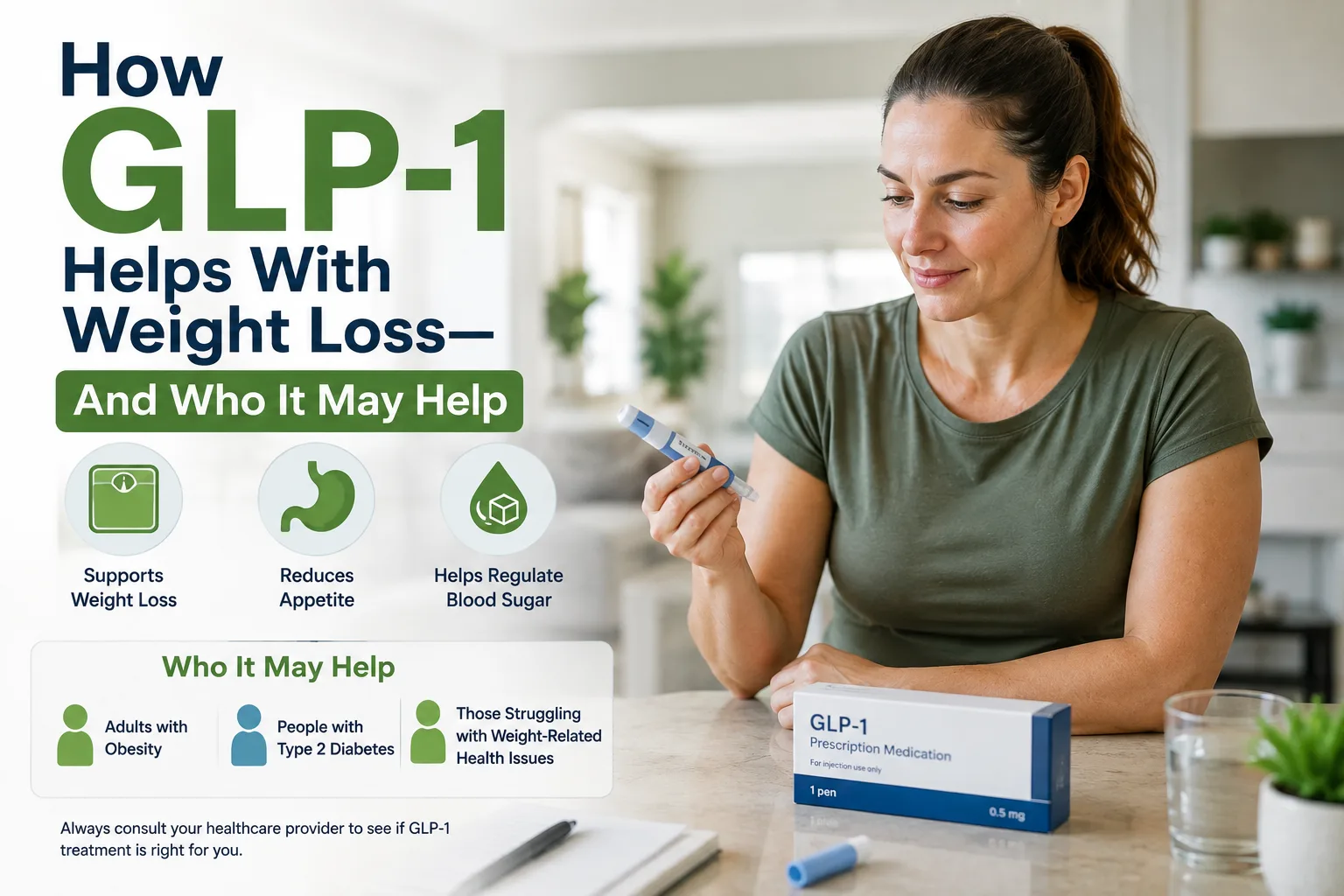
GLP-1 has become one of the most discussed topics in modern weight management. You may have heard about for weight loss, medications, GLP-1 injections, or medicines such as semaglutide and tirzepatide. But what exactly is GLP-1, how does it affect body weight, and who may benefit from treatment?
GLP-1 stands for glucagon-like peptide-1, a hormone naturally produced by the body. It plays an important role in appetite regulation, digestion, and blood sugar control.
When you eat, GLP-1 helps send signals between the digestive system, pancreas, and brain. These signals can promote feelings of fullness, influence how quickly food leaves the stomach, and help regulate blood glucose. GLP-1 receptor agonist medications are designed to mimic some of these effects and are used in the treatment of type 2 diabetes and, for certain medicines and patients, GLP-1 for weight loss and chronic weight management.
What Is GLP-1?
GLP-1 is an incretin hormone released primarily by specialized cells in the intestine after food enters the digestive system.
Its natural functions include helping the body respond to meals. GLP-1 can stimulate insulin secretion when blood glucose is elevated, reduce glucagon secretion, slow gastric emptying, and influence appetite-related signals in the brain.
These effects help explain why medications that activate the GLP-1 receptor can influence both blood sugar and body weight.
It is important to understand that GLP-1 itself is not a weight-loss. It is a naturally occurring hormone. The medications used for weight management are prescription treatments that activate receptors and produce stronger or longer-lasting effects than the body’s naturally produced hormone.
How Does GLP-1 Help With Weight Loss?
The relationship between GLP-1 and weight loss is mainly connected to appetite, fullness, food intake, and metabolic regulation.
1. GLP-1 Can Reduce Hunger
One of the most important effects of GLP-1-based medications is their influence on appetite.
After eating, GLP-1 contributes to signals that tell the brain that the body has received food. receptor agonists can strengthen and prolong some of these signals.
As a result, some people taking these medications may experience less hunger and find it easier to eat smaller portions.
This does not mean everyone experiences the same degree of appetite reduction. Individual responses can vary depending on the medication, dose, treatment duration, health conditions, and other factors.
2. It Can Increase Feelings of Fullness
Weight loss becomes easier for some people when they feel satisfied with less food.
GLP-1 receptor activation can increase feelings of fullness and satiety. Someone who previously felt hungry shortly after eating may find that meals keep them satisfied for longer.
This can reduce overall calorie intake without requiring constant conscious restriction.
However, GLP-1 medications should not be viewed as a replacement for nutritious food choices. A balanced eating pattern remains an important part of long-term weight management.
3. It Slows Stomach Emptying
GLP-1 can slow the movement of food from the stomach into the small intestine.
This process, known as delayed gastric emptying, can contribute to longer-lasting fullness after a meal.
It is also one reason gastrointestinal symptoms can occur with GLP-1 medications. Some people experience nausea, vomiting, diarrhea, constipation, abdominal discomfort, or other digestive symptoms, particularly when starting or increasing treatment.
4. It Helps Regulate Blood Sugar
GLP-1 also has an important role in blood glucose regulation.
When blood glucose rises after eating, GLP-1 can help stimulate insulin release. It can also reduce glucagon secretion in a glucose-dependent manner.
This is particularly important for people with type 2 diabetes, which is one reason several based medicines are used in diabetes treatment.
Some medications used for weight management also affect another incretin pathway. For example, tirzepatide activates both GIP and GLP-1 receptors, rather than acting solely through GLP-1.
What Are GLP-1 Receptor Agonists?
GLP-1 receptor agonists are medicines designed to mimic the effects of naturally occurring GLP-1.
Examples include semaglutide and liraglutide. Tirzepatide is a related medication that activates both GIP and GLP-1 receptors.
Depending on the specific product and indication, these medications may be prescribed for type 2 diabetes, obesity, overweight with weight-related health conditions, or chronic weight management.
They are not interchangeable, and the appropriate medication depends on a person’s medical history, treatment goals, eligibility, and clinician’s assessment.
Which GLP-1 Medications Are Used for Weight Loss?
Several GLP-1-based medications have been studied extensively for weight management.
Semaglutide
Semaglutide is a GLP-1 receptor agonist. It has been studied in adults with overweight or obesity and is also used in diabetes treatment at different doses and under different brand indications.
Research consistently shows meaningful weight reduction with GLP-1-based treatment. A 2026 systematic review and network meta-analysis comparing semaglutide, liraglutide, and tirzepatide found all three effective for weight loss, with tirzepatide and semaglutide ranking highly among the treatments evaluated.
Liraglutide
Liraglutide is another receptor agonist that has been used for diabetes and chronic weight management.
Like other medications in this category, it can affect appetite, food intake, digestion, and glucose regulation.
Tirzepatide
Tirzepatide is sometimes discussed alongside GLP-1 medications, but technically it is a dual GIP/GLP-1 receptor agonist.
It activates two hormone pathways and has demonstrated substantial weight-loss effects in clinical research. Current evidence suggests tirzepatide can produce greater average weight reduction than some single-pathway GLP-1 medications, although individual results vary.
What Does the Research Say About GLP-1 and Weight Loss?
The evidence supporting weight management has grown substantially.
A large meta-analysis published in 2025 included 47 randomized controlled trials and more than 23,000 participants. Overall, GLP-1 receptor agonists were associated with reductions in body weight, BMI, and waist circumference compared with placebo.
More recent research has continued to support the effectiveness of based therapies. A 2026 systematic review and meta-analysis of randomized trials found that based treatments increased the likelihood of weight loss compared with placebo, with tirzepatide and semaglutide ranking among the most effective treatments evaluated.
These findings are encouraging, but clinical trials report average results across groups. They do not guarantee a specific amount of weight loss for an individual.
Who May Benefit From GLP-1 Weight-Loss Treatment?
GLP-1-based medications are generally considered for people who meet specific medical criteria rather than simply anyone who wants to lose a few pounds.
Healthcare professionals may consider prescription weight-management medication for adults with obesity or for some people who are overweight and have weight-related health conditions.
The decision can depend on factors such as:
- Body mass index
- Existing medical conditions
- Blood glucose status
- Blood pressure and cardiovascular risk
- Previous weight-management efforts
- Current medications
- Personal and family medical history
- Potential medication risks and benefits
- Individual treatment goals
Weight-management medications are generally used as part of a broader treatment plan rather than as a standalone solution. NIDDK notes that lifestyle changes remain a core part of overweight and obesity treatment, while medication or surgery may be helpful for some people.
Can People Without Diabetes Use GLP-1 for Weight Loss?
Yes, certain GLP-1-based medications are approved for chronic weight management in eligible adults who do not have type 2 diabetes.
This is an important distinction because medications were initially associated strongly with diabetes treatment.
Clinical research has specifically examined GLP-1-based therapies in adults with overweight or obesity without diabetes. A 2026 systematic review evaluated semaglutide, liraglutide, and tirzepatide in this population and found meaningful differences in weight-loss effectiveness among treatments.
However, whether someone qualifies for treatment is a medical decision. Having a desire to lose weight does not automatically mean that prescription medication is appropriate.
GLP-1 and Lifestyle Changes: Do You Still Need Diet and Exercise?
Absolutely.
Medication does not eliminate the importance of nutrition, physical activity, sleep, or other healthy habits.
A sustainable weight-management plan may include:
- Eating adequate protein and nutrient-dense foods
- Including vegetables, fruits, whole grains, and other minimally processed foods
- Drinking enough fluids
- Performing regular physical activity
- Including resistance training when appropriate
- Getting adequate sleep
- Managing stress
- Following the treatment plan recommended by a healthcare professional
Medication can be one component of obesity treatment. It should not be viewed as a shortcut that makes healthy habits unnecessary.
What Are the Common Side Effects?
Some medications can cause side effects, particularly gastrointestinal symptoms.
Commonly reported effects can include:
- Nausea
- Vomiting
- Diarrhea
- Constipation
- Abdominal discomfort
- Reduced appetite
The severity and frequency of side effects vary from person to person.
Some symptoms may improve as the body adjusts to treatment, but persistent or severe symptoms should be discussed with a healthcare professional.
Because these medicines affect digestion and appetite, healthcare professionals may gradually adjust doses depending on the medication and the patient’s response.
Are GLP-1 Medications Safe for Everyone?
No medication is appropriate for everyone.
GLP-1 medications have specific prescribing information, contraindications, warnings, and precautions. The appropriate choice can depend on medical history, other medications, pregnancy status, gastrointestinal health, and other individual factors.
People should not start, stop, change, or combine prescription weight-loss medications without guidance from a qualified healthcare professional.
It is also important to distinguish approved prescription medications from unapproved products marketed online as “GLP-1 alternatives.” A supplement claiming to naturally increase GLP-1 is not automatically equivalent to a prescription receptor agonist.
GLP-1 vs. Natural GLP-1 Support
The growing popularity of GLP-1 medications has also created a large market for supplements marketed as “natural GLP-1 support.”
These products may contain ingredients such as fiber, plant extracts, or other compounds that are promoted for appetite or metabolic health.
However, a supplement that claims to support is fundamentally different from a prescription medication that directly activates the receptor.
Consumers should therefore look carefully at product claims and avoid assuming that a supplement provides the same effects as a clinically tested prescription medication.
How Quickly Does GLP-1 Cause Weight Loss?
There is no universal timeline.
Weight loss depends on the specific medication, dosage, treatment duration, starting weight, health conditions, lifestyle, adherence, and individual response.
Some people notice appetite changes relatively early, while measurable changes in body weight generally develop over a longer period.
Clinical trials commonly evaluate weight outcomes over many months rather than expecting dramatic changes within a few days or weeks. Research also suggests that longer treatment duration can be associated with greater weight reduction.
This is why promises of extremely rapid weight loss should be treated cautiously.
What Happens If Someone Stops GLP-1 Medication?
Weight management does not necessarily end when medication stops.
The body continues to regulate appetite and energy balance after treatment is discontinued. Some people may regain part of the weight they lost, particularly if the underlying factors contributing to obesity remain.
This is one reason obesity is increasingly understood as a chronic condition that may require long-term management rather than a short-term diet.
Anyone considering stopping a prescribed medication should discuss the decision with their healthcare professional rather than stopping treatment independently.
Frequently Asked Questions About GLP-1 for Weight Loss
What is GLP-1 in simple terms?
GLP-1 is a naturally occurring hormone that helps regulate appetite, digestion, insulin release, and blood sugar after eating.
Does GLP-1 burn fat directly?
Not exactly. GLP-1-based medications primarily influence appetite, food intake, digestion, and metabolic regulation. Reduced calorie intake can then contribute to weight loss.
Is GLP-1 only for people with diabetes?
No. Certain GLP-1-based medications are also approved for chronic weight management in eligible people with overweight or obesity who do not have diabetes.
Is tirzepatide a GLP-1 medication?
Tirzepatide activates both GIP and GLP-1 receptors, so it is more accurately described as a dual GIP/GLP-1 receptor agonist.
Do GLP-1 medications replace diet and exercise?
No. Lifestyle habits remain an important part of comprehensive weight management. Medication can complement—not replace—healthy eating and physical activity.
Can I take a GLP-1 medication without seeing a doctor?
Prescription-based medications should be used under appropriate medical supervision. A healthcare professional can determine whether treatment is suitable and monitor effectiveness and side effects.
The Bottom Line
plays a natural role in appetite, digestion, and blood sugar regulation. receptor agonists mimic some of these effects and can help eligible people reduce food intake and achieve clinically meaningful weight loss.
Current research supports GLP-1 receptor agonists as effective tools for obesity management, with semaglutide, liraglutide, and newer dual-acting therapies such as tirzepatide among the treatments studied extensively.
However, medication is not a universal solution or a quick fix. The right treatment depends on individual health, medical history, weight-management goals, and potential risks and benefits.
For anyone considering weight loss, the safest approach is to discuss the available options with a qualified healthcare professional and combine appropriate treatment with sustainable nutrition, physical activity, and other healthy lifestyle habits.
Medical Disclaimer
This article is intended for general educational purposes only and does not replace professional medical advice, diagnosis, or treatment. Prescription GLP-1-based medications should be used only under appropriate medical supervision. Speak with a qualified healthcare professional before starting, changing, or stopping any medication.