
Bolt diameter and required torque don’t scale linearly. The torque required to tighten a bolt increases roughly with the cube of its diameter, which is why a person can hand-tighten a one-inch bolt but has no realistic way to do the same on a wind turbine foundation bolt or a large pressure vessel flange. Torque multipliers exist to close that gap. They use planetary gear systems to convert a manageable hand force into the high output torque these joints require. This article covers how the gearing works, where accuracy breaks down on large bolts, and what keeps a multiplier’s output trustworthy over time.
The Problem With Tightening Large Bolts by Hand
Beyond about an inch in diameter, most teams turn to either a longer wrench or a cheater bar rather than the correct tool. While both options increase the lever arm length, neither one offers any indication of how much torque is being delivered. The torque is based on how hard the pull is and at what angle, and that cannot be replicated bolt by bolt. In the case of a flange or base ring of a tower, this becomes evident through:
- Leakage at a pipeline or vessel joint
- Bolts backing out under vibration
- Uneven thread wear from unbalanced clamping load
What the Gearing Inside a Torque Multiplier Does
A torque multiplier sits between the operator and the fastener, multiplying input force through a planetary gear train. Ratios of 5:1, 25:1, and 125:1 are common, letting a modest hand force generate output torque far beyond what any hand wrench allows. Higher ratios buy more torque at the cost of more turns of the input handle. The gearing also smooths the applied force, since torque applied gradually reads more accurately than torque applied in a jerk. Tools built with hardened gears on needle-roller bearings typically maintain multiplication accuracy of about 4%, tight enough for flange bolting, structural steel connections, and turbine nacelle work where a long wrench simply won’t fit.
Why You Still Need to Calibrate Torque Wrench Equipment
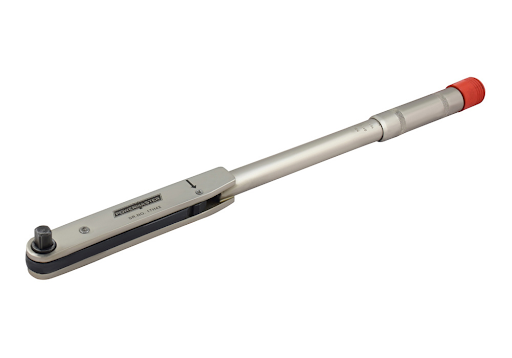
A multiplier only amplifies whatever torque it’s given. If the input wrench reads incorrectly, the multiplier faithfully amplifies that error as well. The standard against which most industries operate is ISO 6789, and click-type wrenches designed to this standard will be within a tolerance of 2% to 4%, provided the equipment is well maintained. Calibrate the wrench at 20%, 60%, and 100% capacity rather than a single point. Generally, calibrate torque wrench equipment every 12 months or 5,000 cycles, whichever comes first, and immediately recheck after any overload, drop, or repair. Gradual spring fatigue builds up without warning, allowing a wrench to read inaccurately for months before it is detected.
Building Accuracy Into Bolting Procedures
Accuracy gains from torque multipliers only hold up when both halves of the setup are treated as a pair. A well-built multiplier with hardened gearing does its job reliably, but it depends on a wrench that has been checked on schedule and hasn’t drifted since its last certification. Sites running large-diameter bolting work get the most value from these tools by building calibration into a fixed routine rather than reacting once a joint has already failed in the field.