
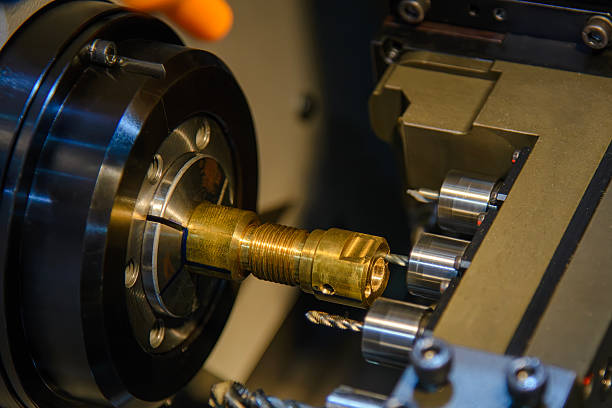
Small components don’t always look like difficult manufacturing jobs. They’re small, right? How hard can they be? Well, anyone who’s dealt with tight tolerances and high-volume production knows that’s not really how it works. Tiny parts can be some of the most annoying ones to manufacture consistently. A slight dimensional change can affect an entire assembly, and a little vibration during cutting can leave you with parts that aren’t quite what the drawing called for. This is one reason Swiss screw machining gets so much attention in precision manufacturing. The process is built around controlling small workpieces while they’re being cut, which can make a noticeable difference when accuracy and repeatability are important. And when you’re making hundreds or thousands of pieces, that difference adds up pretty quickly.
Keeping Slender Parts From Moving Around
One of the basic problems with machining a long, thin component is movement. The cutting tool pushes against the material, and if that material isn’t properly supported, it can flex or vibrate. That’s when things start getting messy. Dimensions can drift, finishes can suffer, and the operator may have to make adjustments just to keep the job on track. Swiss-type machines use a guide bushing to support the stock very close to where the cutting happens. It’s a fairly simple idea, but it solves a very real problem. The workpiece doesn’t have to hang out in open space while the tool is doing its job. Better support can mean better control over diameters, grooves, threads, and other fine details. For parts where there isn’t much tolerance to play with, that matters.
Less Scrap Is More Than Just Saving Material
Scrap is easy to notice because you can literally see it piling up. The other costs are harder to spot. Every rejected component has already used machine time, operator time, electricity, tooling, and inspection effort. Then somebody has to make the part again. Not exactly a great use of a production schedule. Swiss machining can help lower that risk by providing a stable setup for small precision components. Because the stock is supported during cutting, there can be less unwanted movement and fewer problems caused by deflection. Many jobs can also be completed with several operations handled in the same machine cycle. That can cut down on repositioning and secondary handling. It’s not a magic button for zero waste, obviously. But if a manufacturer can remove a few common causes of scrap, that’s money and time kept where they belong.
How Swiss Turn Parts Help With Detailed Work
There are plenty of applications where Swiss turn parts make sense simply because the components are small but still have a lot going on. Think about a part with several diameters, a fine thread, a drilled hole, a groove, and a specific surface finish. None of those features are unusual by themselves. Getting them all right on a tiny component, over and over again, is the tricky bit. Swiss-style equipment is designed to handle this kind of work. It’s used across areas such as medical equipment, electronics, automotive components, aerospace applications, and other precision products. The exact capabilities depend on the machine, of course. Still, combining several machining operations into one setup can reduce some of the back-and-forth that slows production down. Less handling doesn’t sound exciting. It does make life easier, though.
Tight Tolerances Without Constant Adjustment
Tolerances are where things can get uncomfortable. A part may look fine to the naked eye and still be unusable because one dimension is slightly outside the required range. This becomes even more difficult with thin or extended components because deflection can change what the cutting tool actually does to the material. Swiss screw machining addresses part support right at the cutting area, which helps the machine maintain control as material is removed. That can be useful when a job calls for close dimensional tolerances or multiple features that need to line up accurately. Of course, the machine isn’t doing all the thinking. Tool condition, material behavior, programming, coolant, and inspection all have an impact. Still, starting with a machining process that suits the geometry is a pretty sensible place to start.
Fewer Setups Can Take Pressure Off the Shop Floor
Here’s something that gets overlooked. Moving a part between machines takes time. Even when each individual transfer seems quick, the minutes start stacking up over a large production run. The component has to be removed, transported, secured again, aligned, and checked. Every new setup is also another opportunity for a positioning error. Depending on the Swiss machine and the job itself, turning, drilling, threading, grooving, and other operations can often be combined. That means the part may leave the machine much closer to its finished condition. This can reduce secondary work and simplify the production route. Sometimes the biggest improvement isn’t making one operation faster. It’s getting rid of three unnecessary ones. That’s a pretty basic manufacturing principle, but it’s easy to forget.
Consistency Matters When the Order Gets Big
Making five good parts is one thing. Making five thousand that behave the same way is another story. Production customers usually don’t want a batch where the first few pieces are perfect, and the later ones start wandering out of tolerance. They need consistency. CNC Swiss machining can support that by repeating an established program and machining sequence across a production run. Once the setup has been dialed in, the same basic process can be repeated while operators monitor dimensions and tooling. Tool wear still happens. Materials don’t always behave the same way either. Quality checks are still needed. But a repeatable CNC process gives the shop something stable to work from. That makes it easier to identify problems before they turn into a full box of rejected parts.
The Machine Is Only Part of the Solution
It’s tempting to think that choosing Swiss machining automatically fixes a production problem. It doesn’t. The wrong tooling can still cause trouble. So can poor programming, unsuitable cutting conditions, bad chip control, or simply choosing a process that doesn’t fit the component. Material makes a difference too. Brass isn’t going to machine exactly like stainless steel, and titanium brings its own set of headaches. Tool life, heat, surface finish, and cutting speed all need to be considered. An experienced machining team looks at the whole job before production starts. They consider the part drawing, material, tolerances, quantity, tooling requirements, and expected cycle time. That’s the less glamorous side of precision manufacturing, but it’s usually where good results come from.
A Better Fit for Certain Production Problems
So, can Swiss machining reduce production challenges? For the right type of component, it can certainly address several of them at once. Better support can help with small, slender swiss turn parts. A controlled CNC process can improve repeatability. Combining operations may reduce handling and secondary machining, while accurate setups can help limit scrap and rework. But the process still needs to be matched to the actual part. That’s important. Not every component needs Swiss equipment, and forcing the wrong process onto a job won’t suddenly make production efficient. The real benefit comes when the machine, tooling, programming, material, and inspection process all make sense together. For manufacturers dealing with demanding small-part work, that’s where Swiss machining can earn its place. Not because it sounds advanced, but because sometimes a better-supported, more controlled process simply makes the job less of a headache.