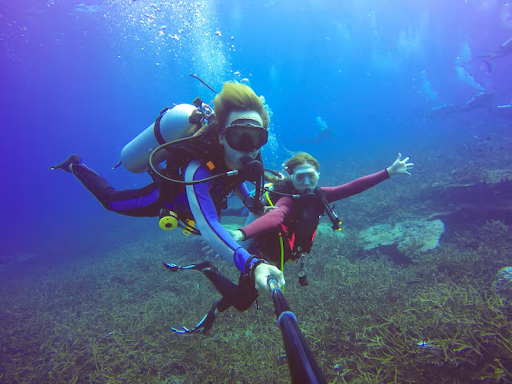
Koh Tao has certified more open water divers than almost any destination on the planet. The island’s combination of warm, clear water, accessible reef systems, and a high concentration of quality instructors has made it a first-choice location for learning to dive for well over two decades.
But nearly every person who books a course on open water koh tao arrives with questions. Some are practical, some are anxious, and some are things people are slightly embarrassed to ask. What follows is an honest attempt to answer them.
Do I need to be able to swim well?
You need to be able to swim — the PADI Open Water course requires a 200-metre swim without fins and a ten-minute float or tread water. You don’t need to be fast, and you don’t need strong technique. The swim is about comfort in the water, not performance. If you can complete those two things at your own pace, you meet the requirement.
What if I panic underwater?
This is the most common anxiety among first-time divers and one that instructors on Koh Tao are well prepared for. Panic underwater is usually a response to something unexpected — an unfamiliar sensation, water entering a mask, unexpected current. Every skill in the confined water sessions is specifically designed to make these scenarios familiar before they happen in open water. The mask-clearing and regulator recovery exercises exist for exactly this reason.
A good instructor will read your comfort level throughout the confined water sessions and will not put you in the ocean before they’re confident you’re ready. The progression is deliberate, not rushed.
How deep do you actually go?
During the Open Water course, the maximum depth is eighteen metres. Most of the four open-water dives happen between five and fifteen metres, which is comfortably within recreational diving range and gives you access to the best of Koh Tao’s reef life without requiring the level of experience needed for deeper work.
What does the actual course look like day by day?
Day one is typically eLearning theory review and the first confined water session — skills practice in shallow water. Day two covers the remaining confined water skills and completes the knowledge work. Days three and four are the open water dives: two per day, each progressively less structured as the skills become instinctive. By the final dive, most students are spending more time looking at the reef than thinking about technique.
How long does the certification last?
A PADI or SSI Open Water certification doesn’t expire. Once you’re certified, you’re certified for life. That said, most dive operators worldwide recommend a refresher session — a brief skills review — if you haven’t dived in twelve months or more. This is a short, low-pressure exercise that gets you comfortable again before returning to open water.
Is Koh Tao actually a good place to learn?
Genuinely, yes. The visibility in the water around Koh Tao averages between fifteen and twenty metres, which is significantly better than most learning environments globally. The sea temperature stays between 28°C and 30°C year-round, meaning a thin wetsuit is comfortable for the duration of any dive. The reef life is varied and interesting enough that training dives don’t feel like exercises — they feel like diving.
The density of certified instructors and the competitive quality standards that come with it mean that below-average instruction doesn’t survive long on the island. Operators who cut corners on the student experience lose business quickly in an environment where divers constantly talk to each other.
What happens after the course?
Certification is the start of something, not the end. Once qualified, you can dive anywhere in the world with any reputable operator. From Koh Tao specifically, you have immediate access to some of the best recreational sites in Southeast Asia — including Sail Rock and the array of reefs around the island itself. Most newly certified divers book at least a few additional fun dives before leaving.
The logical next step is an Advanced Open Water course, which takes typically two to three days and opens up deeper diving, night diving, and a range of specialty skills.
For full details on what the koh tao open water diving course at La Bombona Diving covers — including eLearning access, what equipment is provided, and how to prepare before arrival — the course page has everything you need to book with confidence.
Conclusion
The nerves before a first diving course are almost universal and almost always prove unnecessary. Koh Tao is genuinely one of the best places in the world to earn that first certification — the environment is forgiving, the instruction is competitive, and the reef gives you something remarkable to look at from the very first dive. The questions are sensible. The answers, on the whole, are reassuring.