
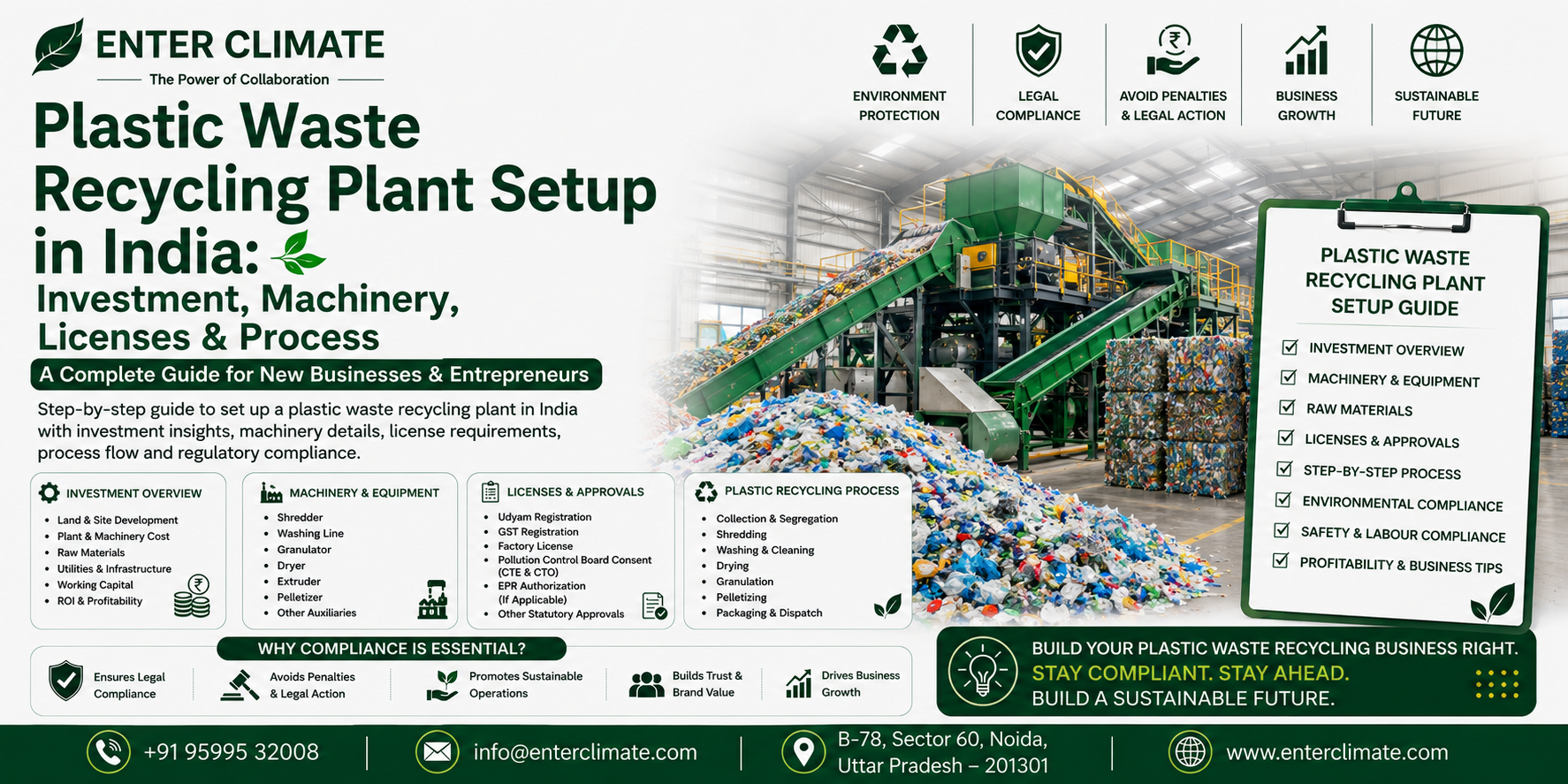
Plastic is everywhere around us. We use plastic bottles, bags, packaging, containers, and many other products every day. But when plastic is thrown away carelessly, it can stay in the environment for many years. This is why Plastic Waste Recycling Plant Setup is becoming an important business opportunity in India.
Why Start a Plastic Recycling Plant in India?
India produces a large amount of plastic waste every year. Businesses, homes, shops, and industries all generate plastic waste. Proper recycling helps reduce the amount of waste going to landfills and supports a cleaner environment.
For entrepreneurs, this sector can also become a practical business opportunity. Recycled plastic can be used to make products such as pipes, containers, sheets, packaging materials, and other plastic items.
However, starting the plant is not just about buying machines. You need proper planning, investment, approvals, and knowledge of waste management rules.
Investment Required for a Plastic Recycling Plant
The investment depends on the size of the plant, type of plastic being recycled, machinery, land, electricity requirements, workers, and production capacity.
A small unit may need less investment, while a large automatic plant can require a much bigger budget. Some common expenses include:
- Land or factory rent
- Recycling machinery
- Electricity and water setup
- Plastic waste collection
- Workers and technicians
- Transportation
- Pollution-control equipment
- Licenses and compliance costs
- Working capital
Before investing money, it is better to prepare a proper project report. This helps you understand the expected cost, production capacity, income, and operating expenses.
Machinery Used in Plastic Recycling
The machinery depends on the type of plastic and the final product you want to manufacture. A typical recycling plant may use:
- Plastic sorting machine – separates different types of plastic.
- Shredder – cuts plastic waste into smaller pieces.
- Washing machine – removes dirt and unwanted materials.
- Drying system – removes moisture from washed plastic.
- Plastic granulator – converts plastic into small granules.
- Extruder – melts and processes plastic material.
- Pelletizer – produces recycled plastic pellets.
The right machinery should be selected according to the plant’s capacity and the type of plastic waste you plan to handle.
Read More – https://regic.net/charging-station-license-in-up/
Licenses and Approvals
A recycling plant must follow applicable environmental and local business rules. Depending on the project and location, an entrepreneur may need approvals such as pollution control permissions, registration under applicable waste-management regulations, factory-related approvals, fire and local authority permissions, and other applicable licenses.
Plastic waste processors also need to pay attention to Extended Producer Responsibility (EPR) requirements and applicable CPCB/state pollution control board rules.
Because requirements can change depending on the state and nature of the business, taking professional compliance guidance before starting the plant can save time and prevent mistakes.
How Does Plastic Recycling Work?
The process is easier to understand than it sounds.
Step 1: Collection
Plastic waste is collected from households, businesses, industries, and other sources.
Step 2: Sorting
Different plastics are separated. Materials such as metal, paper, and other unwanted waste are removed.
Step 3: Shredding
The selected plastic is cut into smaller pieces.
Step 4: Washing
The plastic pieces are washed to remove dust, dirt, labels, and other impurities.
Step 5: Drying
The washed plastic is dried properly.
Step 6: Melting and Extrusion
The clean plastic is heated and processed through an extruder.
Step 7: Pellet Making
The processed plastic is converted into small pellets or granules that can be used to manufacture new products.
How Other Waste Businesses Fit Into the Picture
Plastic recycling is only one part of the larger waste-management industry. Entrepreneurs can also explore opportunities such as Textile Business set up, where discarded fabrics and textile materials can be collected and recycled.
Similarly, a Biodiesel Plant Business set up can focus on converting suitable waste oils and other feedstocks into biodiesel, subject to applicable regulations and technical requirements.
Another opportunity is solid waste management business Set Up, which can include waste collection, segregation, processing, recycling, and other waste-management activities.
These businesses have one common idea: waste should not always be treated as useless material. With the right system, some waste can become a valuable resource.
Final Thoughts
Starting a plastic recycling plant in India can be a meaningful business opportunity for people interested in both entrepreneurship and environmental protection. But success requires more than machinery. Proper market research, investment planning, waste sourcing, skilled workers, suitable technology, and regulatory compliance are all important.
If you are planning a Plastic Waste Recycling Plant Setup, professional environmental compliance support can make the process easier. Enterclimate helps businesses understand environmental approvals, waste-management compliance, and related regulatory requirements.
Author Profile
Upendra Sharma is an Environmental Compliance Consultant who writes about environmental regulations, waste management, EPR compliance, and sustainable business opportunities. Through his work with Enterclimate, he helps businesses better understand environmental compliance requirements and make informed decisions while starting or expanding their operations.