
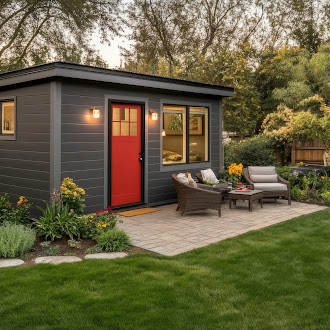
Tiny homes get a bad rap, honestly. People picture something cramped, like you have to turn sideways just to move around. And yeah, some are like that. No denying it. But the good ones don’t feel that way at all. You walk in and it’s… surprisingly fine. Not huge, obviously, but not suffocating either. I’ve seen how tiny house builders in Colorado handle this, and they don’t just shrink a normal house down. They kind of rethink the whole thing from the ground up, sometimes in ways that seem small but add up fast.
Why Space Isn’t Just About Size
People get stuck on square footage. Always. 200 vs 400, like that number alone tells the story. It doesn’t. I’ve been in bigger places that somehow felt tighter than a well-planned tiny home. It’s more about how things are arranged, where your eyes go, how easy it is to move without bumping into stuff. If your view gets cut off every few steps, it feels cramped. If it stays open—even a little—it feels easier. Hard to explain, but you notice it right away.
Open Layouts That Actually Feel Open
“Open plan” gets tossed around a lot, and half the time it’s just marketing fluff. In tiny homes though, it has to be real or the whole thing falls apart. You can’t afford heavy walls breaking everything into little sections. So spaces blend together. Kitchen, living area, sleeping spot—they kind of flow into each other. It’s not always clean or perfectly defined, but that’s what helps. You don’t feel boxed into separate zones.
Ceilings That Give You Some Breathing Room
Low ceilings in a tiny home? Bad idea. Makes everything feel tighter than it already is. Add some height, though, and it changes fast. Lofts come into play here too. Not everyone loves climbing up to bed, fair, but they open up the main floor a lot. Your eyes go upward instead of straight into a wall. Throw in taller windows and suddenly the place feels less like a box. Still small, just… not closed in.
Storage You Don’t Notice Right Away
Storage is where things can go wrong pretty quickly. You need it, obviously, but if it’s all visible, it starts to feel cluttered even when it’s organized. The smarter approach is hiding it. Under benches, inside stairs, built into walls. You don’t always see it at first, which is kind of the point. When everything has a place but nothing is shouting for attention, the space feels calmer. Not perfect, just less chaotic.
Furniture That Has to Work a Bit Harder
Nothing in a tiny home gets to be lazy. A chair is just a chair? Not really. It probably stores something, folds, or moves out of the way. Tables collapse, beds shift, things slide around more than you’d expect. Sounds annoying, but it’s usually not. Once you get used to it, it feels normal. You use what you need, and the rest kind of disappears.
Light Does More Than You Think
Lighting can make or break the whole space. Seriously. You could have a great layout, but if it’s dim, it’ll feel smaller instantly. That’s why tiny homes lean heavily on natural light. Big windows, decent placement, sometimes skylights. When light moves through the space, it softens everything. Edges don’t feel as sharp. Corners don’t feel as tight. Even a bit of daylight helps more than you’d think.
Keeping Materials Simple (Even If It Feels a Bit Plain)
It’s tempting to mix things up. Different colors, textures, bold choices. But in a small space, that can backfire pretty quickly. Too much going on makes it feel busy, and busy turns into cramped. So most designs keep things pretty consistent. Similar tones, not too many contrasts. It might look a little plain at first, maybe even boring, but it works. Your eyes don’t get stuck on one spot.
Little Tricks That Mess With Your Perception (In a Good Way)
There are some small things that help more than they should. Mirrors, for example. They bounce light and make the space feel deeper. Windows placed across from each other do something similar. Even glass doors instead of solid ones can open things up visually. None of it is dramatic on its own, but together, yeah, it adds up. The space just feels less tight.
Letting the Outside Count as Space Too
One thing tiny homes do well is connect to the outside. A small deck, wide doors, big windows facing something decent—not even a great view, just something open. When you can see beyond the walls, it changes how the inside feels. It’s like your brain stretches the space a bit. Hard to measure, but you notice it.
Working Around Rules Without Ruining the Feel
This part’s not exciting, but it matters. You’ve got regulations to deal with. The tiny house code covers things like ceiling height, loft access, window sizing—all that. Sometimes it feels restrictive, yeah. But good builders figure it out. They adjust things without making the place feel awkward. It’s a bit of a balancing act, and not always perfect, but necessary.
Conclusion
Tiny homes aren’t about squeezing everything into less space and hoping it works out. That approach usually fails. The good ones feel different because they’re thought through properly. Every choice pulls some weight. And when it all comes together, the place doesn’t feel tiny in the way people expect. It just feels… enough. Maybe even comfortable, which surprises people more than it should.