
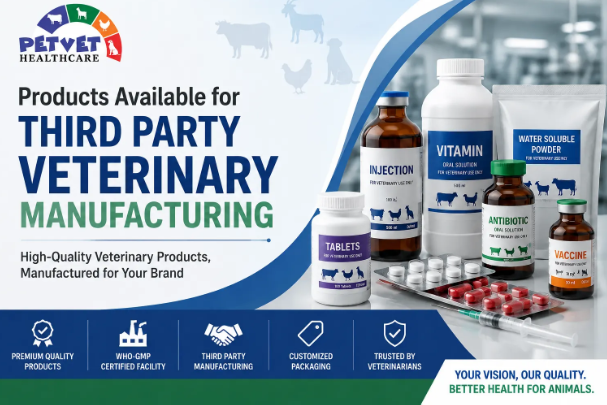
When you outsource production to a veterinary third party manufacturing company, quality and compliance remain your business’s reputation. Verify licences, GMP practices, testing procedures, batch documentation and label accuracy, and put responsibilities in a written agreement. A third party veterinary medicine manufacturer that welcomes these questions is usually a sound partner.
Outsourcing Production Does Not Outsource Responsibility
Many new brand owners assume that once a manufacturer produces the medicine, quality is entirely the manufacturer’s concern. In reality, customers see your brand on the pack. If a batch underperforms, your name carries the consequence.
That is why smart brand owners treat quality as a shared responsibility. They select partners carefully, define expectations in writing and monitor results after each batch.
Core Quality Systems to Look For
Good Manufacturing Practices
GMP is a set of standards covering premises, equipment, personnel, hygiene, documentation and quality control. Companies often refer to cGMP (current GMP) and WHO-GMP as benchmarks. Ask what certifications a manufacturer holds and request copies.
Raw material control
Quality begins with inputs. A reliable manufacturer sources active ingredients and excipients from qualified suppliers, checks incoming materials and stores them properly.
In-process checks
Monitoring during production helps catch deviations early. Ask what checks are performed at key stages, especially for sterile injectables.
Finished product testing
Before release, batches are tested against specifications such as description, identification, assay and other relevant parameters.
Documentation and traceability
Batch manufacturing records let the company trace every batch back to its raw materials, equipment and personnel. This traceability is vital if an issue arises.
Stability and storage
Shelf life and storage conditions should be defined and printed on the label. Ask how the manufacturer supports these claims.
Regulatory Landscape in India
Veterinary medicines in India are covered by the Drugs and Cosmetics Act, 1940 and its rules, under which manufacturers require licences from the state licensing authority. Labels must carry required information such as composition, batch number, manufacturing and expiry dates and manufacturer details.
Regulations can change, and requirements differ by product type, so both you and your manufacturer should stay updated through official sources.
A Brand Owner’s Compliance Checklist
| Area | What to confirm |
| Manufacturing licence | Valid, covers the products you order |
| GMP status | Certificate copies, issue dates |
| Label content | Accurate composition, dosage, storage, dates |
| Artwork approval | Signed proof before printing |
| Batch records | Available on request |
| Testing | Finished product checked before release |
| Your own licences | Wholesale or retail permissions where required |
| Complaint handling | Written procedure for feedback and returns |
Contract Essentials: What Your Agreement Should Cover
A written agreement reduces misunderstandings. Depending on your situation, you may want to discuss with a legal professional whether it covers:
- Product specifications: composition, strength, pack size and shelf life
- Quality responsibilities: who tests what, and how results are shared
- Pricing and payment terms: rates, taxes, advance and credit terms
- Minimum order quantities and lead times
- Packaging and artwork: ownership of design files, approval process
- Confidentiality: protection of your formulations, brand plans and customer data
- Complaints and recalls: how issues are investigated and resolved
- Term and termination: duration, notice and exit terms
Protecting Your Brand
Register your trademark. This helps prevent others from using a similar name.
Keep artwork files. Ensure you have access to final approved artwork.
Standardise approvals. Record who approved each label and when.
Check the first batch carefully. Review physical appearance, labelling, seals and documentation.
Collect feedback. Talk to veterinarians and farmers about product performance and record their comments.
Warning Signs in a Contract Manufacturer
- No clear answers about testing
- Reluctance to provide licence copies
- Missing or inconsistent batch numbers on samples
- Labels with incomplete information
- Frequent delays without explanation
- Unwillingness to put terms in writing
If you see these, pause and reassess.
Petvet Healthcare’s Approach
Petvet Healthcare is a veterinary manufacturer located in Ambala Cantt, Haryana. According to the company, it manufactures under cGMP norms and WHO-GMP standards, tests raw materials and finished products, and continues to invest in people, processes and equipment to deliver consistent batches.
Its third party manufacturing service is aimed at brand owners who want their own veterinary product line, supported by modern packaging and quality raw materials. You can view the full range in the product list, read the company profile on the About Us page and request details through the contact page.
As with any manufacturer, you should still request current certificates and documents to verify details for yourself.
Responsible Use of Veterinary Medicines
Quality manufacturing is only part of safe animal healthcare. Brand owners can promote responsible use by:
- Encouraging diagnosis by registered veterinarians
- Providing clear dosage and withdrawal information where applicable
- Advising customers to store medicines as directed
- Discouraging unnecessary antibiotic use, which contributes to antimicrobial resistance
These practices protect animals, consumers and your brand’s credibility.
Building a Long-Term Partnership
The best manufacturer relationships grow through communication. Share forecasts so production can be planned. Give prompt feedback on each batch. Discuss improvements to packaging, formulations or timelines. When both sides act as partners rather than a buyer and seller, quality tends to improve.
Frequently Asked Questions
Who is responsible for quality in third party manufacturing?
The manufacturer is responsible for producing to specification and GMP standards, while the brand owner is responsible for choosing a compliant partner, approving labels and monitoring results. Responsibilities should be defined in writing.
What is GMP in veterinary manufacturing?
Good Manufacturing Practices are standards for facilities, processes, hygiene, testing and records that ensure consistent product quality.
Should I get a written contract?
Yes. A written agreement clarifies specifications, pricing, responsibilities and dispute handling. Consider legal advice.
How can I verify a manufacturer’s claims?
Request licence and certificate copies, review sample labels and batch documents, and consider a facility visit or independent checks.
Conclusion
A veterinary third party manufacturing company can help you build a brand without a factory, but the strength of that brand depends on quality, compliance and clear agreements. Ask detailed questions, verify documents and monitor every batch. To discuss your requirements, reach out to Petvet Healthcare.