
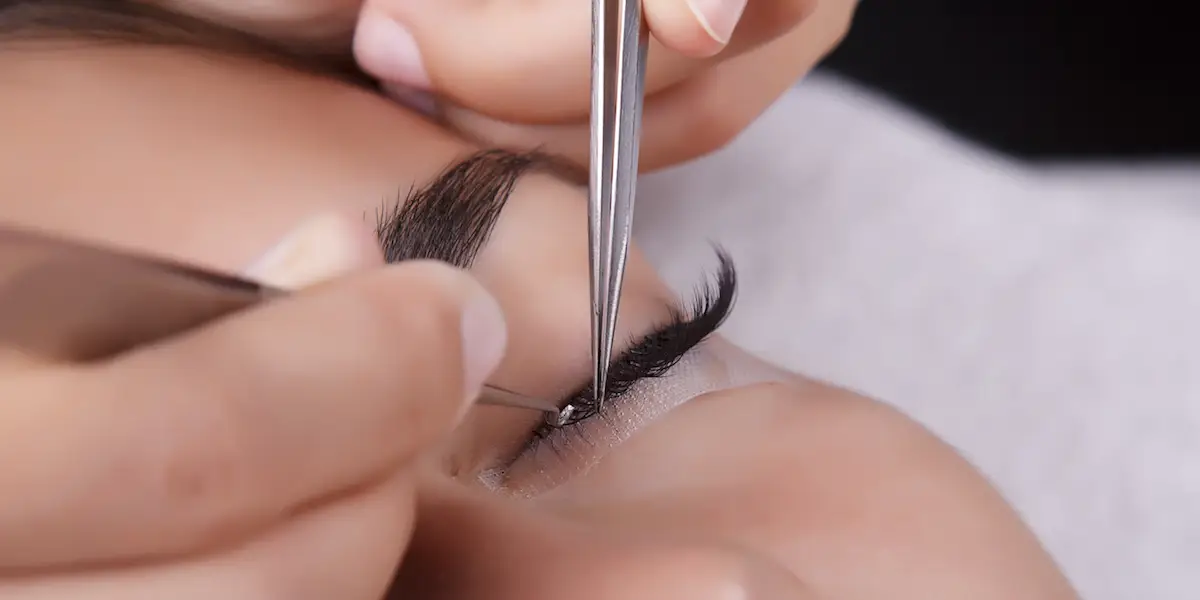
Technicians apply extensions one natural eyelash at a time, and each extension is very thin. You can’t do that with just extension fibers. A tech also needs the right tools, preparation products, a clean workspace, good lighting, and a comfortable seat for the client. Salon owners and lash technicians in Pakistan can read this piece to get an idea of what each part does and why it’s important. It starts with the client lying down and ends with the final check.
Start with the Space: Bed, Light, and Seating
Setting up where the client lies and how the technician sees is the first thing to address during a lash service.
Lash Bed or Treatment Chair
Clients close their eyes and stay still for a long time. They should be able to lie flat or slightly raised on a lash bed or reclining treatment chair without any pain. Comfort matters more for eyelash extensions than for many other beauty services, since an unhappy client will move around, making it harder to place the extensions correctly. A small neck pillow or support can help in some situations, but it should never tilt the head awkwardly.
Lighting and a stool for the technician
Since eyelashes are naturally thin, adjustable lighting is essential. The tech can easily tell the difference between eyelashes with a lamp that can be moved close to the face and tilted so it doesn’t cast shadows on the work. The worker also needs a stool that can be raised or lowered so their back and shoulders can rest for hours. A good view and a comfy position are important for both the work and the person doing it.
A Trolley for Supplies
The tech never has to leave the patient or stretch out on the bed because the tools are close at hand on a small trolley. Keep the things you need for the appointment in the same spot.
Preparing Natural Lashes Before Eyelash Extensions
Real eyelashes need to be clean and free of oil, makeup, and residue before you apply any eyelash extensions. That’s where prep products come in.
A professional cleaner removes oil and dirt from the lash surface. Some techs also use a primer when the product’s directions say to. For cleaning, use lint-free applicators because regular cotton can leave fibers behind that get in the way. You can use pads or gel patches under your eyes to protect the skin and keep the lower lashes out of the way. Professional lash tape holds the upper lid in place and covers the lower lashes.
Because these items touch the eye area, they must be made for lash services and used exactly as directed. If you need to use something on a different part of your face or body, don’t. Some clients may also be allergic to pads and tapes, so check for allergies before use.
Tools Used to Apply Eyelash Extensions
This is what the kit includes. Each tool serves a specific task and cannot be swapped for another.
Straight and Curved Lash Tweezers
There are different kinds of lash tweezers. Most of the time, straight tweezers separate natural lashes from extensions, while curved ones pick up and place extensions. However, technicians have different preferences. So no single shape works for everyone. It depends on the technique, the lash style, and how the technician holds their hand. Most of the time, training and practice help a technician figure out which forms feel right.
Brushes and Tools for Isolation
To isolate a natural lash, separate it from its neighbors so an extension can connect to only one. Isolation tweezers are for this. Use clean, dry lash brushes to arrange the eyelashes before and after application. If you only need to clean something or apply a product, throw away a disposable applicator after one use.
Extension Trays, Adhesive and Palettes
Extension fibers are kept in bins organized by length, curl, and thickness. Ready-to-use fibers are kept in a tray, while adhesive is a separate item with its own use. The tech can keep a small ring or tray with a small amount of glue nearby so they can quickly dip each extension. Adhesive is meant to be used near the eyes and must be used exactly as instructed by the maker.
Cleaning, Disinfection and Single-Use Items
Application tools and hygiene items are not the same thing, and mixing them up leads to mistakes. Cleaning removes visible dirt and residue. Disinfecting reduces germs to a safe level. One-time-use items are thrown away after one use.
This group includes brushes, applicators, pads, and tape that can only be used once. Never wash them and reuse them. Most reusable tools, like tweezers, can be cleaned and made germ-free between clients. Cleaning and sanitizing depend on the material and the maker’s instructions, so techs should follow those and any local hygiene rules. Keep clean tools in a clean, closed container, away from used tools. The basic hygiene plan for eyelash extensions includes washing your hands before each client, keeping the area clean, and using a lidded trash can.
Adhesive Storage and Working Conditions
Lash glue is sensitive to what’s around it. Its performance can change depending on temperature, humidity, and how long it’s been open. Each glue has its own needs. That’s why no single rule works for all products. Techs should read the adhesive’s instructions and follow the advice on how to store it, how long it should last, and when to replace it after opening it.
This means you should store the bottle according to the directions and keep it tightly closed when not in use. It should also not be stuck together with glue that looks or smells different from normal. Many salons in Pakistan’s warm or humid areas find that the best times to work change with the seasons. To get the best results, watch how the glue works and adjust the room instead of guessing.
Extra equipment that can be used for advanced lash services
For some techniques, you need extra things. Examples include extras for hand-made fans, holders made just for ready-made fans, or small gadgets that help you control the space around the glue. Of course, these help with certain styles or for experienced technicians, but a beginner or someone on a regular visit doesn’t need them. A trained technician can do a careful job with a basic, well-kept kit. Only add extra tools when a specific technique requires them.
Training, how well the product works, and how customers react
Just because someone has the right tools doesn’t mean they are ready to work on clients. Since eyelash extensions are applied close to the eye, the person doing them should first get solid professional training. Training teaches you how to use each tool, assess natural eyelashes, and handle issues.
Also, not everyone can wear eyelash extensions. Some clients may develop rashes, redness, swelling, or an allergic reaction to the tape, adhesive, or other products. If a client says they are uncomfortable, or if a reaction worries the worker, they should stop the service. A trained medical worker should provide medical care, not the salon.
Setting up a Useful Lash Workstation
Get everything ready before the client comes. Put the palette, tweezers, tray, and adhesive on the side of the hand that you use most, so you can reach them without taking your eyes off the lashes. Keep clean tools in one area and used tools in another, so they don’t get mixed up. Set up the bed, stool, and trolley so the worker has room to move. Make sure the lamp is placed so that it doesn’t glare into the eye.
The surface should hold only what’s needed for the appointment. Phones, drinks, and extra parts add clutter and increase the risk of germ transmission.
Common Mistakes
- The technician has to lean in and guess because there isn’t enough light.
- Unorganized tools slow the work and make it hard to focus.
- Sticky stuff kept in a spot that doesn’t follow the maker’s directions.
- Using single-use items for more than one client.
To Read More Blogs: Daily Serum for Hyperpigmentation UK | Top Picks for Even Skin Tone
Last Thoughts
For lash setup, four things are necessary: application tools that fit the technician, clean supplies, proper storage, and a space that is easy to move around in. It’s easier and safer for the client when the technician builds their kit around the real steps of the appointment, follows the product instructions, and gets the right training.