We do a lot for our kids… making sure they eat right, sleep on time, stay active. But dental care? That one sometimes gets pushed to the side, especially in the early years.
And honestly, we get it. When those tiny baby teeth first show up, it does not feel like a big deal.
But then comes that question a lot of us end up asking at some point…
Do they need fluoride already?
Do they need fluoride already?
If you have been hearing about fluoride treatment in Myrtle Beach and wondering what it is all about, you are not the only one. It sounds like something complicated, but it is really not.
Let us break it down… no confusing stuff.
So… what is fluoride really?
Think of fluoride like a little helper for your child’s teeth.
Every day, teeth go through a lot… snacks, sweets, even normal bacteria in the mouth. All of that slowly weakens the outer layer of the teeth.
Fluoride helps build that layer back up. Keeps it strong.
Nothing fancy. Just quiet protection doing its thing.
When should we start?
Here is where most of us go, “Wait… that early?”
Fluoride can actually be helpful as soon as the first tooth pops up. Yes, even that one tiny tooth we celebrate like it is a big milestone.
Most dentists will suggest bringing your child in around their first birthday. Not because something is wrong… just to get started the right way.
From there, they might suggest fluoride treatments during regular visits. Some kids need it more often, some do not.
There is no one-size-fits-all here… and that is completely normal.
But they are just baby teeth… right?
We have all heard that line. Maybe from family, maybe from friends.
But the truth is… baby teeth matter more than we think.
They help kids chew food properly. They help with speech. And they hold space for adult teeth later on.
If those teeth get cavities early, it can lead to pain… and yeah, a lot more dental work than anyone wants.
So taking care of them now saves a lot later.
What actually happens during the treatment?
Nothing dramatic, promise.
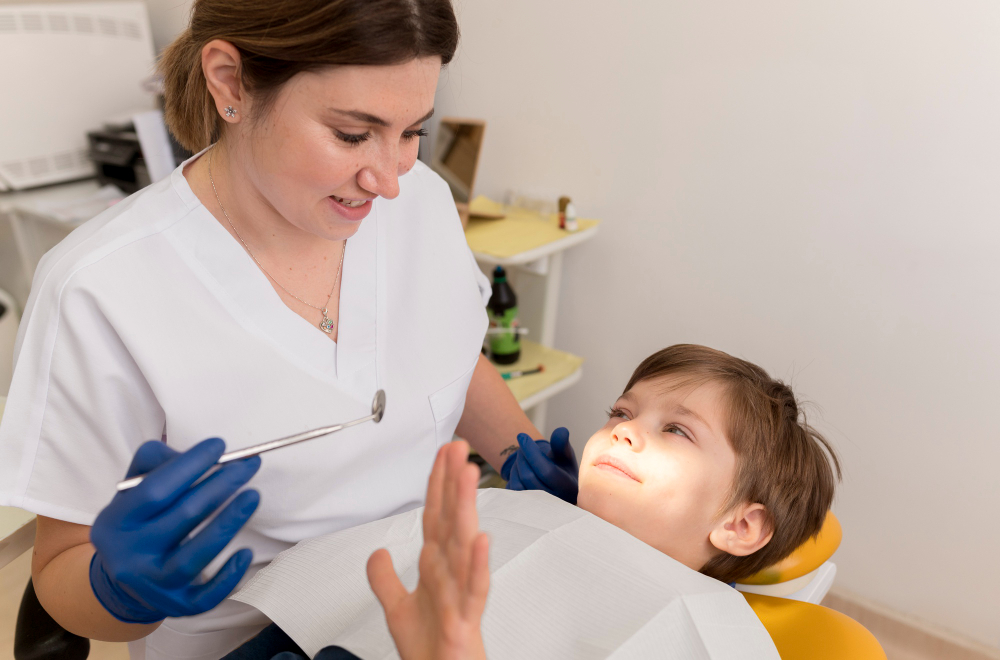
The dentist just applies a small amount of fluoride on your child’s teeth. That is it.
No machines. No scary sounds. No needles.
It takes a few minutes… sometimes less.
Kids usually sit through it just fine. Some do not even realize it is done.
How do we know if our child really needs it?
Some kids are more likely to get cavities than others.
Like… if your child:
- Loves sweets (and who does not, honestly)
- Is still figuring out brushing
- Has had a cavity before
- Does not drink much water
Then fluoride can really help.
But even if none of that sounds like your child, it is still worth talking about during a dental visit.
Is it safe?
This is where parents usually pause… and that is fair.
The short answer? Yes, it is safe when done properly.
Dentists use a small, controlled amount. Nothing excessive.
So no need to go down a Google rabbit hole and stress yourself out.
What can we do at home?
Fluoride treatments are helpful, but everyday habits matter just as much… maybe even more.
Simple things like:
- Brushing twice a day (even when they resist… especially then)
- Not overdoing sugary snacks
- Getting them to drink water regularly
- Keeping up with dental visits
And let us be real for a second… getting kids to brush is not always easy.
Some nights feel like a full negotiation. Some mornings are rushed. It happens.
We just keep trying. That is enough.
The bottom line
There is no perfect moment where everything has to start.
But earlier is better than later.
Once those first teeth show up, it is a good time to start thinking about dental care… including fluoride.
It is one of those small things that quietly prevents bigger problems down the road.
And if you are unsure, just talk it out with pediatric dental experts Myrtle Beach. A simple conversation can clear up a lot.
Frequently Asked Questions
1. At what age can my child receive fluoride treatment?
As soon as the first tooth appears. That is usually when parents start discussing it with a dentist.
As soon as the first tooth appears. That is usually when parents start discussing it with a dentist.
2. How often should fluoride treatments be done?
Usually every three to six months, depending on your child’s needs.
Usually every three to six months, depending on your child’s needs.
3. Does fluoride treatment hurt?
Not at all. It is quick and completely painless.
Not at all. It is quick and completely painless.
4. Can fluoride reverse early tooth decay?
It can help strengthen weak areas before they turn into cavities. Once a cavity forms, other treatment is needed.
It can help strengthen weak areas before they turn into cavities. Once a cavity forms, other treatment is needed.
5. Is fluoride toothpaste enough for children?
It helps a lot for daily care, but professional treatments give extra protection when needed.
It helps a lot for daily care, but professional treatments give extra protection when needed.