
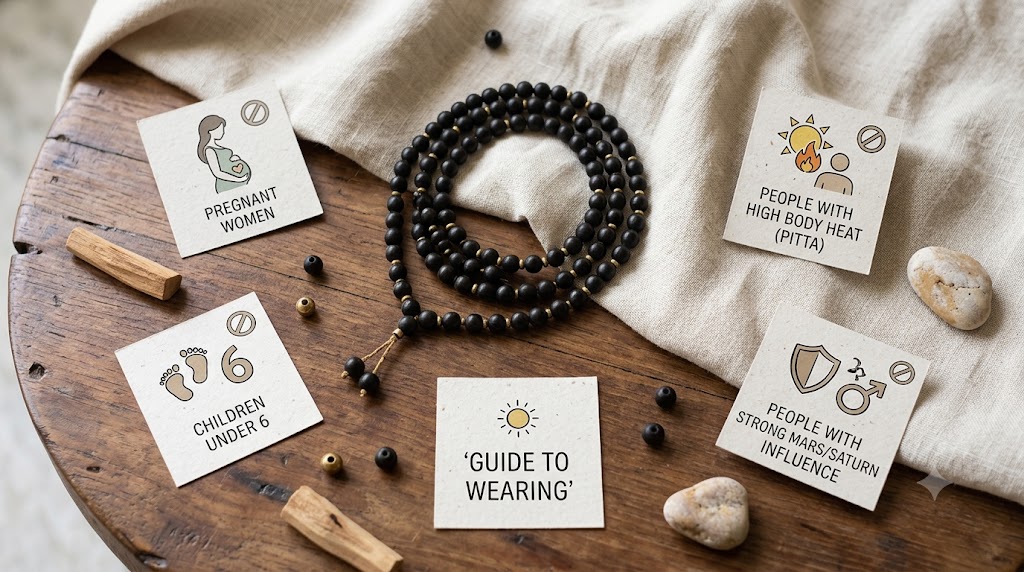
A Karungali Mala is traditionally associated with spiritual practices, protection, grounding, and positive energy. Made from Karungali wood, commonly identified with ebony, the mala is often worn as a devotional or symbolic accessory.
But does everyone need to wear one? Not necessarily. Traditional beliefs around Karungali Mala can vary by region, family practice, and spiritual tradition. Rather than assuming that it is suitable for everyone, it is worth understanding when people may prefer not to wear it.
People Who Are Uncomfortable Wearing It
The simplest reason to avoid a Karungali Mala is discomfort.
Some people may find wearing a wooden mala around their neck irritating, especially if the beads rub against the skin or feel heavy during the day. If it causes itching, redness, or physical discomfort, there is little reason to force yourself to keep wearing it.
A spiritual accessory should feel comfortable enough to become part of your routine—not something you spend the entire day trying to adjust.
Those Who Do Not Connect With Its Tradition
A Karungali Mala carries cultural and spiritual significance for many people. If you do not personally connect with the beliefs associated with it, you may simply choose not to wear one.
There is no universal requirement that everyone must use a particular mala. Personal belief, intention, and comfort can influence whether someone chooses to incorporate such an item into their daily life.
If it feels meaningful to you, wear it. If it does not, there is no need to treat it like a mandatory accessory.
People With Skin Sensitivity
The beads themselves are made from wood, but the overall mala may include thread, metal components, coatings, or other materials depending on how it is made.
If you have sensitive skin or notice irritation after wearing a particular mala, take it off and check what materials are touching your skin.
It is also sensible to keep the mala clean and dry, especially if you wear it frequently.
Those Who Follow Specific Religious or Spiritual Rules
Some people follow particular spiritual traditions that have their own rules about what can be worn, when it should be worn, and how devotional objects should be handled.
In such cases, the guidance of your own tradition, teacher, or knowledgeable practitioner may be more relevant than general advice about Karungali Mala.
There is no one-size-fits-all rule across every spiritual practice.
People Who Expect Guaranteed Results
Another group that may want to reconsider wearing a Karungali Mala is anyone expecting it to solve every problem overnight.
Traditional beliefs may associate Karungali wood with grounding, protection, or positive influences, but wearing a mala should not be treated as a guaranteed solution for financial difficulties, relationship problems, health concerns, or other serious issues.
If you are wearing one, it can be approached as a spiritual or symbolic practice rather than a magic shortcut.
Unfortunately, even the most attractive mala cannot negotiate with your boss for you.
Those Who Do Not Want Maintenance
Wooden malas need reasonable care. Depending on the construction and finish, excessive moisture, sweat, or rough handling may affect the beads over time.
If you regularly swim, shower, exercise heavily, or work in conditions where the mala could become wet or damaged, you may prefer to remove it during those activities.
Taking it off when necessary can help preserve the beads and keep the accessory in good condition.
Children Should Be Supervised
Young children may not always understand how to handle a beaded necklace safely. A mala can potentially become a choking or entanglement hazard if it is used carelessly.
For that reason, parents and caregivers should use appropriate judgment when allowing children to wear a Karungali Mala.
Age, maturity, construction, and how the mala is being used all matter.
Should Certain Zodiac Signs Avoid Karungali Mala?
There is no universally accepted rule that specific zodiac signs must avoid Karungali Mala.
Some traditional practitioners may offer personalised recommendations based on an individual’s birth chart, planetary placements, or spiritual practice. However, these recommendations can vary depending on the astrological or religious tradition being followed.
So, if someone tells you that your zodiac sign automatically makes Karungali Mala unsuitable, it is worth asking what tradition or reasoning that recommendation comes from.
When Should You Remove It?
Even if you regularly wear a Karungali Mala, there are situations when removing it may be practical.
You may choose to take it off while bathing, swimming, sleeping, exercising, or doing activities where the beads could become wet, damaged, or caught on something.
If the mala is worn for spiritual purposes, some people may also follow specific practices regarding when it should be removed or handled. These can vary according to personal or traditional beliefs.
Final Thoughts
There is no universal list of people who are absolutely forbidden from wearing a Karungali Mala. Suitability can depend on personal comfort, skin sensitivity, cultural or spiritual practices, the construction of the mala, and the beliefs of the person wearing it.
People who experience irritation, do not connect with its traditional significance, cannot maintain it properly, or expect guaranteed results may prefer not to wear one.
If you are considering a Karungali Mala for spiritual reasons, understanding the tradition behind it can help you make a more informed choice. And if you follow a specific religious or spiritual practice, consulting a knowledgeable person within that tradition can provide guidance that is more relevant to your circumstances.
Also Read: How Karungali Mala Supports Mindfulness and Positive Living